America’s best-selling truck is supposed to be “Built Ford Tough.” Owners of 2018–2020 Ford F-150 trucks equipped with the 5.0-liter Coyote V8 say it is anything but. Their engines consume oil at rates that drain the crankcase before the next scheduled oil change — sometimes losing a quart every 500 to 1,000 miles with no visible leak. Two class action lawsuits, the most recent filed in August 2025, allege Ford Motor Company knew about this defect since at least August 2018, concealed it from buyers, and issued a technical service bulletin critics call a cover-up rather than a real fix.
The lead active case, Bryan, et al. v. Ford Motor Company, Case No. 2:25-cv-12714, was filed on August 28, 2025, in the U.S. District Court for the Eastern District of Michigan. It follows a 2021 lawsuit — Lyman, et al. v. Ford Motor Company, Case No. 2:21-cv-10024 — filed in the same court and still working through the system. Together, they represent over four years of continuous litigation over what plaintiffs call a fundamental engineering failure in one of Ford’s most popular and profitable powertrains.
- What: Class actions allege 2018–2020 Ford F-150 trucks with 5.0L Coyote V8 engines have a design defect causing dangerous, excessive oil consumption Ford concealed from buyers
- Who: 12+ named plaintiffs from nine states vs. Ford Motor Company; class potentially covers all owners of 2018–2020 F-150s with 5.0L engines
- Status: Ongoing — Bryan v. Ford in discovery phase in Eastern District of Michigan (filed Aug. 2025); Lyman v. Ford (filed Jan. 2021) still active in same court
- Injuries: Engine wear, carbon deposits, stalls, engine failure, out-of-pocket repair costs up to $10,000–$12,000 for engine replacement, diminished resale value
- Settlement: No nationwide settlement; some preliminary agreements reported in late 2025 covering certain model years, awaiting final court approval
- Eligibility: Owners and lessees of 2018–2020 Ford F-150 trucks equipped with the 5.0L Coyote V8 engine
- Key date: December 2019 — Ford issued TSB 19-2365 acknowledging excessive oil consumption; plaintiffs allege this masked rather than fixed the defect
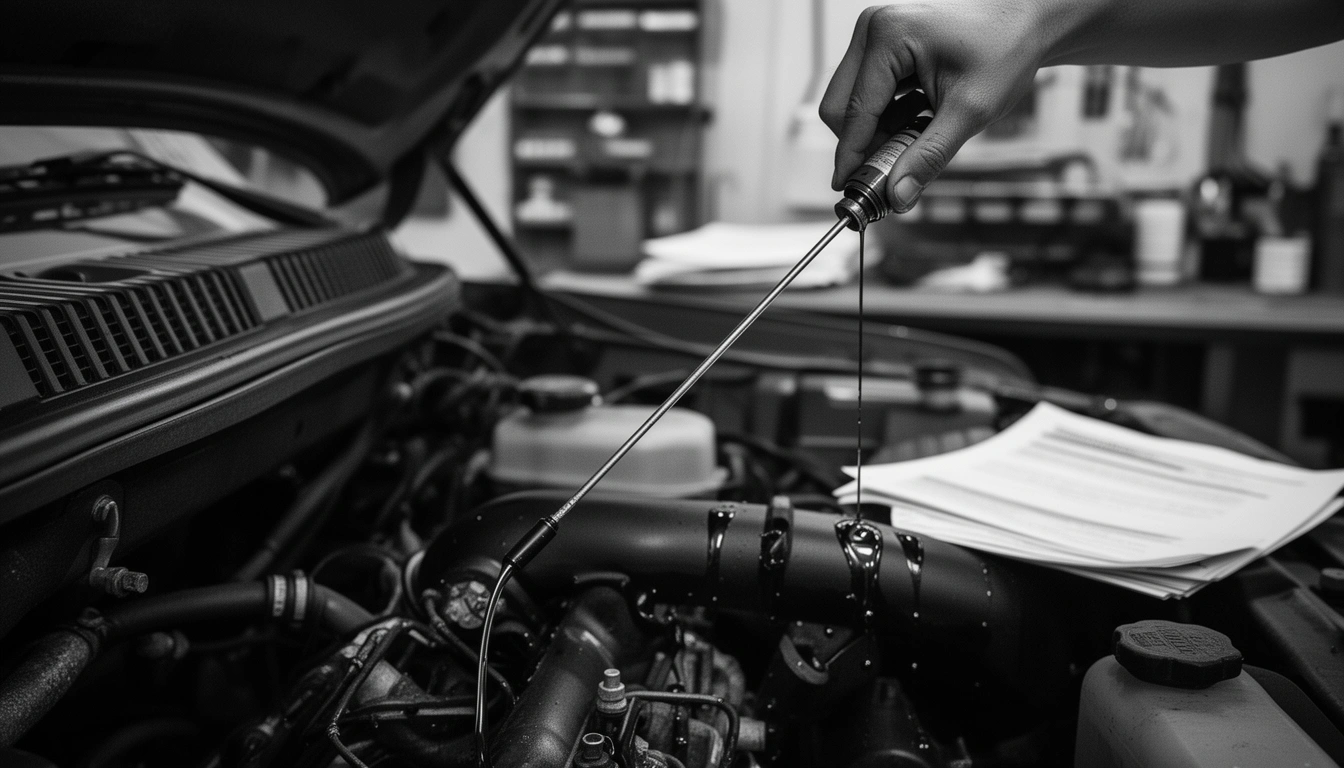
Ford F-150 Oil Consumption Lawsuit Timeline and Updates
August 2018 — Ford’s Own Records Reveal the Problem
Plaintiffs allege Ford had internal knowledge of the excessive oil consumption problem in the 5.0L Coyote engine by August 2018 — the same year the third-generation Coyote launched in the F-150. The engine represented a significant redesign: Ford switched from traditional cast-iron cylinder liners to Plasma Transfer Wire Arc (PTWA) cylinder liners, a weight-saving technology that coats the aluminum cylinder walls with a sprayed metal alloy layer instead of inserting a separate iron sleeve.
Owner complaints began accumulating almost immediately. NHTSA received more than 4,000 complaints related to F-150 oil consumption between 2015 and 2025, with the volume spiking sharply after 2018. Ford’s internal warranty and service records, dealer reports, and NHTSA complaint data all, according to plaintiffs, gave the company notice of a systemic problem it did not disclose to buyers.
2018–2019 — Multiple Technical Service Bulletins Issued
Ford issued its first internal acknowledgment of the problem through a Technical Service Bulletin in 2018. That was followed by TSB 19-2338, which addressed excessive oil consumption in 2018–2019 F-150 models with the 5.0L engine. Both bulletins went to Ford dealerships — not to consumers.
The bulletin attributed the excessive consumption to high intake manifold vacuum during deceleration fuel shut-off (DFSO) events. When a driver lifts off the throttle at highway speed, the throttle plate closes, creating intense vacuum that pulls oil past piston rings, through valve guides, and through the positive crankcase ventilation (PCV) system into the combustion chamber — where it burns off instead of returning to the oil pan.
December 2019 — Ford Issues TSB 19-2365 — the Alleged Cover-Up
In December 2019, Ford issued Technical Service Bulletin 19-2365, superseding TSB 19-2338 and expanding coverage to 2018–2020 F-150 models with 5.0L engines. The bulletin acknowledged that some trucks “may exhibit excessive oil consumption of greater than 1L (1 quart) in 4,800 km (3,000 mi) with no visible oil leaks.”
The prescribed fix had three components: reprogram the Powertrain Control Module (PCM) to keep the throttle plate slightly open during deceleration, install a new engine oil level indicator, and change the oil and filter. That new oil level indicator is where plaintiffs say the cover-up began. The revised dipstick expanded the “normal” operating range from 1 quart to 2 quarts — meaning a truck that had consumed a full quart would still show as acceptable on the new stick. Plaintiffs allege Ford lowered the minimum fill standard to hide the defect rather than fix it.
January 8, 2021 — First U.S. Class Action Filed
Law firms Cohen Milstein Sellers and Toll PLLC, Sauder Schelkopf LLC, Handley Farah and Anderson PLLC, and Baron and Herskowitz filed the first major U.S. class action, Lyman, et al. v. Ford Motor Company, in the Eastern District of Michigan on January 8, 2021. The case covered 2018–2020 Ford F-150 trucks with 5.0L engines.
The complaint alleged Ford violated the Magnuson-Moss Warranty Act, breached express and implied warranties, and committed fraudulent concealment. On March 22, 2022, Judge Gerschwin A. Drain appointed Douglas J. McNamara to the Plaintiffs Steering Committee. That case remains active as of 2026 — more than five years after filing.
August 28, 2025 — Second Class Action Filed by 12 Plaintiffs
With the 2021 case still unresolved, a new group of 12 named plaintiffs from nine states filed Bryan, et al. v. Ford Motor Company on August 28, 2025, also in the Eastern District of Michigan. The lead plaintiff, Daniel Bryan of Kansas, owns a 2019 Ford F-150. The full plaintiff roster spans Alabama, California, Florida, Kansas, Kentucky, Michigan, Mississippi, Missouri, and Rhode Island.
| Plaintiff | State | Model Year |
|---|---|---|
| Daniel Bryan | Kansas | 2019 F-150 |
| Victor Caballero | Alabama | 2020 F-150 |
| Nathan Dew | Mississippi | 2018 F-150 |
| Michael Lepore | Rhode Island | 2018 F-150 |
| Stephanie Pake | Michigan | 2019 F-150 |
| Charles Williamson | Missouri | 2018 F-150 |
| Michael Gruenke | California | 2018 F-150 |
| Jacob Benavides | Florida | 2018 F-150 |
| Joshua Hammons | Kentucky | 2020 F-150 |
The Bryan case is represented by The Miller Law Firm, P.C., Sauder Schelkopf LLC, Cohen Milstein Sellers and Toll PLLC, Handley Farah and Anderson PLLC, Baron and Herskowitz, and Gordon and Partners, PA. Several of the same firms litigated the 2021 case — a sign that the earlier lawsuit’s progress justified a parallel second filing with additional plaintiffs and updated allegations.
2026 — Discovery Phase, Preliminary Settlements Reported
As of early 2026, the Bryan case has moved into a critical discovery phase. This is the stage where plaintiffs’ attorneys gain access to Ford’s internal engineering documents, design specifications, warranty claim data, and communications about the Coyote oil consumption problem. Plaintiffs allege Ford’s internal records will show engineers flagged the oil consumption issue before the 2018 model year launched — meaning the defect was knowable, and concealed, from the start.
Some preliminary settlement agreements covering certain model years were reported in late 2025, awaiting final court approval in the first half of 2026. No nationwide settlement covering all affected owners has been reached. The Lyman case from 2021 remains active alongside the newer Bryan litigation.
The Engineering Defect — What Plaintiffs Say Is Actually Wrong
The 2018 Coyote was Ford’s most ambitious redesign of the platform. The switch to PTWA cylinder liners — where a plasma arc sprays a hardened metal alloy directly onto the aluminum cylinder walls — eliminated cast-iron liners entirely and reduced engine weight. Ford marketed the 2018–2020 F-150 as “reengineered,” “upgraded,” and featuring “the most advanced F-150 engine lineup ever.”
Plaintiffs and independent engineers identify three compounding failure mechanisms in the third-generation Coyote:
- PTWA liner degradation: The spray-on cylinder coating can fail to provide a proper seal for piston rings, allowing oil to bypass into the combustion chamber. Once the PTWA surface breaks down, no software update resolves it — physical cylinder wall scoring requires engine teardown or replacement.
- Low-tension piston rings: The suit alleges the piston rings have insufficient tension to maintain a seal against the cylinder walls, allowing oil to seep past during the combustion cycle rather than staying in the crankcase where it belongs.
- Deceleration vacuum spike: When the throttle plate closes completely during deceleration fuel shut-off (DFSO), the engine creates intense vacuum that pulls oil through the PCV system, past valve guides, and into the intake manifold — where it enters the combustion chamber and burns off.
The three mechanisms compound each other. A degraded PTWA liner means rings cannot seal even at idle. Low ring tension worsens the seal failure during normal driving. The vacuum spike during highway deceleration then pulls whatever oil the degraded seals failed to contain directly into combustion. Owners report losing a quart every 500 to 1,500 miles on otherwise well-maintained trucks — rates that the F-150 owner’s manual, with its recommended oil change intervals of up to 10,000 miles, never prepared them for.
The owner’s manual states the oil change indicator may illuminate as early as 3,000 miles after the previous change, but recommends no change interval exceed 10,000 miles or one year. For a truck consuming a quart every 1,000 miles, following the manual means running the engine with critically low oil pressure long before the indicator ever lights up. The lawsuit argues the manual itself is defective because Ford wrote it knowing the engine could not maintain proper oil levels across the intervals it described.
What Ford Did — and What Plaintiffs Say It Was Hiding
Ford’s response to the oil consumption problem followed a pattern plaintiffs call deliberate concealment. No recall was issued. No consumer notification went out. No buyback program was announced. Instead, Ford issued technical service bulletins directed at dealerships — documents consumers rarely see unless they specifically request them.
TSB 19-2365, issued in December 2019, is the crux of the concealment allegation. The bulletin prescribed three changes. The PCM reprogramming — keeping the throttle plate slightly open during deceleration — addressed the vacuum spike mechanism and reportedly resolved the issue for roughly 90% of affected vehicles. But for the remaining 10%, the fix did nothing because their engines had progressed to physical cylinder wall scoring from sustained ring seal failure.
What matters here is the revised dipstick. Ford’s new oil level indicator expanded the “acceptable” range from a 1-quart window to a 2-quart window. A truck that had burned through a full quart since its last oil change would now show as within the acceptable range on the new stick. Plaintiffs allege Ford designed the new dipstick to reclassify dangerous oil consumption as normal — not to protect engines, but to protect Ford from warranty claims. By widening what counted as “acceptable,” Ford could deny warranty repairs to owners whose trucks showed consumption within the new expanded range.
The lawsuit alleges dealers followed suit. When owners brought in F-150s with oil consumption complaints, dealers would check the new dipstick, find the level still within the 2-quart range, and tell owners nothing was wrong. Engine wear continued. The warranty clock ran. When powertrain warranties expired — typically at 60,000 miles or five years — Ford’s exposure ended and owners were left with a truck that now required a $10,000–$12,000 engine replacement out of pocket.
Who Qualifies and What Damages Are Available
The class as defined in the complaints covers owners and lessees of 2018–2020 Ford F-150 trucks equipped with the 5.0L Coyote V8 engine. The states covered in the most recent filing include California, Michigan, Florida, Kentucky, Kansas, Mississippi, Missouri, Alabama, and Rhode Island — with potential expansion to additional states as litigation develops.
- Owned or leased a 2018, 2019, or 2020 Ford F-150
- Truck is equipped with the 5.0-liter V8 Coyote engine
- Experienced excessive oil consumption — losing more than 1 quart per 3,000 miles with no visible leaks
- Ford dealer denied warranty repairs or attributed consumption to “normal” operating characteristics
- Incurred out-of-pocket costs for oil, engine repairs, or replacement within the statute of limitations period
Damages sought include compensation for out-of-pocket oil costs, engine repair and replacement expenses, diminished resale value, and injunctive relief requiring Ford to properly repair or replace affected engines. Some owners with documented engine failure report receiving over $10,000 in individual cases. Class-wide average payouts in auto defect settlements typically run $500–$3,500 per claimant depending on documented harm, though the final range will depend heavily on whether the case settles or proceeds to trial.
Owners who have already had repairs performed under warranty may still be eligible if Ford’s remedy was insufficient. Owners whose trucks are now out of warranty but within the statute of limitations window — typically three to six years under state consumer protection laws — should document their oil consumption and contact plaintiffs’ counsel.
What Ford’s Own Documents May Reveal in Discovery
The 2026 discovery phase is where the fraudulent concealment claim lives or dies. Plaintiffs allege Ford’s internal engineering documents will show that the company’s own engineers identified oil consumption problems before the 2018 model year launched commercially.
The timeline the plaintiffs construct is damaging if the documents support it. Ford knew in August 2018. Ford issued dealer-only TSBs in 2018 and 2019. Ford’s solution included a revised dipstick that widened what counted as acceptable rather than actually reducing consumption. Ford did not tell buyers. Ford did not recall the vehicles. And when owners came to dealers with complaints, many were turned away — told their consumption was within spec on a spec that Ford had quietly revised to make the defect disappear on paper.
This is precisely the pattern courts have found sufficient for fraudulent concealment claims in prior automotive defect litigation. Similar to the Toyota UA80 transmission lawsuit, where owners alleged Toyota denied warranty repairs for a known defect until warranties expired, the Ford Coyote case turns on whether internal documents show the company knew the defect was real, systemic, and material to a buyer’s purchase decision.
The Broader Coyote Problem — Beyond the 2018–2020 F-150
The lawsuits focus on 2018–2020 model years because that is where the third-generation Coyote with PTWA liners debuted. But owner complaints extend beyond those years. Owners of 2021 and later F-150s with 5.0L engines also report oil consumption issues, though Ford changed the recommended oil viscosity from 5W-20 to 5W-30 starting with the 2021 model year — a change that mitigated but did not eliminate complaints for some owners.
Ford Mustang owners with the same 5.0L Coyote engine have also reported oil consumption issues, though the F-150 applications appear more severe due to the higher load and towing demands placed on the truck platform compared to a performance car. The PTWA technology itself is not unique to Ford — it has been used across the automotive industry — but its implementation in the third-generation Coyote appears to have produced a specific failure mode that Ford’s TSBs addressed only partially.
Attorneys investigating the case have signaled potential expansion to newer model years and to EcoBoost engine variants that have also generated elevated NHTSA oil consumption complaints. That expansion, if it materializes, would dramatically broaden the affected class and Ford’s potential liability exposure.
What This Lawsuit Teaches Consumers
The Ford F-150 oil consumption case teaches a lesson about the difference between a warranty and protection. Ford offered a 5-year/60,000-mile powertrain warranty on these trucks. On paper, that warranty should have covered the oil consumption defect. In practice, plaintiffs allege Ford used a revised dipstick and dealer-level denial to keep consumption claims out of the warranty system until the warranty expired — at which point the same owners who had been told their consumption was “within spec” suddenly faced engine replacement bills that started at $10,000.
The lesson for truck buyers is blunt. A warranty is only as good as the automaker’s willingness to honor it. When a manufacturer issues a technical service bulletin to dealers — but not to consumers — about a defect it acknowledges internally, and when that same manufacturer revises its dipstick to reclassify dangerous consumption as normal, the warranty has been engineered to expire before the defect is officially acknowledged. The consumer bears the cost.
Document everything. Check your oil level — not just at oil changes but between them. If your F-150 5.0L is losing more than a quart per 3,000 miles, log every top-off. Request that dealers record your complaints in writing, with dates and mileage. Keep all service records. That documentation is what separates a potential class member from someone who cannot prove their consumption exceeded what Ford claimed was normal. In a case where Ford’s own revised dipstick is the centerpiece of the concealment allegation, consumer-level evidence of what actually happened in the real world may be the most powerful evidence in the courtroom.
Read These
- Senate lawsuit provision repealed by the House
- Red Bull false advertising lawsuit
- Toyota UA80 transmission defect lawsuit
- Toyota driver data tracking class action
- Homeschool diploma Pennsylvania lawsuit
Frequently Asked Questions
What is the Ford F-150 oil consumption lawsuit?
Two class actions allege 2018–2020 Ford F-150 trucks with 5.0L Coyote V8 engines have a design defect causing dangerous oil consumption — losing up to a quart per 1,000 miles — that Ford concealed from buyers and failed to properly fix.
Which Ford F-150 trucks are affected?
The lawsuits target 2018, 2019, and 2020 Ford F-150 trucks equipped with the 5.0-liter V8 Coyote engine. Attorneys are investigating whether newer model years with similar complaints may be added to the class.
What is the current status of the lawsuit?
Bryan et al. v. Ford Motor Company (filed Aug. 2025) is in the discovery phase in the Eastern District of Michigan. Lyman et al. v. Ford Motor Company (filed Jan. 2021) is also still active in the same court. No nationwide settlement exists.
What defect do plaintiffs allege?
Three compounding failures: PTWA cylinder liner degradation preventing proper ring sealing; low-tension piston rings allowing oil into combustion; and deceleration vacuum pulling oil through the PCV system into the intake manifold, where it burns off.
What is TSB 19-2365 and why does it matter?
Ford’s December 2019 Technical Service Bulletin acknowledged excessive oil consumption in 2018–2020 F-150s. It included a PCM software fix and a revised dipstick with a wider acceptable range. Plaintiffs allege the new dipstick reclassified dangerous consumption as normal rather than actually fixing the defect.
How much oil should my F-150 normally consume?
The owner’s manual acknowledges consumption may occur but does not specify a per-mile rate. Plaintiffs argue losing more than 1 quart per 3,000 miles with no visible leaks — as TSB 19-2365 itself defines — constitutes excessive and defective consumption.
Do I qualify for the lawsuit?
Owners and lessees of 2018–2020 Ford F-150 trucks with 5.0L engines who experienced excessive oil consumption — especially if dealers denied warranty repairs — may qualify. Documented oil top-offs, service records, and dealer complaint logs strengthen eligibility.
What damages could I receive?
Potential compensation includes out-of-pocket oil costs, repair and engine replacement expenses, and diminished resale value. Reports suggest average settlements in similar auto defect cases range from $500–$3,500, with documented engine failures yielding higher amounts.
Has Ford recalled the F-150 for this defect?
No. Ford has not issued a consumer recall for the 5.0L Coyote oil consumption defect. It issued dealer-only technical service bulletins. Plaintiffs allege Ford’s decision not to recall was itself a concealment of a known safety defect.
What is the Magnuson-Moss Warranty Act?
A federal law requiring manufacturers to honor written warranties. The 2021 Lyman lawsuit and the 2025 Bryan lawsuit both invoke it, arguing Ford’s failure to properly repair the oil consumption defect — or to acknowledge it at all — constitutes a breach of express and implied warranty obligations.
What is the statute of limitations to join the lawsuit?
Statutes of limitations vary by state, typically three to six years under consumer protection laws. The clock generally starts when the owner knew or should have known of the defect. Consult a plaintiffs’ attorney to determine your specific window.
What should I do right now if my F-150 burns oil?
Log every oil top-off with date, mileage, and quarts added. Ask your dealer to document complaints in writing referencing TSB 19-2365. Keep all service records and receipts. Contact one of the firms involved in Bryan v. Ford or Lyman v. Ford to assess your potential claim.

Leave a Reply