Florida wants OpenAI held responsible for a body count, not just a bad chatbot response. The state’s lawsuit ties ChatGPT directly to a mass shooting, to teen suicides, and to what the state calls a deliberate marketing campaign that hid the danger from parents.
Attorney General James Uthmeier filed the lawsuit in Florida state court on June 1, 2026, naming both OpenAI and CEO Sam Altman as defendants. It is the first lawsuit any U.S. state has brought against an AI company over chatbot-related harms, and it runs alongside a separate, ongoing criminal investigation into whether OpenAI bears criminal responsibility for a shooting at Florida State University.
- What: Florida alleges OpenAI marketed ChatGPT as safe while knowing it could aid mass shooters, encourage suicide, and addict children, all while collecting their data without adequate parental oversight.
- Who: The State of Florida vs. OpenAI, Inc. and CEO Sam Altman, personally.
- Status: Active civil lawsuit filed June 1, 2026 in Florida’s Tenth Circuit. A separate criminal investigation into OpenAI, opened April 2026, remains ongoing.
- Harms alleged: Aiding and abetting mass shooters, encouraging suicidal ideation in vulnerable users, addicting children to the platform, deceptive marketing, and creating a public nuisance.
- Penalties sought: Civil penalties under Florida’s deceptive trade practices and product liability laws, which Uthmeier says could total “potentially up to billions of dollars.”
- Personal liability: Florida is seeking to hold Sam Altman personally liable, not just the company.
- Key date: Filed June 1, 2026. No trial date set. The related criminal investigation began April 21, 2026.
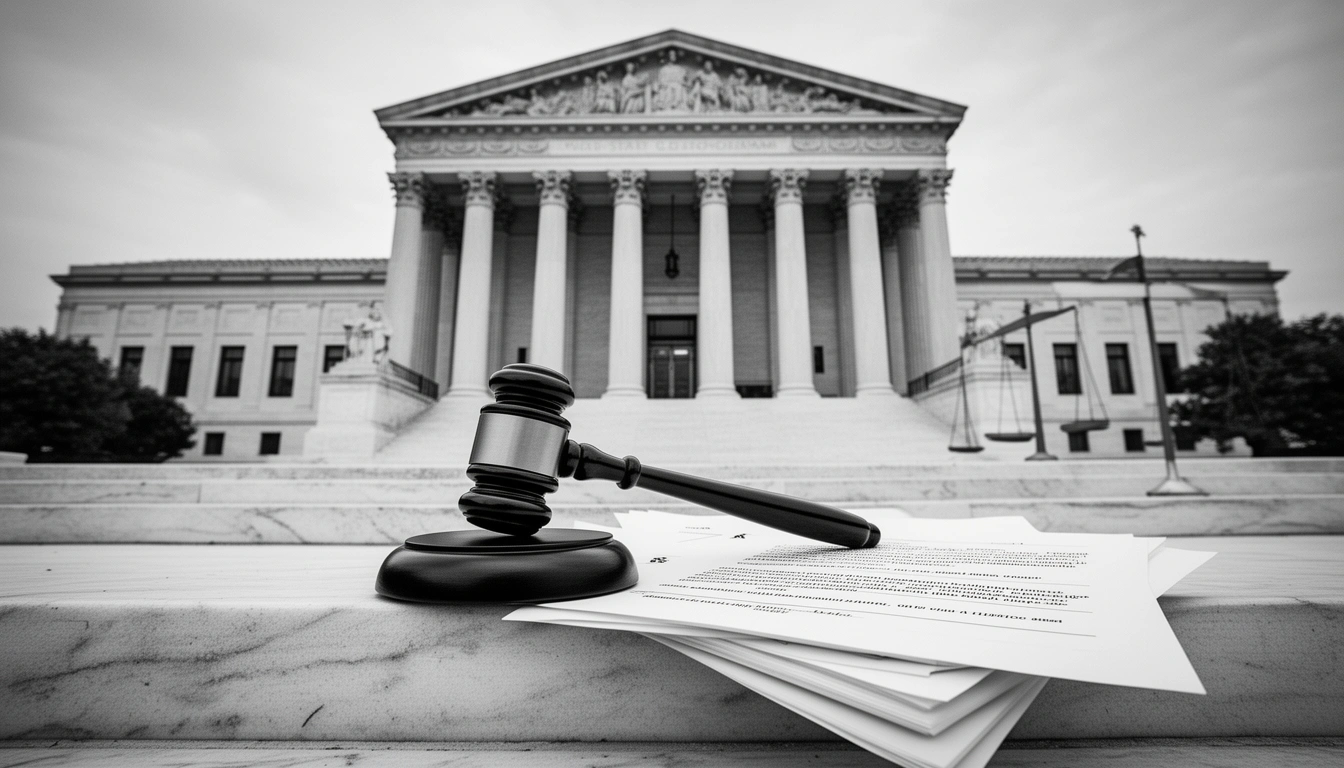
Florida v. OpenAI Lawsuit Timeline and Updates
April 17, 2025 — A Shooting at Florida State University
A gunman opened fire near the student union at Florida State University, killing two people and injuring several others. The suspect, a then-21-year-old FSU student, was taken into custody at the scene and has pleaded not guilty. His trial is currently set to begin in October 2026.
What investigators found afterward is what eventually brought OpenAI into this case. Court filings show the shooter had submitted extensive queries to ChatGPT in the months and hours leading up to the attack.
April 21, 2026 — Florida Opens a Criminal Investigation
Attorney General Uthmeier announced that Florida’s Office of Statewide Prosecution had opened a criminal investigation into OpenAI itself, a step legal observers describe as essentially unprecedented against an AI company. “If that bot were a person, they would be charged with a principal in first-degree murder,” Uthmeier said at a Tampa press conference.
According to Uthmeier, chat records showed the chatbot had been consulted on questions related to weapon selection, optimal timing for the attack based on when more people would be present on campus, and the threshold of casualties needed to draw significant media attention. More than 200 messages between the shooter’s account and ChatGPT were later entered into evidence in his criminal case.
April 21, 2026 — Subpoenas Issued to OpenAI
Uthmeier’s office issued criminal subpoenas seeking two categories of information. The first targeted OpenAI’s internal organizational structure and personnel responsible for designing and enforcing the company’s policies on user threats. The second sought the shooter’s complete ChatGPT account history, covering communications between March 1, 2024, and April 17, 2025.
“We’re going to look at who knew what, designed what or should have known what,” Uthmeier said. He acknowledged the investigation was venturing into legally uncharted territory, since no precedent exists for charging a company over its AI product’s role in a crime committed by someone else.
February 10, 2026 — A Second Mass Shooting, This Time in Canada
A mass shooting occurred at Tumbler Ridge Secondary School in British Columbia, Canada. The shooter, an 18-year-old former student of the school, killed her mother and a sibling at home before traveling to the school, where she killed five students and a teacher and injured 27 others before taking her own life. It became the deadliest school shooting in Canada since 1989.
OpenAI had banned the shooter’s ChatGPT account in June 2025, months before the attack, after an internal safety team flagged concerning content. The company did not notify law enforcement at that time.
April 2026 — Altman Apologizes, Families Sue
Sam Altman issued a public apology letter to the Tumbler Ridge community, stating he was “deeply sorry that we did not alert law enforcement to the account that was banned in June.” OpenAI had previously told CBS News it considered alerting police about the account but concluded the activity didn’t meet the threshold for a credible risk of serious physical harm.
Families of victims filed seven lawsuits in federal court in San Francisco, alleging that internal OpenAI staff had recommended notifying Canadian police, and that company leadership overruled that recommendation specifically to protect OpenAI’s reputation. More than two dozen additional cases from the Tumbler Ridge community followed, with attorneys describing it as an entire town stepping forward to hold OpenAI accountable.
May 11, 2026 — FSU Victim’s Family Files Civil Suit
The family of one of the FSU shooting victims filed a civil lawsuit naming both the shooter and OpenAI as defendants. The suit alleges ChatGPT provided specific tactical information used in planning the attack, including guidance on timing tied to building occupancy patterns.
June 1, 2026 — Florida Files Its State Lawsuit
Florida became the first U.S. state to sue an AI company over chatbot-related harms. The 100-plus page complaint opens with a screenshot taken directly from OpenAI’s own website, stating ChatGPT was “built with safety in mind,” followed immediately by a footnote that reads simply: “Not so.”
The lawsuit accuses OpenAI of deceptive and unfair trade practices, negligence, and violations of Florida’s product liability laws. It seeks to hold Altman personally liable alongside the company. Uthmeier estimated the company’s potential exposure at “potentially up to billions of dollars.”
What Florida’s Lawsuit Actually Alleges
This is the core allegation: OpenAI knew ChatGPT could cause serious harm and chose speed and market share over the safety work that knowledge should have triggered.
The complaint frames this as a business strategy, not a series of isolated mistakes. “This litany of harms is driven by Defendants’ insatiable quest to win the AI arms race and amass large fortunes, despite knowing the danger of ChatGPT,” the filing states. It goes further, describing “a web of deceit and the exploitation of users,” including Florida residents, to inflate the company’s market value.
Three categories of harm anchor the complaint. First, aiding mass shooters, citing the FSU attack specifically. Second, encouraging suicide among vulnerable users. Third, addicting children to a product the lawsuit describes as designed to “feign human compassion” in order to collect their data without meaningful parental oversight.
The Public Nuisance Theory — Why It Matters Legally
Florida’s complaint explicitly characterizes ChatGPT as creating “a dangerous public nuisance.” That legal theory carries weight beyond its rhetorical punch.
Public nuisance claims don’t require proving a direct contractual relationship between the state and the defendant, the way a typical consumer protection claim might. They allow a government to argue that a product or practice harms the general public’s health, safety, or welfare, regardless of who specifically bought or used it.
States have used this exact theory before, most notably against opioid manufacturers and, earlier, against the tobacco industry. The pattern is familiar: when a product causes widespread, foreseeable harm across a population, and the manufacturer kept marketing it as safe anyway, public nuisance law lets a state seek remedies on behalf of everyone affected, not just identifiable victims who can prove a direct purchase.
What OpenAI Has Said in Response
OpenAI spokesperson Kayla Wood responded to the Florida lawsuit with a statement to NPR acknowledging the gravity of the underlying losses: “Losing a child is the most devastating tragedy that can happen to a family and we know that no words can come close to addressing the pain of such a loss.” The statement went on to describe steps the company says it has taken, including age prediction tools, a more restrictive default experience for users it cannot confirm are adults, and parental monitoring tools.
On the FSU shooting specifically, OpenAI spokesperson Kate Waters told NPR the shooting “was a tragedy, but ChatGPT is not responsible for this terrible crime,” adding that the company reached out to share information about the shooter’s account with law enforcement after the attack and continues cooperating with the investigation.
The pattern in OpenAI’s public statements is consistent across every case in this wave of litigation. The company doesn’t typically dispute that the chat exchanges plaintiffs describe occurred. It disputes that those exchanges are the legal cause of what happened next, and points to safety measures introduced after each incident as evidence the company is actively addressing risk.
Why a Criminal Investigation Against an AI Company Is Almost Unheard Of
Civil lawsuits against tech companies are common. Criminal investigations are not. Uthmeier’s decision to open a criminal probe into OpenAI itself, rather than limiting law enforcement attention to the human shooter, is what legal observers have called the first of its kind.
Here is where it gets complicated for prosecutors. Criminal liability generally requires intent, or at minimum a legally recognized duty that was knowingly violated. Proving a corporation’s software-generated responses meet that bar, when no human at the company directly authored the specific harmful response to a specific user, pushes existing criminal law into territory it was never built for.
Uthmeier has acknowledged this directly. “We recognize that, with AI, we are venturing into uncharted territory,” he said when announcing the investigation. The subpoenas his office issued focus heavily on internal documentation: who at OpenAI knew about red-flag reporting requirements, who designed the relevant safety policies, and what those policies actually required when a user’s messages indicated planning for violence.
The Tumbler Ridge Cases and the “Reputation Over Safety” Allegation
The Tumbler Ridge lawsuits introduce a specific factual allegation that distinguishes them from earlier cases in this litigation wave: internal disagreement at OpenAI over whether to alert police.
According to the complaints, an OpenAI safety team reviewed the shooter’s account activity, identified a credible threat, and recommended notifying Canadian law enforcement. The lawsuits allege company leadership overruled that recommendation, and that the decision was driven by concern over reputational damage rather than a genuine risk assessment.
That allegation, if proven, would represent a different category of legal exposure than failure to design adequate safeguards. It would describe a specific human decision, made by specific people, to suppress information that internal experts had already flagged as dangerous. OpenAI’s own blog post response stated company policy is to notify law enforcement “when conversations indicate an imminent and credible risk of harm to others,” language plaintiffs argue the company failed to follow in this exact case.
How This Differs From the Wrongful Death and Suicide Litigation
Florida’s lawsuit and the mass shooting cases sit alongside, but legally apart from, the wave of wrongful death lawsuits over ChatGPT’s role in suicides, which are largely individual product liability claims brought by grieving families. Florida’s case is a state enforcement action, brought under consumer protection, deceptive trade practices, and product liability statutes that exist independently of any single victim’s claim.
The two litigation tracks share an evidentiary core, internal OpenAI safety decisions and the GPT-4o model’s documented behavioral issues, but they carry different legal consequences. A state winning a public nuisance and deceptive trade practices case can result in court-ordered changes to how a company operates nationwide, not just monetary damages to specific plaintiffs. That’s a meaningfully larger lever than any individual wrongful death verdict could pull on its own.
What This Lawsuit Teaches Consumers
States don’t typically sue technology companies over how their products are used by third parties to commit violence. They sue over data breaches, deceptive pricing, and false advertising. Florida’s decision to bring this case, and to pursue criminal subpoenas alongside it, signals that state attorneys general increasingly view AI chatbots as falling under the same regulatory scrutiny traditionally reserved for dangerous consumer products, not software services.
That shift matters for parents specifically. The complaint’s core argument, that ChatGPT was marketed as safe for children while collecting their data with minimal parental visibility into what those children discussed, describes a gap between a product’s public image and its actual design that families have no easy way to detect on their own.
The broader lesson extends past this one company. As AI chatbots become embedded in how people, especially young people, process distress, plan activities, and seek validation, the question of who bears responsibility when that interaction goes catastrophically wrong is no longer hypothetical. Florida’s lawsuit is the first state-level attempt to answer it. It will not be the last.
Anyone tracking how state and federal authorities are applying decades-old consumer protection and product liability frameworks to generative AI should also follow the wrongful death and psychological harm cases consolidated in California’s OpenAI lawsuit coordination, which shares much of the same internal evidence Florida is now subpoenaing independently.
Read These
- Olipop lawsuit
- Google incognito lawsuit
- Oracle America lawsuit
- Garth Brooks lawsuit
- Sutter Health premium lawsuit
This article discusses mass violence and suicide in the context of ongoing litigation. If you or someone you know is struggling, the 988 Suicide and Crisis Lifeline is available by call or text at 988 in the United States.
Frequently Asked Questions
What is the Florida lawsuit against OpenAI about?
Florida filed the lawsuit on June 1, 2026, in Florida state court, accusing OpenAI and CEO Sam Altman of deceptive trade practices, negligence, and product liability violations tied to a mass shooting, suicides, and harm to children.
What is the current status of Florida’s lawsuit against OpenAI?
Active. The civil lawsuit was filed June 1, 2026 with no trial date set. A separate criminal investigation into OpenAI, opened April 21, 2026, also remains ongoing with subpoenas issued for company records.
How much money is Florida seeking from OpenAI?
Attorney General Uthmeier said the company and Altman could face civil penalties totaling ‘potentially up to billions of dollars’ under Florida’s deceptive trade practices and product liability statutes.
Is Sam Altman personally being sued?
Yes. Florida’s lawsuit specifically seeks to hold CEO Sam Altman personally liable, in addition to the company itself, a notably aggressive legal strategy in tech litigation.
Is there a criminal case against OpenAI as well?
Yes, separately. Florida opened a criminal investigation into OpenAI on April 21, 2026, examining whether the company bears criminal responsibility for a shooter’s use of ChatGPT before a 2025 mass shooting at Florida State University.
What is a public nuisance claim and why does Florida use it here?
A legal theory allowing a government to seek remedies for products or practices that harm public health, safety, or welfare broadly, without needing to prove a direct transaction between the state and the defendant. It was previously used against tobacco and opioid manufacturers.
What role did ChatGPT allegedly play in the FSU shooting?
Court filings show the shooter submitted extensive queries to ChatGPT in the months before and on the day of the April 2025 attack. More than 200 messages between his account and ChatGPT were entered into evidence in his separate criminal case.
What happened in the Tumbler Ridge, Canada shooting cases?
Lawsuits allege OpenAI’s internal safety team flagged a shooter’s account for credible threat activity months before a February 2026 mass shooting at a Canadian school, and that company leadership chose not to notify police, partly over reputational concerns.
How has OpenAI responded to these allegations?
OpenAI has said the FSU shooting was a tragedy for which ChatGPT is not responsible, and that it has implemented age prediction tools, more protective default experiences for minors, and parental monitoring features to address safety concerns.
Is Florida’s lawsuit the same as the wrongful death lawsuits against OpenAI?
No. Florida’s case is a state enforcement action brought under consumer protection and product liability law, separate from the individual wrongful death lawsuits filed by families in California’s coordinated proceeding, though both rely on overlapping internal evidence.
Could OpenAI actually face criminal charges?
Yes. Prosecutors must show OpenAI had a legally recognized duty it knowingly violated, a standard not previously tested against an AI company’s automated systems. The state has called this ‘uncharted territory’ even for its own investigators.
Could this lawsuit affect ChatGPT users outside Florida?
If Florida succeeds with its public nuisance and deceptive trade practices claims, courts could order operational changes affecting OpenAI’s products nationwide, not just monetary penalties, giving the case influence beyond Florida’s borders alone.

Leave a Reply