A truck accident lawsuit is a civil claim filed against a truck driver, trucking company, or other liable party after a commercial vehicle collision causes injury or death. It is not the same as a car accident claim. Federal regulations apply. Multiple companies can share the blame. The money at stake is usually far higher.
This matters the moment a crash involves a commercial truck rather than another passenger car. The injuries tend to be worse. The insurance policies are bigger. The civil lawsuit process itself follows familiar steps, but the evidence, the deadlines, and the list of defendants all work differently than they do in an ordinary fender-bender.
- What it is: A civil claim against a truck driver, trucking company, or other party after a commercial truck crash causes injury or death.
- Who it applies to: Injured drivers, passengers, pedestrians, and the families of people killed in crashes involving semi-trucks, box trucks, or other commercial vehicles.
- When it matters: Once an insurance claim is denied, underpaid, or the damages exceed what the truck’s policy will cover.
- Key exception: Government-owned trucks (postal, municipal, school district) often require a notice of claim within 60 to 180 days, far shorter than the standard statute of limitations.
- Practical takeaway: Evidence like black box data and driver logs can disappear within weeks. Acting fast protects the case even if the filing deadline is years away.
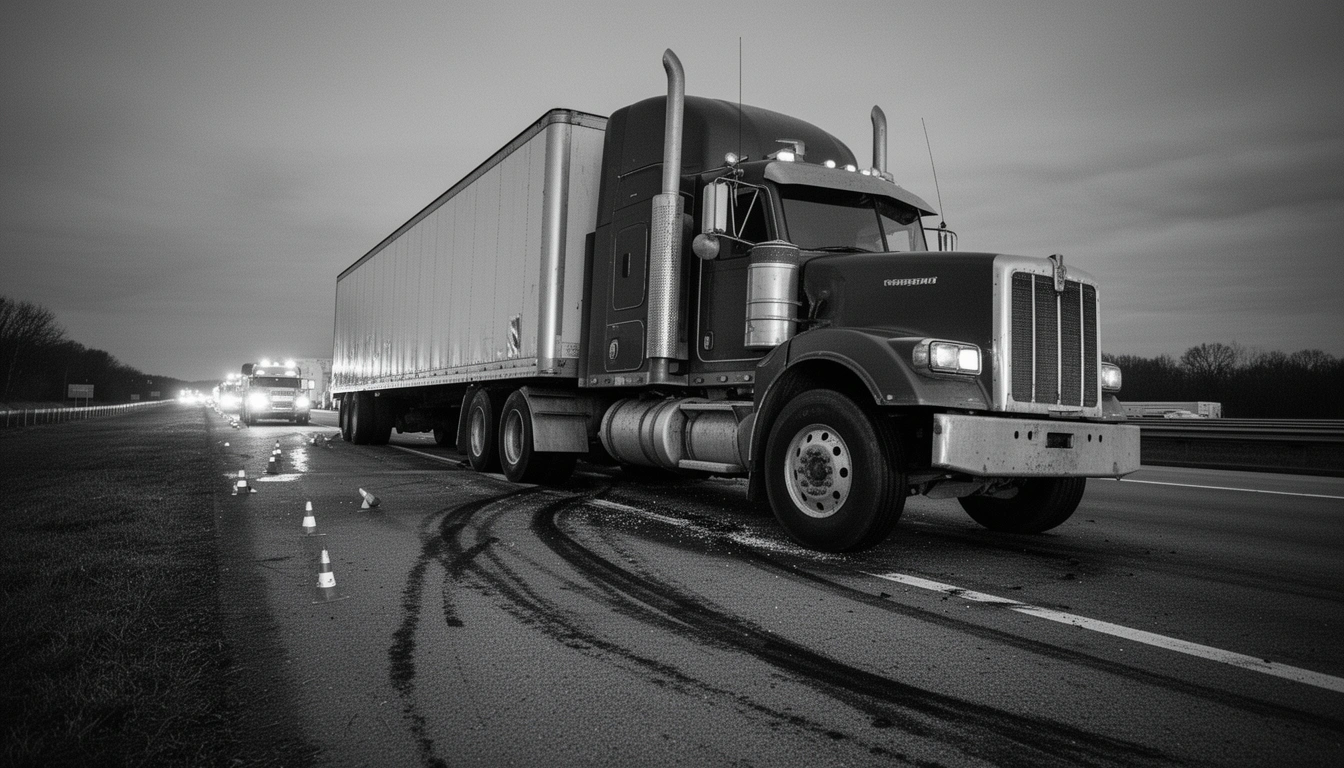
What Makes a Truck Accident Lawsuit Different From a Car Accident Claim
A truck accident lawsuit involves federal safety regulations and multiple corporate defendants that a typical car accident claim never touches. A loaded semi-truck can weigh 80,000 pounds. A passenger car weighs around 4,000. That weight gap shows up in the injuries, the insurance limits, and the number of parties who can be sued.
The Weight and Injury Gap
The size difference is not just a statistic. It is the reason these cases exist as their own legal category. A collision that would leave a fender dented in a car-on-car crash can cause traumatic brain injury, spinal damage, or death when a truck is involved.
What matters here is who absorbs that force. In a passenger-to-passenger crash, both vehicles share the impact roughly evenly. In a truck collision, the smaller vehicle absorbs almost all of it. A standard car accident lawsuit deals with comparable vehicles on both sides; a truck case rarely does.
Higher Insurance, Higher Stakes
Federal law sets minimum insurance requirements far above what a personal driver carries. Commercial trucks hauling general freight must carry at least $750,000 in liability coverage, and trucks hauling hazardous materials must carry up to $5 million. Compare that to the $15,000 to $50,000 minimums most states set for ordinary drivers.
| Vehicle Type | Typical Minimum Liability Coverage |
|---|---|
| Passenger vehicle | $15,000–$50,000 (varies by state) |
| Commercial truck, general freight | $750,000 |
| Commercial truck, oil transport | $1,000,000 |
| Commercial truck, hazardous materials | Up to $5,000,000 |
This is the core principle: more coverage available means more compensation possible, but it also means insurance companies fight harder to protect that money. They send investigators to the scene within hours. A victim without a lawyer is negotiating against a team that does this every day.
How Liability Works in a Truck Accident Case
Liability in a truck accident case can extend beyond the driver to the trucking company, maintenance contractor, cargo loader, or parts manufacturer. A car accident usually has one defendant. A truck accident often has four or five.
Who Can Be Held Responsible
The driver is the obvious starting point. But the trucking company often carries the larger exposure, especially if it employed the driver rather than hired them as a true independent contractor. Product liability lawsuit principles come into play too, when a defective brake, tire, or steering component caused or worsened the crash.
- The truck driver
- The trucking company or motor carrier
- The company that leased or owned the truck
- The cargo loading or shipping company
- The maintenance contractor
- The manufacturer of a defective part
Why Trucking Companies Try to Avoid Liability
Trucking companies sometimes classify drivers as independent contractors specifically to dodge vicarious liability. The pattern is familiar: a company dictates the driver’s routes, schedule, and equipment, then argues in court that the driver was never really an employee. Courts look past the label to the actual control the company exercised. If that control was extensive, the company stays on the hook regardless of what the paperwork says.
How Federal Regulations Prove Negligence
The Federal Motor Carrier Safety Administration sets safety rules that, when broken, can establish negligence automatically under a doctrine called negligence per se. This is where trucking cases diverge sharply from ordinary negligence claims.
What Negligence Per Se Means in Plain English
Under 49 C.F.R. Parts 350 through 399, the FMCSA controls hours of service, driver qualifications, vehicle maintenance, and drug testing for almost every interstate commercial truck. Under negligence per se, proving a specific regulation was violated does most of the legal work. The carrier cannot argue it was otherwise careful. The violation itself is the breach.
The Regulations That Show Up Most in Litigation
Here is where it gets complicated, because the FMCSRs cover thousands of specific rules. A handful drive most truck accident litigation.
Under 49 C.F.R. Part 395, most property-carrying drivers can drive 11 hours after 10 consecutive hours off duty, must take a 30-minute break after 8 hours, and cannot exceed 70 hours over 8 days. Fatigue from exceeding these limits is one of the most litigated causes of truck crashes.
Electronic Logging Devices have made these violations easier to prove. Since December 2019, most commercial trucks must record driving activity through an ELD rather than a paper logbook. The data is harder to falsify, and it creates a digital trail investigators can subpoena directly.
Under 49 C.F.R. Part 391, carriers must check an applicant’s driving record for the past three years, run a background check, and administer road tests before putting someone behind the wheel of a commercial vehicle.
Federal driver-licensing rules carry their own legal weight outside the courtroom too. The disruption from the DOT’s recent move to strip non-domiciled commercial driver’s licenses shows how unsettled the qualification rules for truck drivers can become, and how quickly a regulatory change can ripple into who is even legally allowed to be on the road.
Under 49 C.F.R. Part 396, carriers must conduct regular inspections and document pre-trip and post-trip checks. Brake failures, blown tires, and steering defects often trace back to a skipped inspection.
How a Lawyer Proves the Violation
An attorney typically subpoenas the driver’s logs, the carrier’s maintenance records, drug testing results, and the truck’s black box data. The FMCSA’s own Motor Carrier Management Information System can also show whether a company has a pattern of safety violations, not just a single bad day. A pattern is harder for a defense team to wave away as an isolated mistake.
What Compensation Looks Like
Compensation in a truck accident case typically covers medical bills, lost wages, pain and suffering, and, in fatal cases, wrongful death damages, often reaching settlements far higher than car accident claims. Severity drives the number more than any other factor.
What a Settlement Can Include
- Past and future medical treatment
- Lost wages and diminished earning capacity
- Pain and suffering
- Property damage
- Funeral and burial costs in wrongful death cases
- Punitive damages, in cases of willful or systemic violations
Most truck accident cases settle rather than go to trial. Settlement typically takes six to sixteen months from the date of the crash, depending on how quickly evidence is gathered and how willing the insurer is to negotiate in good faith. A case is more likely to reach trial when injuries are catastrophic, multiple parties dispute fault, or the insurer refuses a reasonable offer.
When Punitive Damages Apply
Punitive damages are rare and reserved for the worst conduct. Falsified ELD logs, a driver kept on the road despite a positive drug test, or a known defect left unrepaired can all support a punitive award on top of actual losses. These cases punish the company, not just compensate the victim.
Filing Deadlines and the Statute of Limitations
Most states give truck accident victims two to three years from the crash date to file a lawsuit, though deadlines range from one to six years depending on the state. This is the single most unforgiving rule in the entire process.
Why the Deadline Exists and Why It Doesn’t Bend
No discovery rule exception usually applies, because truck accident injuries are almost always immediately apparent. No court extends the deadline out of sympathy. File one day late, and the claim is barred regardless of how clear the trucking company’s fault was.
State Law Variations
Laws vary by state, and the difference can matter enormously to a real case. California and Texas set a two-year deadline. North Carolina allows three years. Missouri stands out with five years under Missouri Revised Statutes § 516.120. Minnesota and North Dakota allow six. A truck accident occurring in one state and litigated by a resident of another generally follows the law of the state where the crash happened, not the victim’s home state.
Shorter Deadlines for Government Trucks and Minors
A crash involving a government-owned truck, like a postal vehicle or a city garbage truck, often requires a notice of claim within 60 to 180 days under the Federal Tort Claims Act or the relevant state’s tort claims act. Miss that notice window, and the case can be barred before the standard statute of limitations even becomes relevant. Minors injured in a truck accident usually get the deadline paused until they turn 18, though a parent may still need to file separately for medical expenses within the regular timeframe.
Why Speed Matters Even When the Deadline Is Years Away
Critical evidence in a truck accident case can disappear within days or weeks, long before the statute of limitations would ever force a decision. The legal deadline and the practical deadline are two different things.
Evidence That Decays Fast
Driver logs are sometimes required to be kept for as little as six months. Black box data can be overwritten during routine truck operation. Witness memories fade. A trucking company facing a likely claim has no legal obligation to preserve favorable evidence on its own initiative.
The practical implication is this: an attorney can send a spoliation letter demanding the company preserve maintenance records, logbooks, and black box data immediately after a crash. Courts can sanction a company that destroys evidence after receiving that notice. Waiting months to send it gives the company room to claim the data was already gone before any duty to preserve existed.
State Law Variations in Practice
Beyond filing deadlines, states differ on fault rules, damage caps, and how wrongful death claims are handled, which can change the value of an otherwise identical case.
Comparative and Contributory Fault
Most states use comparative negligence, which reduces compensation by the victim’s percentage of fault rather than eliminating it. A small number of states still use contributory negligence, where being even 1% at fault can bar recovery entirely. This single rule can be the difference between a six-figure settlement and nothing.
Wrongful Death Rules
When a truck accident kills someone, the right to file often belongs to a spouse, child, or parent first. Some states require a court-appointed administrator if no will names an executor. A personal injury lawsuit filed by a survivor and a wrongful death claim filed on behalf of someone who died follow related but distinct rules, and a family can sometimes pursue both.
Common Misconceptions About Truck Accident Lawsuits
The biggest misconception is that a truck accident case works like a car accident case with a bigger truck involved, when the regulatory framework changes nearly every part of the process.
- “The insurance company will treat me fairly.” Commercial insurers investigate aggressively within hours of a crash specifically because the payouts are larger.
- “I have plenty of time to decide.” The filing deadline may be years away, but the evidence window is measured in weeks.
- “Only the driver can be sued.” The trucking company, maintenance contractor, and parts manufacturer are all potential defendants.
- “A traffic ticket means the case is already won.” A citation and an FMCSA violation are different things, and the federal violation typically carries more legal weight.
Key Takeaways
- Truck accident lawsuits involve higher insurance minimums, more potential defendants, and federal regulations that car accident cases never touch.
- A violation of an FMCSA regulation, such as hours-of-service limits, can establish negligence automatically under negligence per se.
- Most states allow two to three years to file, but deadlines range from one to six years and shrink to 60 to 180 days for government-owned trucks.
- Evidence like black box data and driver logs can disappear within weeks, making speed more urgent than the filing deadline alone suggests.
- Liability often extends beyond the driver to the trucking company, maintenance contractor, and parts manufacturer.
- This article provides general legal information, not legal advice. Consult a licensed attorney in your state about your specific case.
Frequently Asked Questions
Who can be sued in a truck accident lawsuit?
The driver, the trucking company, the maintenance contractor, the cargo loading company, and the manufacturer of a defective part can all potentially be named as defendants.
How long do I have to file a truck accident lawsuit?
Most states allow two to three years from the crash date, though deadlines range from one to six years depending on the state where the accident occurred.
What if the truck was owned by the government?
Claims against government-owned trucks often require a written notice of claim within 60 to 180 days, far shorter than the standard statute of limitations.
Does a traffic ticket prove the truck driver was at fault?
Not on its own. A traffic citation is separate from an FMCSA violation, and the federal violation typically carries more legal weight in court.
Can I still recover compensation if I was partly at fault?
In most states, yes. Comparative negligence reduces your compensation by your percentage of fault rather than barring recovery entirely.
How long does a truck accident settlement take?
Most cases settle within six to sixteen months, though catastrophic injuries or disputed liability can extend the timeline well beyond a year.
What is negligence per se in a truck accident case?
It is a legal doctrine where proving a trucking company violated a specific federal safety regulation automatically establishes negligence, without needing to argue the company was careless in general.
Can a trucking company avoid liability by calling the driver an independent contractor?
Not always. Courts look at how much control the company actually exercised over routes, schedules, and equipment, regardless of the driver’s official classification.

Leave a Reply