Toyota Motor Sales U.S.A. Inc. and its parent entities face three simultaneous class action lawsuits alleging they knowingly sold vehicles equipped with a defective UA80 eight-speed automatic transmission that overheats, burns fluid, and fails prematurely. Plaintiffs in Texas, California, and New Jersey allege the transmission’s mechanical and software defects put drivers at risk of sudden vehicle stalls and repair bills they should never have faced.
All three cases are pending in federal courts with no class certification granted and no settlement reached as of June 2026. Toyota has issued no recall for any of the affected vehicles and has not publicly responded to the filings. The cases name Toyota Motor Sales U.S.A. Inc., Toyota Motor North America Inc., and Toyota Motor Corporation as defendants.
- What: Three class action lawsuits allege Toyota’s UA80 8-speed transmission has a heat-related design defect compounded by defective software, causing premature failure.
- Who: Current and former Toyota and Lexus owners vs. Toyota Motor Sales U.S.A. Inc., Toyota Motor North America Inc., and Toyota Motor Corporation.
- Status: Ongoing — three active lawsuits in California, Texas, and New Jersey. No class certification. No settlement.
- Defects: Excess heat buildup burns transmission fluid; software forces premature upshifts and torque converter clutch engagement, accelerating wear and causing stalling.
- Settlement: Pending — no settlement reached as of June 2026.
- Eligibility: Current or former owners and lessees of affected 2017-present Toyota and Lexus models equipped with the UA80 transmission.
- Key date: Toyota’s internal awareness dates to August 2016; first consumer lawsuit filed December 1, 2025.
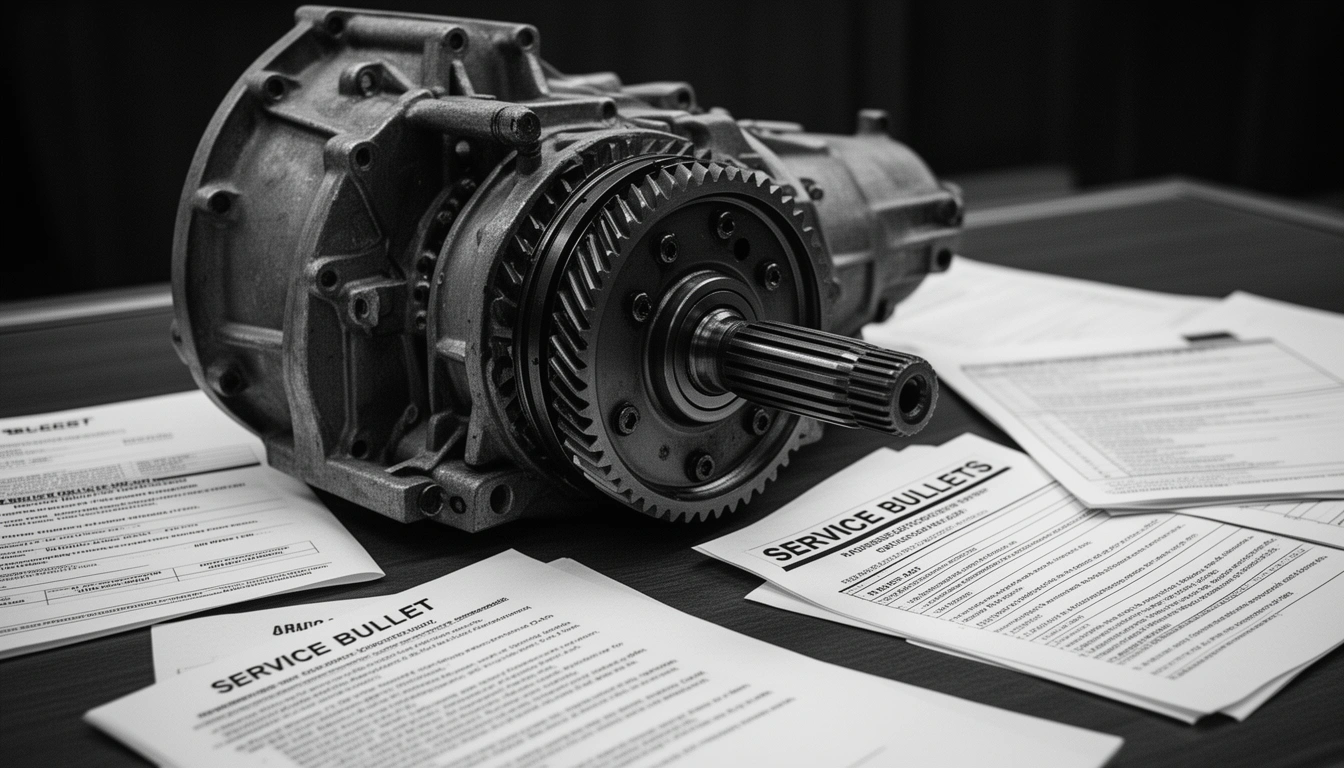
Toyota UA80 Transmission Lawsuit Timeline and Updates
August 2016 — Toyota’s First Internal Red Flag
Toyota issued Tech Tip T-TT-0410 on August 17, 2016, months before the UA80 reached dealership lots. This is the earliest document cited in all three class action complaints. It establishes that Toyota’s own engineers identified transmission behavior issues before the first affected vehicle was ever sold to a consumer.
2017 — UA80 Enters the Market
Toyota launched the direct-shift UA80 eight-speed automatic transmission as a replacement for its older six-speed gearbox. The redesign was marketed as a fuel economy achievement: 8 percent more efficient, 6 kilograms lighter, and 5 millimeters shorter than the outgoing unit. Toyota moved the valve body from the bottom surface of the transmission to the front, lowering each vehicle’s center of gravity and reducing the number of gear control components.
What Toyota did not disclose: those same design changes restricted heat dissipation inside the transmission in ways the previous six-speed architecture did not. The complaints filed in Texas and California both identify the valve body relocation as a root cause of the thermal buildup at the center of this litigation.
February to December 2017 — First Post-Launch Bulletins
Toyota issued service bulletin T-SB-0187-17 on February 20, 2017 and T-SB-0194-17 on March 2, 2017 — within weeks of the UA80 reaching consumers. By December 2017, Toyota issued T-SB-0330-17, covering Camry transmission behavior. Three separate bulletins in one year of deployment. Consumers received none of this information directly.
2018–2020 — A Decade’s Worth of Bulletins Accumulates
Toyota issued over a dozen additional service bulletins and tech tips between 2018 and 2020, covering the Highlander, Camry, Lexus RX 350, Lexus ES 350, and Avalon. Entries included T-SB-0001-18 (January 2018), T-SB-0010-18 (February 2018), T-SB-0160-18 (December 2018), Customer Support Program JZC (April 2019), T-SB-0107-19 (August 2019), T-SB-0105-20 (October 2020), and T-SB-0122-20 (December 2020). Each document addressed specific symptoms: unusual noises, rough shifting, fluid condition, early upshift behavior.
No recall followed. No consumer notification. No extended warranty. Each bulletin went to dealer service departments. Owners had no way to know it existed unless a dealer proactively disclosed it, which the complaints allege did not happen consistently.
2021–2023 — The Bulletins Keep Coming
Toyota issued T-SB-0008-21 in February 2021 and continued releasing additional guidance through 2023, ending with T-SB-0087-23 in November 2023, which again addressed Highlander transmission issues. By this point, the UA80 had been in consumer vehicles for six years. Owners were appearing at dealerships with transmission failures at 60,000 to 70,000 miles, often just past the powertrain warranty threshold.
December 1, 2025 — First Class Action Filed in California
Neil Pallaya filed the first known class action lawsuit in the U.S. District Court for the Central District of California, Case No. 2:2025cv10613. Pallaya’s 2020 Toyota Highlander began emitting a high-pitched whining noise at approximately 67,000 miles before complete transmission failure. The replacement cost was quoted at $7,400. After paying it, the replacement transmission developed the same problems as the original. His complaint seeks more than $5 million in damages.
December 20, 2025 — Texas Lawsuit Filed
James LeBoutheller filed suit in the U.S. District Court for the Eastern District of Texas, Case No. 4:25-cv-01389. LeBoutheller owned a 2020 Toyota Camry XSE purchased from a Nevada dealership. When transmission problems emerged, he brought the vehicle to an authorized Toyota dealer who held the car for 30 days and told him it was operating normally. A second dealer found aluminum particles in the transmission fluid — a sign of internal component shearing, not normal wear. Toyota agreed to cover the replacement transmission. It refused to pay for installation or labor, leaving LeBoutheller with thousands of dollars in costs Toyota declined to absorb.
February 17, 2026 — Third Lawsuit Filed in New Jersey
A third class action, Pszwaro, et al., v. Toyota Motor Sales U.S.A. Inc., et al., was filed in the U.S. District Court for the District of New Jersey, Case No. 1:2026cv01400. Attorneys Joseph Santoli, Esq., and Bruce H. Nagel, Esq. represent the plaintiffs, who include Edward Pszwaro (2024 Toyota Camry SE, New Jersey), Javier Diaz (2024 Lexus TX, New York), Amanda Peterson (2018 Toyota Camry XLE, Indiana), and Christopher Hovey (2023 Lexus ES 350, Indiana). Each reported transmission failures outside the warranty period, absorbing repair costs between $7,000 and $9,000.
June 2026 — Three Cases, No Recall, No Response
As of June 2026, three simultaneous class action lawsuits targeting the UA80 are active in federal courts across three states. Toyota has not filed a public response to any complaint, issued no recall, and announced no reimbursement program. Hundreds of thousands of UA80-equipped vehicles remain on U.S. roads.
What the Lawsuits Allege
Every complaint identifies the same two defects working in tandem to destroy the transmission.
The first defect is mechanical. The UA80’s redesigned architecture restricts heat dissipation inside the transmission housing. Excess heat burns the transmission fluid. Degraded fluid loses lubrication properties. Metal-on-metal contact inside the gear assembly increases. Components — gear sets, clutch packs, bearings — wear at an accelerated rate. When a component fails, the transmission can no longer stay in gear. The vehicle slips, hesitates, and stalls. Sometimes without warning. Sometimes at highway speed.
The second defect is in the software. The transmission control module, engine control module, and powertrain module are programmed to prioritize fuel economy by commanding early upshifts and frequent torque-converter clutch engagement. The torque converter clutch locks the engine directly to the transmission to reduce slip and improve efficiency. The problem: this cycling happens more often and at lower speeds than the hardware can sustain without overheating. The two defects drive each other. Heat accelerates wear. Wear is accelerated further by software that never lets the transmission run cool.
The lawsuits describe the result plainly. A defective UA80 may fail to engage or stay in gear, cause slipped gears, leak fluid, delay shifts, produce burning smells and unusual noises, and cause the vehicle to lose power entirely. None of that is a maintenance issue. All of it is a safety event.
The complaints further allege that Toyota knew about both defects before vehicles reached consumers, actively concealed the issues from buyers, denied warranty claims on technicalities, and instructed dealers to tell customers their vehicles were operating within specification when they were not.
Affected Vehicles — The Full List
The following models are named across the three class action complaints as equipped with the defective UA80 eight-speed automatic transmission assembly:
| Vehicle | Affected Model Years |
|---|---|
| Toyota Highlander | 2017 to present |
| Toyota RAV4 (gas-powered) | 2019 to present |
| Toyota Grand Highlander | 2023 to present |
| Toyota Camry | 2017 to 2024 |
| Toyota Sienna | 2017 to 2020 |
| Toyota Avalon | 2019 to 2022 |
| Lexus ES 350 | 2019 to present |
| Lexus ES 250 | 2021 to present |
| Lexus RX 350 | 2023 to present |
| Lexus NX 250 | 2022 to present |
| Lexus NX 350 | 2022 to present |
| Lexus TX 350 | 2024 to present |
The 2017 model year marks the first year the UA80 appeared in consumer vehicles across the Camry, Highlander, and Sienna platforms. Vehicles from those model years have had the most time to accumulate failures and are most represented in current complaints to the National Highway Traffic Safety Administration. Reports of high-pitched whining noises and premature failure are concentrated in the 2017 to 2022 Highlander and Camry, with failures occurring most commonly between 60,000 and 125,000 miles.
What Toyota Knew and When
This is where the case becomes most damaging for the automaker.
Toyota’s internal awareness of the UA80’s problems predates the transmission’s commercial launch. The first documented reference is Tech Tip T-TT-0410, issued August 17, 2016. That date matters: the 2017 Camry and Highlander, the first vehicles to carry the UA80, did not reach dealerships until later that year. Toyota’s engineers already had enough concern about the transmission’s behavior to issue internal technical guidance before any consumer ever drove one.
What followed was not a fix. It was documentation. Over the next seven years, Toyota issued more than 20 service bulletins and tech tips addressing UA80 transmission behavior across multiple vehicle platforms. The complaints in all three lawsuits reference this bulletin trail as the paper record of Toyota’s knowledge, and argue it constitutes evidence of ongoing concealment rather than good-faith remediation.
The pattern is familiar, and the 23andMe data breach lawsuit illustrates the same dynamic in a different industry: a company with documented internal awareness of a risk, continuing to market its product as trustworthy, and leaving consumers to absorb the consequences when the risk materializes. In Toyota’s case, the bulletin trail shows a company that knew. The absence of a recall shows a company that calculated it was cheaper not to act.
The complaint in the Eastern District of Texas goes further. It alleges Toyota received notice through internal data, customer complaints, dealer service records, and government safety submissions to the National Highway Traffic Safety Administration. All of it pointed in the same direction. None of it produced a recall.
The Science Behind the Defect
The UA80 was designed to achieve an 8 percent fuel efficiency gain over the previous six-speed transmission. The engineering team achieved this by making the transmission lighter, moving internal components to lower the vehicle’s center of gravity, and simplifying gear control by reducing the total number of components involved in gear changes.
Automatic transmissions generate heat during operation. They rely on transmission fluid to absorb and dissipate that heat while lubricating moving parts. The UA80’s redesigned geometry altered how heat moves through the transmission housing. The result, according to the complaints, is that heat builds up faster and lingers longer than the fluid is designed to manage.
The thermal cycle works like this: excess heat degrades the fluid. Degraded fluid loses viscosity and lubricating properties. Components that should glide against each other with a fluid film begin to make contact without adequate lubrication. Metal wears against metal. Aluminum particles shear off internal components and circulate in the fluid, causing further abrasion throughout the system.
The Texas plaintiff’s diagnostic visit at a second dealership confirmed aluminum particles in the transmission fluid. That finding is significant. Aluminum is present in key transmission components including the valve body, clutch drums, and torque converter housing. Aluminum particles in transmission fluid mean those components are disintegrating from the inside.
The software defect compounds the thermal problem. Toyota’s powertrain software prioritizes fuel efficiency by commanding the transmission to upshift at lower vehicle speeds and engage the torque converter clutch more frequently. The torque converter clutch eliminates slip between the engine and transmission, improving efficiency but increasing the thermal load on components that are already running too hot. The two defects are not independent: the software accelerates the rate at which the mechanical defect causes failure.
What Repair Costs Actually Look Like
Owners who have already paid for transmission replacements report bills between $7,000 and $9,000. These are not estimates. These are documented out-of-pocket costs from named plaintiffs in active federal litigation.
| Plaintiff | Vehicle | Failure Mileage | Out-of-Pocket Cost | Toyota Covered? |
|---|---|---|---|---|
| Neil Pallaya (CA) | 2020 Toyota Highlander | ~67,000 miles | $7,400 (first replacement) | No |
| James LeBoutheller (TX) | 2020 Toyota Camry XSE | Undisclosed | Labor and installation costs (Toyota covered parts only) | Partial |
| NJ Plaintiffs (four drivers) | 2018–2024 Toyota and Lexus models | Post-warranty | $7,000 to $9,000 | No |
The California plaintiff’s situation is particularly notable. After paying $7,400 for a replacement transmission, that replacement failed in the same way as the original. A second failed transmission means the replacement unit carries the same design flaw. Paying for a new UA80 does not fix the problem. It restarts the clock on the same defect.
These figures also exclude diminished vehicle value, rental costs during dealer holds that stretched up to 30 days, and diagnostic fees paid for service visits that produced written findings of “operating normally” before a second dealer confirmed internal component damage. The complaints seek recovery of all of it.
Why Toyota’s Warranty Offers Little Protection
Toyota’s powertrain limited warranty covers five years or 60,000 miles, whichever comes first. That is the boundary the lawsuits argue was designed to protect Toyota, not consumers.
Reported UA80 transmission failures are concentrated between 60,000 and 70,000 miles, with some occurring as early as 50,000 miles and others not until 125,000. The majority of documented failures sit directly at or just past the warranty threshold. An owner whose transmission fails at 62,000 miles is outside coverage by fewer than 2,000 miles. Toyota’s position, according to the complaints, has been to deny warranty coverage based on that threshold regardless of when symptoms first appeared or whether they were reported before the mileage limit was reached.
The New Jersey complaint calls Toyota’s warranty disclaimers “unconscionable and unenforceable” because Toyota allegedly knew of the latent defect when it wrote the warranty and knew the warranty term was short enough that failures would often occur after it expired. That argument, if accepted by the court, creates exposure under breach of implied warranty and fraud theories, not just product liability. The damages calculation under those theories is significantly broader.
The DOT non-domiciled CDL lawsuit points to the same structural problem from a different angle: when the rules governing vehicle operation create a gap between the harm consumers suffer and the remedies available to them, litigation becomes the only enforcement mechanism. That is exactly where the Toyota UA80 cases now stand.
Toyota’s Response
Toyota has not publicly responded to any of the three class action complaints as of June 2026. No recall has been issued. No reimbursement program exists. No extended warranty coverage has been announced for any of the affected vehicles.
Toyota’s communications on UA80 transmission behavior have been exclusively technical service bulletins distributed to authorized dealers. These documents are not disclosed to consumers. A Toyota owner whose vehicle is experiencing transmission problems would only know a relevant bulletin existed if a dealer chose to mention it, which the complaints allege was not the practice.
In the Texas case, Toyota’s own authorized dealer held the LeBoutheller vehicle for 30 days and reported no problem. A second authorized dealer then found aluminum particles in the fluid. The discrepancy between two dealers’ assessments of the same vehicle points to one of two conclusions: either Toyota’s diagnostic protocols for the UA80 are inadequate, or dealers are not consistently applying them. Neither reflects well on a company asking the court to believe it acted in good faith.
Who Can File a Claim
- You currently own or lease, or previously owned or leased, one of the affected Toyota or Lexus models listed in this article
- Your vehicle is a 2017 model year or later equipped with the UA80 eight-speed automatic transmission
- You experienced transmission symptoms: whining noise, slipping gears, harsh shifts, delayed engagement, stalling, burning smell, or fluid leakage
- You paid out-of-pocket repair costs for transmission work, or Toyota denied your warranty claim
- You are a U.S. resident, or the defect and repair occurred in the United States
The lawsuits seek to represent all current and former owners and lessees of listed vehicles in the United States. You do not need to have paid for a full transmission replacement. If a dealer told you the vehicle was operating normally and the problem persisted, if Toyota denied a warranty claim, or if you paid diagnostic fees for a problem that was never properly addressed, those experiences are relevant to the class definition the plaintiffs’ attorneys are seeking to establish.
No class certification has been granted yet. Until certification, there is nothing formal to join. Consulting a product liability attorney who handles automotive defect class actions is the most reliable way to understand your specific position as these cases develop.
What Plaintiffs Are Actually Going Through
The legal filings describe defects in mechanical and software terms. They do not fully capture what it costs a driver to navigate Toyota’s response to those defects.
Multiple owners report the same sequence. An unusual noise appears, usually a high-pitched whine. The vehicle goes to an authorized Toyota dealer. The dealer holds it for days, sometimes weeks. The written finding: operating normally. The owner drives home. The noise continues. The transmission deteriorates. Eventually it fails. Then comes the repair estimate: $7,000 to $9,000.
Some owners found a second dealer who identified the problem the first dealer missed. The LeBoutheller case followed exactly this pattern. Two authorized service centers. Two different findings on the same vehicle in the same condition. The second finding, aluminum particles in the fluid, was the one that reflected reality. But reaching that finding required persistence, time, and the willingness to pay for two separate diagnostic processes.
The California plaintiff went further. He paid $7,400 for a replacement transmission and got a second failure for his money. The replacement was the same design. The defect was the same. The only thing that changed was the odometer reading at which the second failure arrived.
That experience is what turns a product complaint into a lawsuit. Not the failure itself, but the response to it.
What This Lawsuit Teaches Consumers
The Toyota UA80 case is a lesson in what “reliability” means when an automaker issues two dozen internal service bulletins about a known problem and continues advertising the vehicle as dependable.
Service bulletins are not recalls. That distinction is not semantic. A recall requires notifying consumers and is frequently mandated by the National Highway Traffic Safety Administration under federal motor vehicle safety law. A service bulletin goes to dealer service departments. It tells technicians how to handle a documented issue if a customer raises it. The consumer has to know to complain. The dealer has to choose to apply the fix. And none of it creates the cost exposure for the manufacturer that a formal recall does.
Toyota issued more than 20 service bulletins about the UA80 over nine years. The vehicle continued selling. The warranty terms never changed. The marketing continued to emphasize reliability and engineering quality. Owners who experienced problems were often told those problems did not exist.
What consumers can take from this: documentation is protection. When your vehicle makes an unusual noise or behaves abnormally, get it in writing at the dealership. Ask the service adviser to document the symptom and their diagnosis in the repair order. If they tell you the vehicle is operating normally, ask them to note that finding in writing. Those words on a service receipt become the paper trail that class action attorneys use to demonstrate a pattern of concealment.
Toyota built the UA80 for fuel economy. The engineering team achieved that goal. The tradeoff was a transmission that runs too hot, wears too fast, and fails at mileage points that leave owners outside warranty coverage and facing five-figure repair bills. For nine years, Toyota managed that tradeoff with service bulletins. The courts are now managing it with litigation.
Read These
- Toyota data sharing lawsuit
- homeschool diploma lawsuit
- Starbucks class action lawsuit
- Chaturbate lawsuit
- UPS Teamsters lawsuit
Frequently Asked Questions
What is the current status of the Toyota UA80 transmission lawsuit?
As of June 2026, three class action lawsuits are active in federal courts in California, Texas, and New Jersey. No class certification has been granted, no settlement has been reached, and Toyota has not publicly responded to any of the complaints. No recall has been issued.
Which Toyota and Lexus vehicles are affected by the UA80 transmission defect?
Affected models include the 2017-present Toyota Highlander, 2019-present Toyota RAV4, 2023-present Toyota Grand Highlander, 2017-2024 Toyota Camry, 2017-2020 Toyota Sienna, 2019-2022 Toyota Avalon, 2019-present Lexus ES 350, 2021-present Lexus ES 250, 2023-present Lexus RX 350, 2022-present Lexus NX 250, 2022-present Lexus NX 350, and 2024-present Lexus TX 350.
Do I qualify to file a claim in the Toyota UA80 lawsuit?
You may qualify if you currently own or previously owned any of the listed Toyota or Lexus models, experienced UA80 transmission symptoms, paid out-of-pocket repair costs, or were denied warranty coverage. Consult a product liability attorney to evaluate your specific situation.
What are the symptoms of the UA80 transmission defect?
Reported symptoms include high-pitched whining noises, gear slippage, delayed gear engagement, harsh shifting, burning smells, transmission fluid leaks, loss of power, and sudden vehicle stalling. Failures are most commonly reported between 60,000 and 125,000 miles.
How much could I receive in a settlement?
No settlement has been reached, so payout amounts are not yet established. Plaintiffs are seeking reimbursement for transmission repair costs (documented at $7,000 to $9,000), diminished vehicle value, and related expenses. Final amounts will depend on class certification, litigation outcomes, and any settlement terms Toyota agrees to.
Why did Toyota issue service bulletins but not recall the vehicles?
Service bulletins go to dealers and instruct technicians how to handle known issues. They do not require consumer notification. A recall is a formal federal process that requires notifying owners and creates greater legal and financial exposure for the manufacturer. The plaintiffs argue Toyota chose bulletins over a recall precisely to avoid that exposure.
Can I still file if my warranty has already expired?
Yes. All named plaintiffs in the three lawsuits experienced failures after their warranties expired. The lawsuits specifically allege Toyota’s 5-year/60,000-mile warranty was structured to exclude most UA80 failures, which typically occur at or just past that threshold. An expired warranty does not prevent you from being a class member.
What is a class action lawsuit and how is it different from suing Toyota individually?
A class action groups plaintiffs with similar claims into a single case, handled by lead attorneys on behalf of the entire class. Individual plaintiffs do not appear in court separately. If a settlement is reached, all class members receive compensation under the terms. Individual lawsuits allow for larger personal recoveries but require separate legal proceedings and are rarely cost-effective for cases involving consumer product defects.
What documentation should I gather if my UA80 transmission has failed?
Preserve all dealer repair orders, service records, diagnostic findings, invoices, and any written communications with Toyota or authorized dealers. If a dealer told you the vehicle was operating normally in writing, that document is particularly valuable. Photographs of symptoms and records of when problems first appeared also strengthen your position.
If Toyota replaces my transmission and it fails again, does that strengthen my claim?
Yes, significantly. A second UA80 failure after a replacement indicates the design defect is in the transmission itself, not the specific unit that failed. The California plaintiff’s lawsuit is partly built on exactly this fact. A second failure under the same design is evidence that the replacement does not constitute a cure.
Are settlement payouts from product liability lawsuits taxable?
Typically, settlement amounts compensating for out-of-pocket expenses like repair costs are not taxable under federal law because they represent a return of money already spent. Amounts compensating for punitive damages or emotional distress may be taxable. Consult a tax professional once any settlement is reached, as individual circumstances vary.
Do I need to hire a lawyer to join the class action?
No. Class action lawsuits allow affected consumers to be included as class members without retaining individual counsel. If a settlement is reached, you would typically file a claim through an online portal or claim form. However, consulting an attorney is advisable if your losses are substantial, as individual representation may yield a better outcome than participation in the class settlement.

Leave a Reply