At 1:14 a.m. on July 4, 2025, the National Weather Service issued a flash flood emergency for Kerr County, Texas, declaring that “life-threatening conditions exist” and urging immediate movement to higher ground. Roughly 750 girls were asleep at Camp Mystic in Hunt, a historic all-girls Christian summer camp situated along the edge of the Guadalupe River — a stretch of Central Texas known as Flash Flood Alley. About 10 inches of rain fell in a matter of hours. The river rose 26 feet in 45 minutes. By morning, 27 campers and counselors were dead.
Five separate wrongful death lawsuits have now been filed arising from the disaster. The primary defendants are Camp Mystic LLC and members of the Eastland family, who have owned and operated the camp for decades. A parallel federal civil rights lawsuit targets six Texas Department of State Health Services officials for licensing the camp without a legally required evacuation plan. A criminal investigation by the Texas Rangers is active on the property. A trial date of April 2028 has been set in Travis County District Court for the Steward family case. Camp Mystic withdrew its application for a 2026 operating license on April 30, 2026, after two days of testimony before the Texas legislature and mounting pressure from state officials.
- What: 27 campers and counselors died when the Guadalupe River flooded Camp Mystic’s riverside cabins on July 4, 2025. Families allege the camp ignored warnings and ordered girls to shelter in place.
- Who: Families of at least 20 deceased campers and counselors vs. Camp Mystic LLC, the Eastland family, and related entities. Separate federal suit targets six Texas DSHS officials.
- Status: Multiple active wrongful death lawsuits in Travis County District Court. Federal civil rights suit pending in Western District of Texas. Texas Rangers criminal investigation ongoing. Trial set April 2028.
- Injuries: 27 deaths by drowning — 25 campers and 2 counselors. Camp owner and executive director Dick Eastland also died during the flood.
- Settlement: None reached. Cases are in early litigation phases.
- Eligibility: Families of the 27 deceased and potentially injured survivors. Texas wrongful death statute permits suits by surviving spouses, children, and parents.
- Key date: April 2028 trial date set in Steward v. Camp Mystic. Criminal investigation ongoing as of June 2026.
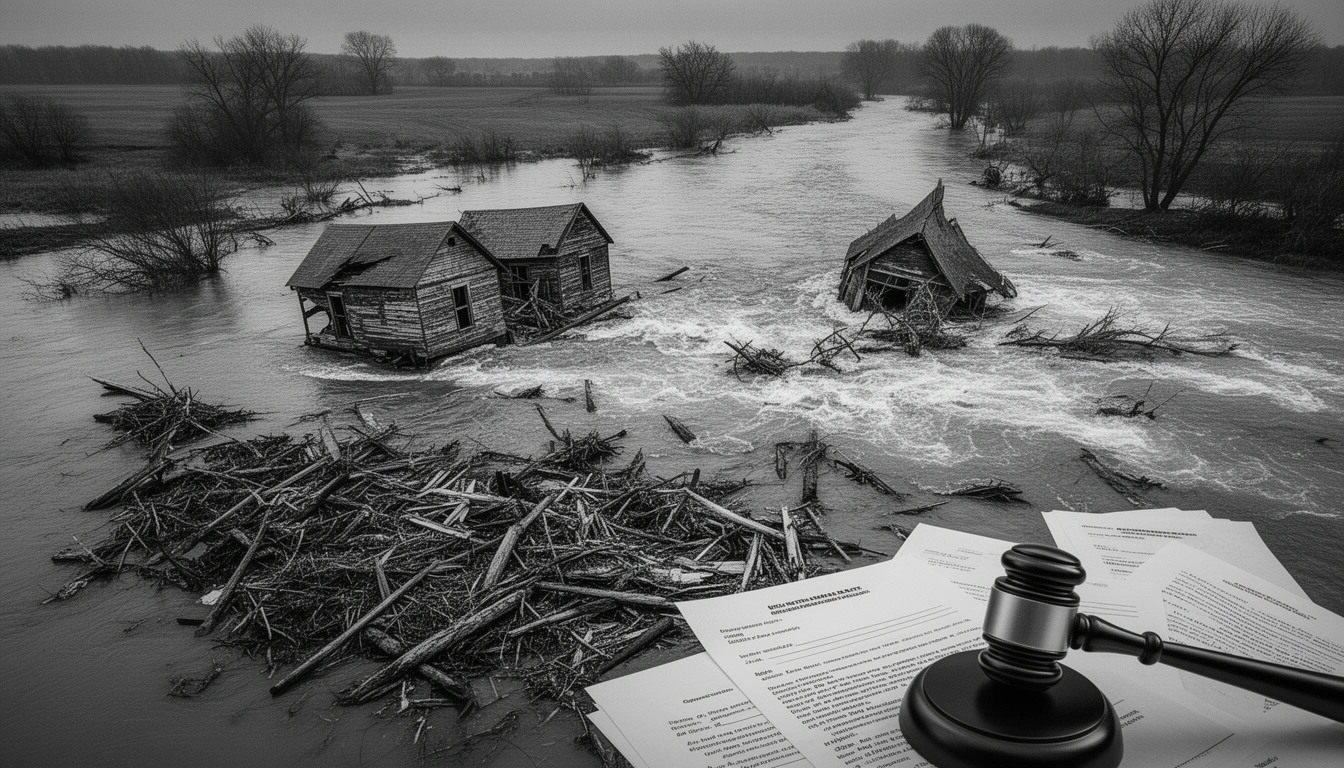
Camp Mystic Lawsuit Timeline and Updates
July 2–3, 2025 — Flood Warnings Begin
Starting July 2, 2025, the National Weather Service and the Texas Division of Emergency Management issued multiple flash flood alerts for the Hill Country region surrounding Hunt, Texas, and Kerr County. The warnings escalated through July 3 as rainfall totals climbed. Nearby Presbyterian Mo-Ranch Assembly noticed the Guadalupe River swelling around 1 a.m. on July 4, immediately evacuated approximately 70 children and adults to higher ground, and reported no injuries. All were accounted for before any official evacuation order.
At Camp Mystic, approximately 750 campers were in their second summer session. Cabins in a low-lying area called “the flats” — some located fewer than 250 feet from the river’s edge — housed the camp’s youngest girls, many 7 and 8 years old. Plaintiffs allege no evacuation was ordered despite the incoming warnings.
July 4, 2025 — The Flood Strikes
At 1:14 a.m., the National Weather Service issued its flash flood emergency: life-threatening conditions, move immediately to higher ground. The Guadalupe River rose 26 feet in 45 minutes. About 10 inches of rain had fallen in just a few hours. The surge swept through the camp’s riverside cabins. Lawsuits allege that camp counselors, following orders from leadership, told girls to “settle down and go back to sleep” as thunder intensified, and later directed campers in the flat cabins to shelter in place even as water rose.
Some campers defied those instructions, escaped to higher ground yards away, and survived. The youngest girls in the lowest cabins did not. According to court filings, staff managed to evacuate five of the eleven cabins in the flats. Most of the 27 deaths occurred in two cabins built closest to the river. Camp owner and executive director Richard “Dick” Eastland, 74, died during the flood, reportedly while attempting to enter one of the flooding cabins to help evacuate girls.
The first 911 call from the camp was placed nearly three hours after the initial 1:14 a.m. flash flood warning, and roughly 20 minutes after the National Weather Service’s second warning at 3:36 a.m. By the time emergency responders could access the camp, the Guadalupe River had already torn through the grounds. Roads had washed out. The highway was gone. Over 100 game wardens and aviation personnel attempted to reach the site beginning around 3 a.m. and were able to begin rescues by midday.
July 5–9, 2025 — Search and Rescue, Death Toll Climbs
As of the morning of July 5, 27 girls remained missing from Camp Mystic. National search teams arrived. Divers worked the Guadalupe River downstream. In the broader Kerr County flood disaster, authorities eventually confirmed 75 deaths — 48 adults and 27 children. The statewide death toll from the July 4 flooding exceeded 100. Twenty-six of the 27 Camp Mystic victims were ultimately recovered. The body of 8-year-old Cecilia “Cile” Steward has never been found. As of June 2026, recovery efforts for Cile are ongoing.
Camp Mystic confirmed in a statement that it was “grieving the loss of 27 campers and counselors.” The 27 victims ranged in age from 7 to young adult. They came from Dallas, Houston, San Antonio, Bellville, and communities across Texas.
November 2025 — First Wrongful Death Lawsuits Filed
In November 2025, families of 20 of the 27 deceased filed wrongful death lawsuits in Travis County District Court. Among them, the Lanier Law Firm filed on behalf of six families on November 11: Virginia “Wynne” Naylor, Hadley Hanna, and Jane “Janie” Hunt of Dallas; Lucy Dillon of Houston; Kellyanne Lytal of San Antonio; and Virginia Hollis of Bellville. All six were 8 or 9 years old at the time of their deaths.
A separate lawsuit filed the same week alleged gross negligence by the camp and named five camper families and two counselor families as plaintiffs. Attorney Mark Lanier stated: “These six families entrusted Camp Mystic with the lives of their 8 and 9-year-old daughters, but the owners failed in every conceivable way.”
December 2025 — Lulu Peck Lawsuit Filed
The family of 8-year-old Eloise “Lulu” Peck filed a separate wrongful death lawsuit in Travis County. A CNN investigation into the case described Lulu as having drawn a picture weeks before the flood of rising water and black skies. A camp van carrying families attempting to flee was found submerged, smashed against a tree; all inside were killed.
February 2026 — Steward Family Sues to Block Reopening
On February 4, 2026, Will and CiCi Steward — the parents of Cile, whose body remains missing — filed a 108-page wrongful death petition in Travis County District Court. The suit became the fifth wrongful death action against the camp. It named Camp Mystic LLC, members of the Eastland family, and related entities as defendants. The Stewards simultaneously sought an injunction to prevent Camp Mystic from reopening and to preserve the flood site as evidence, citing an ongoing Texas Rangers criminal investigation.
The petition alleged the camp had “ignored a century of warnings” about catastrophic flooding on its riverside property, prioritized commercial operations over safety, housed children in a FEMA-designated Special Flood Hazard Area without disclosing that designation to parents, and failed to have a legally required written evacuation plan posted in each cabin.
February 23, 2026 — Federal Civil Rights Lawsuit Against State Officials
Families of nine of the deceased filed a federal lawsuit in the U.S. District Court for the Western District of Texas, Austin Division, against six Texas Department of State Health Services officials in their individual capacities: Commissioner Jennifer Shuford, Timothy H. Stevenson, Jeffrey Adam Buuck, Annabelle Dillard, Lindsey Eudey, and inspector Maricela Torres Zamarripa.
The lawsuit alleged DSHS had licensed and repeatedly renewed Camp Mystic’s operating permit despite the camp’s failure to maintain a written evacuation plan as required by Texas law — and that state inspectors, including Torres Zamarripa, had conducted annual inspections and either missed or ignored the absence of that plan. The complaint advanced two Fourteenth Amendment substantive due process claims: state-created danger and bodily integrity violations. Plaintiffs sought compensatory damages and alleged the officials had deprived the victims of their “constitutional rights to life and bodily integrity.”
March–April 2026 — Injunction Hearings, Camp Seeks to Reopen
In March 2026, Camp Mystic announced plans to reopen its Cypress Lake campus, a separate site from the flood deaths, for summer 2026. The Eastland family applied for a license renewal with DSHS before the March 31 application deadline. The Steward family returned to Travis County District Court seeking an emergency injunction to block any reopening and to halt repairs or demolition of flood-damaged structures.
Travis County District Judge Maya Guerra Gamble, assigned to the Steward case, held hearings in March and April 2026. She ordered Camp Mystic to preserve all structures affected by the floodwaters and to refrain from altering, demolishing, or removing them — protecting evidence for the ongoing criminal investigation and civil trial. Texas Lt. Governor Dan Patrick urged DSHS not to issue a 2026 camping license. Investigators testified about a lack of staff training and “complacency” at the camp. Edward Eastland, son of the deceased Dick Eastland and current camp director, testified over multiple days.
April 30, 2026 — Camp Mystic Withdraws License Application
Under mounting pressure from state officials, families, and regulators, Camp Mystic withdrew its 2026 license renewal application on April 30, 2026. In a statement, camp officials cited ongoing grief, investigations, and legal proceedings. “Rather than risk defending our rights under Texas law in a manner that may unintentionally effect further harm,” the camp stated, “we choose rather to withdraw our application for the 2026 camp season.”
The Steward family was unsparing in response. “It was a calculated exit from a license they were about to lose,” Cici and Will Steward wrote. “The Eastland family withdrew their license to operate before the State of Texas yanked it from them.” Judge Gamble’s injunction preserving the flood site remained in place. A trial date of April 2028 is set in the Steward case.
What the Lawsuits Allege — The Core Claims
Failure to Evacuate and Shelter-in-Place Orders
The most damaging allegation across every lawsuit is direct: when floodwaters began rising, camp leadership directed counselors to tell campers to stay in their cabins. The National Weather Service had issued a life-threatening emergency warning by 1:14 a.m. Nearby Mo-Ranch began evacuating at 1 a.m. without any official order and saved everyone. Camp Mystic, plaintiffs allege, did the opposite. Girls who disobeyed and ran for higher ground survived. Girls who stayed in the lowest cabins died.
Court filings detail that staff only managed to evacuate five of the eleven flat cabins before the surge hit. Most of the 27 deaths were concentrated in two riverside cabins. The question at the center of every lawsuit is whether those deaths were preventable — and whether the hours between the first warning and the first 911 call represent negligence, recklessness, or something worse.
Cabins in a FEMA Floodplain — Concealed From Parents
The Lanier Law Firm lawsuit alleges that FEMA maps designated Camp Mystic’s riverside cabin area as a Special Flood Hazard Area, meaning it carries a statistically significant flood risk. Parents, the lawsuit says, were never told their daughters’ sleeping cabins sat inside that flood zone. The filing also alleges the Eastland family had previously petitioned to remove certain cabins from floodplain designations — a move plaintiffs say was motivated by reducing insurance costs, not improving safety.
The camp has a documented history of flooding. The Guadalupe River corridor in Kerr County has flooded catastrophically multiple times. Plaintiffs argue that a century of warnings existed — geological, historical, and regulatory — and that the camp proceeded with overnight occupation of riverside cabins anyway, season after season, without warning the families who entrusted it with their daughters.
No Written Evacuation Plan — The Regulatory Failure
Texas law requires licensed youth camps to have written emergency plans posted in each cabin. The federal civil rights lawsuit against the six DSHS officials alleges that Camp Mystic had no such plan, and that state inspectors either failed to identify that deficiency or actively overlooked it during annual inspections. The camp’s instructions, according to the lawsuit, directed campers to shelter in place during flooding — the opposite of an evacuation protocol. DSHS licensed the camp repeatedly despite this alleged noncompliance.
Gross Negligence and the Question of Recklessness
Every wrongful death filing includes counts of both negligence and gross negligence. In Texas, gross negligence requires showing that the defendant’s conduct involved an extreme degree of risk and that the defendant was consciously indifferent to that risk. Plaintiffs argue the camp’s pattern of behavior — operating riverside cabins in a flood zone, lacking an evacuation plan, issuing shelter-in-place orders during an active flood emergency — crossed the line from carelessness into recklessness. Gross negligence findings in Texas can support exemplary damages awards beyond actual damages.
The 27 Victims
Twenty-five of the 27 victims were campers. Two were counselors. Their ages ranged from 7 to young adult. They came from across Texas, including Dallas, Houston, San Antonio, Bellville, and Austin. Named plaintiffs across the five lawsuits include: Virginia “Wynne” Naylor, Hadley Hanna, Jane “Janie” Hunt, Lucy Dillon, Kellyanne Lytal, Virginia Hollis, Eloise “Lulu” Peck, Cecilia “Cile” Steward (body never recovered), Linnie McCown, and Renee Smajstrla. Other families have joined the litigation but not all names have been publicly reported at this stage of proceedings.
Camp owner Richard “Dick” Eastland also died during the flood, reportedly while attempting to enter one of the flooding cabins. His son, Edward Eastland, has taken over as camp director and has testified in court proceedings.
The Contrast That Defines the Case
The most powerful single fact in this litigation is not a legal argument. It is a comparison. Presbyterian Mo-Ranch Assembly sits near Hunt, along the same Guadalupe River corridor. On the night of July 3–4, Mo-Ranch’s facilities manager noticed the river swelling around 1 a.m. and alerted leadership. With no official warning yet issued, Mo-Ranch began evacuating approximately 70 children and adults to higher ground immediately. All were accounted for. No injuries. No deaths.
Camp Mystic had more warning time. It had more resources. It had a formal safety inspection process administered by the state. The contrast in outcomes is not subtle, and plaintiffs’ attorneys have made it central to their case. What Mo-Ranch did in the dark, without an official warning, in under an hour, the camp allegedly failed to replicate despite hours of escalating alerts from state and federal agencies.
The Criminal Investigation
The Texas Rangers opened a criminal investigation into the Camp Mystic deaths. An active ranger filed an affidavit in the Steward civil case confirming the investigation is ongoing and that preserving the flood site as physical evidence is necessary. The investigation’s scope and potential charges have not been publicly confirmed. Judge Gamble’s preservation order ensures the flood-damaged cabin structures remain intact pending both the criminal investigation’s conclusion and the April 2028 civil trial.
No criminal charges have been filed as of June 2026. The investigation’s timeline depends in part on the legislative inquiry being conducted by the Texas Senate and House General Investigating Committee, which was expected to produce a report by early summer 2026.
Camp Mystic’s History and What It Reveals
Camp Mystic was founded in 1926 — nearly a century before the flood. It has operated continuously on the Guadalupe River in Kerr County and has served generations of Texas families. For many parents, sending a daughter to Camp Mystic was itself a family tradition. That history is double-edged. It speaks to the camp’s deep cultural roots in Texas. It also establishes that the property’s flood vulnerability was not a surprise — 100 years of operations on a river in Flash Flood Alley created a documented record of that risk.
Plaintiffs have cited that history as evidence that the Eastlands were not blindsided by a once-in-a-century weather event. They were operating in a location that has flooded catastrophically before, on a river that regulators and geographers have long identified as among the most flood-prone in the country. The question the lawsuits ask is not whether the flood was predictable. It is whether the deaths were preventable.
Families navigating wrongful death claims in disaster settings may also want to follow the Astroworld lawsuit, where organizers similarly continued an event despite active danger signals, resulting in 10 deaths and mass litigation. The State Farm homeowner lawsuit raises parallel questions about what property owners and their insurers are obligated to disclose about known hazard risks. For context on how gross negligence allegations proceed through Texas courts, the MyChart class action illustrates how institutional failures affecting large populations of vulnerable individuals reach resolution through coordinated litigation.
What This Lawsuit Teaches Consumers
Camp Mystic is a case about what adults owe children when they accept care of them in a dangerous environment. Parents sent their daughters to a camp they trusted, in a location they did not know was inside a federal flood zone, with no reason to believe their children’s sleeping quarters lacked evacuation plans required by state law. None of that information was disclosed. The state inspector who visited annually either did not find the missing evacuation plan or did not act on it. The camp continued to fill those riverside cabins every summer.
The practical lesson for parents is not to distrust summer camps. It is to ask specific questions before enrollment: Where are the sleeping cabins located relative to water sources? Is the property in a FEMA flood zone? What is the written emergency plan for flood conditions? Is that plan posted in each cabin? Who decides when to evacuate, and what triggers that decision? Mo-Ranch answered those questions correctly on the night of July 3–4, without an official warning, and lost no one. The answers to those questions determine who survives.
For regulators, this case poses a harder challenge. Texas law required evacuation plans. DSHS inspectors visited Camp Mystic annually. The plans were apparently not there, or not adequate, or not enforced. The federal civil rights lawsuit asks a court to assign personal liability to the officials who signed off on those licenses. That is new legal territory for youth camp regulation — and whether it succeeds or fails, the question it asks will shape how states inspect and license camps that house children in flood-prone locations for generations to come.
Frequently Asked Questions
What happened at Camp Mystic on July 4, 2025?
The Guadalupe River surged 26 feet in 45 minutes after approximately 10 inches of rain fell in a few hours. Floodwaters swept through riverside cabins at Camp Mystic in Hunt, Texas, killing 25 campers and 2 counselors. 750 girls were at the camp at the time.
How many people died at Camp Mystic?
27 campers and counselors died. Camp owner and executive director Richard ‘Dick’ Eastland also died reportedly while attempting to evacuate cabins. The body of 8-year-old Cile Steward has not been recovered as of June 2026.
What does the Camp Mystic lawsuit allege?
The wrongful death lawsuits allege camp leadership ignored hours of flood warnings, ordered girls to shelter in place instead of evacuating, housed children in a FEMA-designated floodplain without disclosing that to parents, and had no written evacuation plan as required by Texas law.
Who filed the Camp Mystic lawsuit?
Families of at least 20 of the 27 victims have filed lawsuits. Named law firms include the Lanier Law Firm and Robinson & Henry. The Steward family filed a 108-page petition seeking to prevent the camp from reopening. A federal civil rights suit was filed by families of nine victims against six Texas DSHS officials.
What is the current status of the Camp Mystic lawsuit?
Multiple wrongful death cases are active in Travis County District Court. A federal civil rights case is pending in the Western District of Texas. A Texas Rangers criminal investigation is ongoing. Camp Mystic withdrew its 2026 operating license application on April 30, 2026. A civil trial is set for April 2028.
Why was Camp Mystic not evacuated before the flood?
Lawsuits allege camp leadership issued shelter-in-place orders rather than evacuations despite flash flood warnings beginning at 1:14 a.m. Survivors reported counselors told them to go back to sleep. Staff evacuated only 5 of 11 flat cabins before the surge hit.
What is the state lawsuit against Texas DSHS officials about?
Families of nine victims filed a federal civil rights lawsuit against six Texas DSHS officials alleging they licensed Camp Mystic for years despite it lacking a mandatory written evacuation plan posted in each cabin, as required by state law. The suit claims this deprived victims of constitutional rights to life and bodily integrity.
Is Camp Mystic reopening in 2026?
No. Camp Mystic withdrew its 2026 operating license application on April 30, 2026, following two days of legislative testimony, pressure from the Texas governor and lieutenant governor, and an ongoing judicial review. Camp Mystic Cypress Lake, a separate site, was separately evaluated.
What is the difference between negligence and gross negligence in this case?
Negligence means failing to act with reasonable care. Gross negligence requires showing the conduct involved extreme risk and conscious indifference to that risk. Proving gross negligence in Texas can support exemplary (punitive) damages on top of actual wrongful death damages.
Can families of Camp Mystic victims still file lawsuits?
Texas has a two-year statute of limitations for wrongful death claims, running from the date of death. The disaster occurred July 4, 2025, meaning the standard deadline is July 4, 2027. Families who have not yet filed should consult a Texas wrongful death attorney promptly.
What is the Mo-Ranch comparison and why does it matter?
Presbyterian Mo-Ranch Assembly, located near Camp Mystic on the same river, began evacuating 70 people to higher ground around 1 a.m. — before any official warning was issued — and reported zero injuries. Plaintiffs argue this proves the deaths at Camp Mystic were preventable, not inevitable.
Is there a criminal investigation into Camp Mystic?
Yes. Texas Rangers opened a criminal investigation into the deaths. An active ranger filed an affidavit in the Steward civil case confirming the investigation is ongoing and that the flood site must be preserved as evidence. No criminal charges have been filed as of June 2026.

Leave a Reply