Jon Gruden sued the NFL and Commissioner Roger Goodell in November 2021, weeks after resigning as Las Vegas Raiders head coach over emails containing racist, homophobic, and misogynistic language. Gruden does not dispute writing the emails. He alleges the league orchestrated a “malicious and orchestrated campaign” to selectively leak his private correspondence and destroy his career, walking away from more than six years and roughly $60 million remaining on his contract.
The case is pending in Nevada’s Eighth Judicial District Court, Clark County, after the Nevada Supreme Court ruled twice that Gruden cannot be forced into NFL-controlled arbitration. A trial date is now set for May 2027. Gruden’s attorneys have indicated his claimed losses exceed $150 million.
- What: Gruden alleges the NFL selectively leaked his old emails to force his resignation and destroy his coaching career.
- Who: Jon Gruden vs. the National Football League and Commissioner Roger Goodell.
- Status: Ongoing. Trial scheduled for May 2027 in Clark County, Nevada.
- Claims: Intentional interference with contractual relations, tortious interference with prospective economic advantage, negligence, negligent hiring, negligent supervision, civil conspiracy, and aiding and abetting.
- Damages sought: Gruden’s attorneys claim losses exceeding $150 million.
- Settlement: None reached. No trial verdict yet.
- Key date: August 11, 2025 — Nevada Supreme Court ruled 5-2 that the NFL’s arbitration clause does not apply to Gruden, clearing the case for open court.
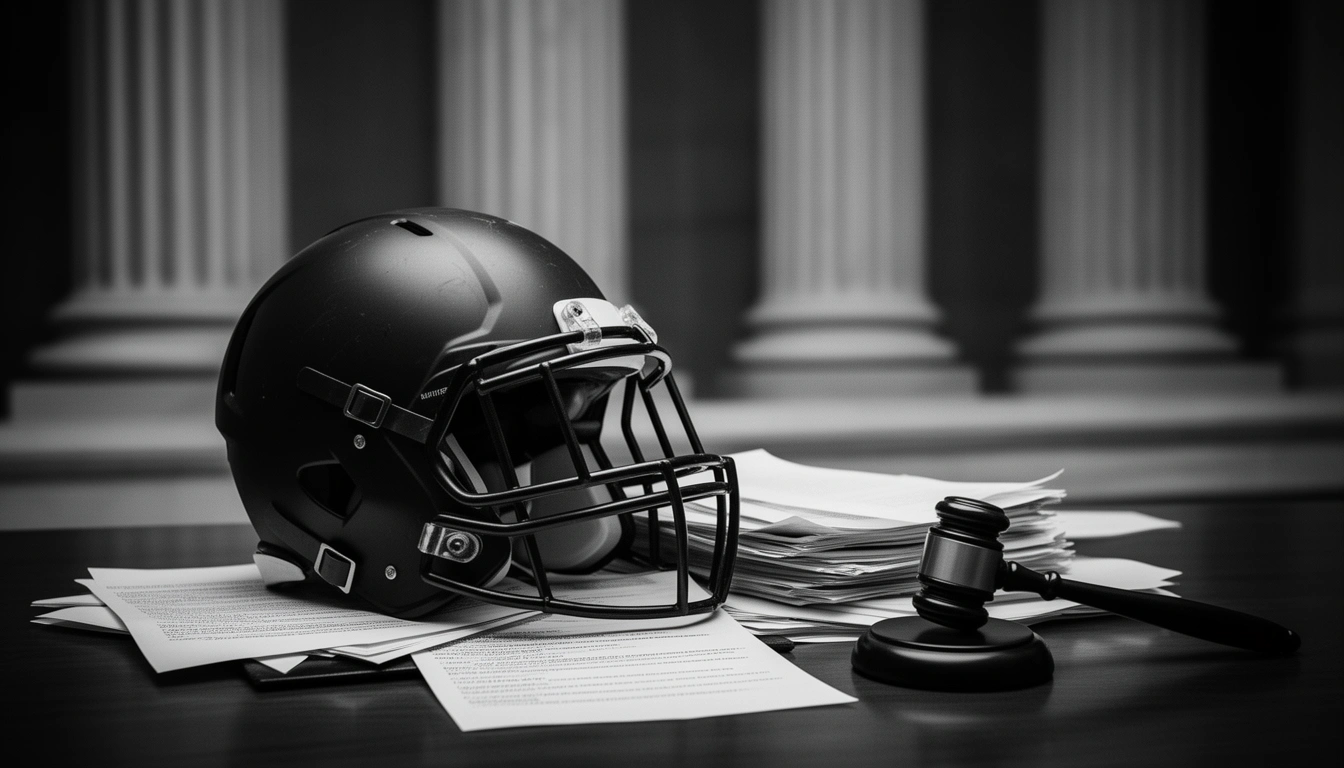
Jon Gruden NFL Lawsuit Timeline and Updates
2011–2018 — The Emails Are Written
Gruden sent the emails while working as an ESPN analyst, not as an NFL employee. The recipient was Bruce Allen, then an executive with the Washington Commanders. One 2011 email used a racist trope describing then-NFLPA president DeMaurice Smith, who is Black.
Additional emails sent between 2011 and 2018 contained homophobic and misogynistic language. Gruden has never disputed authorship or content.
2020 — The NFL Launches the Commanders Investigation
The league commissioned an internal investigation into the Washington Commanders organization under former owner Daniel Snyder. That investigation reviewed roughly 650,000 workplace emails as part of its scope.
Gruden was not the subject of that investigation. He was not employed by the NFL at any point the emails covered. His messages surfaced only because Bruce Allen, the recipient, was a person of interest in the broader review.
October 2021 — Emails Leak to the Wall Street Journal and New York Times
The Wall Street Journal first published Gruden’s 2011 email. The New York Times followed with additional reporting revealing Gruden had used derogatory language repeatedly across years of correspondence, not in a single isolated message.
Gruden resigned as Raiders head coach on October 11, 2021. He walked away from a 10-year, $100 million contract with more than six seasons remaining.
November 2021 — Gruden Files Suit in Clark County District Court
Gruden sued the NFL and Commissioner Roger Goodell in Nevada’s Eighth Judicial District Court, exactly one month after his resignation. The 21-page complaint alleged the league pursued a deliberate campaign to selectively leak his private correspondence and force him out.
The complaint listed seven causes of action: intentional interference with contractual relations, tortious interference with prospective economic advantage, negligence, negligent hiring, negligent supervision, civil conspiracy, and aiding and abetting. Each count sought damages “in excess of $15,000,” the minimum threshold for filing in that court, not Gruden’s actual claimed losses.
November 2021 — NFL Responds Publicly
NFL spokesperson Brian McCarthy called the allegations “entirely meritless” and said the league would “vigorously defend against these claims.” That posture has not shifted in the four years since.
Gruden’s attorney Adam Hosmer-Henner framed the case differently from the outset: the lawsuit was about who selectively leaked private correspondence and why, not about whether the content of the emails was offensive.
May 2022 — Judge Allows the Claim to Proceed on Specific Intent
A Clark County judge ruled that Gruden’s allegation, that the league intentionally leaked only his documents out of the 650,000-email Commanders investigation, could support a claim of specific intent to cause a particular result. That ruling rejected the NFL’s first attempt to dismiss the case outright.
The NFL appealed to the Nevada Supreme Court, arguing Gruden’s claims belonged in private arbitration under the NFL Constitution rather than in open court.
May 2024 — A Three-Justice Panel Sides With the NFL
A three-judge panel of the Nevada Supreme Court ruled the case should be arbitrated, not litigated in court. Two justices found Gruden understood the NFL Constitution’s arbitration clause when he became a head coach. One justice dissented, calling it “outrageous” to let Goodell arbitrate a dispute naming Goodell himself as a defendant.
That dissent previewed the argument that would ultimately prevail. Gruden’s team appealed the panel’s ruling to the full seven-justice court.
August 11, 2025 — Nevada Supreme Court Rules for Gruden, 5-2
The full Nevada Supreme Court reversed the panel decision in a 5-2 ruling. The arbitration clause in the NFL Constitution, the court held, “is unconscionable and does not apply to Gruden as a former employee.”
The majority found it unconscionable that the clause let the commissioner “arbitrate disputes about his own conduct, exactly what is at issue here.” The court also flagged that the league could amend its own constitution, including the arbitration clause, “at any time, and without notice.” That combination, a self-interested arbitrator and a unilaterally revisable governing document, doomed the clause’s enforceability against a former employee.
October 2025 — NFL’s Rehearing Bid Rejected Unanimously
The NFL asked the full court to rehear its own decision. The Nevada Supreme Court rejected that request unanimously, 7-0. The justices did not rule on whether Gruden’s underlying claims were true. They ruled only that the case belongs in public court, not private arbitration.
The NFL’s remaining appellate option, the U.S. Supreme Court, accepts a small fraction of petitions it receives. The league filed anyway.
October 24, 2025 — Case Returns to State Court; NFL Seeks Dismissal Again
With the arbitration question resolved against it, the NFL filed new motions in Clark County District Court seeking dismissal on the merits. The league’s filing used unusually direct language, accusing Gruden of “wrongly blaming the NFL and its Commissioner for the consequences of the racist, misogynistic, and homophobic emails Gruden authored and widely distributed.”
The NFL’s motion leaned heavily on Nevada’s anti-SLAPP statute, arguing the league’s communication of Gruden’s own unaltered emails to the media was protected First Amendment activity that cannot support tort liability.
December 2025 — Judge Hardy Denies the NFL’s Motions
Clark County District Court Judge Joe Hardy denied several NFL motions seeking to stall or dismiss the case, including the anti-SLAPP motion. The case moved forward toward discovery.
That ruling meant Gruden’s team could begin seeking documents and testimony the NFL had spent four years trying to keep out of a public record.
February 2026 — Gruden’s Team Targets Goodell, Owners for Testimony
Gruden’s attorneys filed paperwork identifying a sweeping list of individuals they intend to seek testimony and documents from: Commissioner Roger Goodell, Raiders owner Mark Davis, Cowboys owner Jerry Jones, Patriots owner Robert Kraft, and other current and former NFL executives.
The filing also sought to have the NFL retain all 650,000 documents tied to the original Commanders investigation. A separate Case Conference Report, filed February 4, identified Gruden’s claimed losses as exceeding $150 million, covering lost employment, diminished future coaching opportunities, lost contract value, lost sponsorships, and reputational injury.
March 31, 2026 — Trial Date Set for May 2027
The court scheduled jury trial to begin in May 2027, more than five and a half years after Gruden first filed suit. The NFL has continued to argue that pending appeals should pause further proceedings, a position the trial court has not accepted as grounds to delay discovery.
Why the Arbitration Fight Mattered More Than the Underlying Claims
Here is what matters most in this case: for nearly four years, the central legal battle was never about whether the NFL leaked Gruden’s emails. It was about which forum would decide that question.
Arbitration under the NFL Constitution would have kept the proceedings private, limited discovery, and put Commissioner Goodell in a position to oversee or appoint the arbitrator deciding a dispute in which Goodell himself is a named defendant. Gruden’s lawyers understood that distinction from day one.
| Forum | Discovery Scope | Public Access | Who Decides |
|---|---|---|---|
| NFL Arbitration | Limited | None | Commissioner or league-appointed arbitrator |
| Nevada State Court | Broad, includes depositions and subpoenas | Full public record | Jury |
The Nevada Supreme Court’s 5-2 ruling did not just keep Gruden’s case alive. It opened the door to depositions of Goodell, multiple team owners, and league executives, along with access to the full 650,000-document Commanders investigation file. That is precisely the outcome the NFL spent four years and two Supreme Court appeals trying to prevent.
The Anti-SLAPP Defense and Why It Failed
Nevada’s anti-SLAPP statute exists to protect people and organizations from lawsuits designed to punish or silence legitimate speech, particularly speech touching matters of public interest. The NFL’s argument was straightforward: communicating Gruden’s own unaltered emails to journalists is core First Amendment activity, and Gruden cannot sue over true statements about his own documented conduct.
That argument has surface appeal. It also sidesteps the actual theory of Gruden’s case. Gruden does not allege the emails were fabricated, edited, or misattributed. He alleges the league selectively pulled his emails out of a 650,000-document investigation into an entirely different team, and did so specifically to engineer his removal from the Raiders.
Judge Hardy’s December 2025 denial of the anti-SLAPP motion suggests the court found that distinction legally significant enough to survive dismissal. Whether truthful disclosure of embarrassing but real documents constitutes protected speech is different from whether selective disclosure, chosen deliberately from a much larger pool of similar material involving other people, constitutes tortious interference. That is the question discovery is now positioned to test directly.
What “Negligent Hiring” and “Negligent Supervision” Actually Mean Here
Two of Gruden’s seven causes of action target the NFL’s own internal conduct rather than the leak itself. Negligent hiring and negligent supervision claims typically allege an organization failed to properly screen or oversee individuals who went on to cause harm.
Applied to this case, the theory implicates how the league handled the Commanders investigation generally, who had access to the full email archive, and whether adequate controls existed to prevent selective leaking of material unrelated to the investigation’s actual subject. These claims require Gruden to show the NFL’s internal processes around the investigation were deficient in a way that foreseeably enabled the harm he experienced.
This is where the requested depositions of Goodell and multiple team owners become directly relevant rather than merely tactical. If Gruden’s team can establish who had access to the full document set, who decided which emails to share with which reporters, and what internal approval processes existed, that evidence speaks directly to both the interference claims and the negligence claims simultaneously.
What Discovery Could Actually Reveal
The pattern is familiar to anyone who has followed high-profile employment litigation against powerful institutions: the real fight often happens during discovery, not at trial.
Gruden’s February 2026 filing sought records from the Raiders, Commanders, Cowboys, Patriots, Seahawks, Giants, Jets, and Dolphins. That breadth suggests his legal team believes the decision to release his emails specifically, while reportedly not releasing comparable material involving other coaches or executives named in the same investigation, was coordinated above the team level.
If depositions confirm that league officials made a deliberate choice to surface Gruden’s emails while declining to surface similar material involving others, that evidence would support his core theory far more directly than any public statement the league has made to date. If depositions instead show the leak happened through uncontrolled access or unauthorized individual action, the NFL’s negligence exposure shifts even as its direct interference exposure might shrink.
Either outcome makes the discovery phase, not the eventual jury verdict, the moment that will most shape how this case is remembered. The Michael Oher lawsuit followed a similar arc: a public figure’s legal claim against a powerful institution turned less on the initial headline allegation and more on what internal records revealed once a court forced their disclosure.
What This Means for Coaches and Employees Under League Arbitration Clauses
The Nevada Supreme Court’s ruling carries consequences well beyond Gruden’s individual case. League constitutions across professional sports routinely include arbitration clauses giving a commissioner broad authority over employment disputes, including disputes naming the commissioner personally.
Gruden’s attorney Adam Hosmer-Henner called the ruling a victory “not just for Coach Gruden but for all employees facing an employer’s unfair arbitration process.” That framing understates how narrowly the court actually ruled. The decision turned specifically on two factors: the clause applied to a former employee no longer bound by ongoing league membership, and the commissioner held authority to arbitrate disputes about his own conduct.
Current NFL coaches and employees remain subject to the arbitration clause as written. The ruling does not abolish league arbitration generally. It establishes that a similarly structured clause may not survive a challenge specifically when the person bringing the dispute is no longer employed and the commissioner’s own conduct is directly at issue. That is a meaningful crack in league arbitration authority, not a collapse of it.
What This Lawsuit Teaches Consumers
This case does not turn on whether Gruden’s emails were offensive. Every party agrees they were, including Gruden himself. What the case actually tests is a narrower and more consequential question: can a powerful organization selectively weaponize true, embarrassing information about one person, while sitting on comparable information about others, and escape liability simply because the disclosed material was accurate?
That question extends well past sports. Any organization holding sensitive internal records, whether from an HR investigation, a compliance review, or routine email retention, faces the same structural temptation Gruden alleges the NFL acted on: release damaging material about an inconvenient person while protecting others facing similar exposure.
The Nevada Supreme Court’s ruling establishes that an organization cannot always control the forum where that question gets answered, even when its own governing documents say otherwise. Gruden built his career, and lost it, inside a league that wrote its own rulebook. The rulebook said disputes get arbitrated under commissioner authority. Nevada’s highest court said that rulebook does not get the last word when the commissioner himself is the one being accused.
Whatever a Clark County jury decides in May 2027, the four-year fight over forum already produced the more durable precedent: institutional arbitration clauses, however broadly written, are not immune from judicial scrutiny when the person controlling the arbitration is also the person being sued.
Read These
- Dairy Queen labor lawsuit New York
- Perplexity AI lawsuit
- Celtic Sea Salt lawsuit
- Ed Sheeran lawsuit
- Homeland Security student visa lawsuit
Frequently Asked Questions
What is the Jon Gruden lawsuit against the NFL about?
Jon Gruden alleges the NFL and Commissioner Roger Goodell selectively leaked his old emails containing offensive language to force his resignation as Raiders head coach and destroy his career, costing him his contract and future coaching opportunities.
Does Jon Gruden deny writing the emails?
No. Gruden has never disputed that he authored and sent the racist, homophobic, and misogynistic emails. His claim is about who selectively leaked them and why, not whether the content was real.
What did the Nevada Supreme Court decide?
The Nevada Supreme Court ruled 5-2 on August 11, 2025 that the NFL’s arbitration clause is unconscionable and does not apply to Gruden as a former employee, allowing his case to proceed in open court instead of private arbitration.
How much money is Gruden seeking?
Court filings from February 2026 state Gruden’s claimed losses exceed $150 million, covering lost employment, lost contract value, lost sponsorships, diminished future coaching opportunities, and reputational injury.
When is the Jon Gruden lawsuit going to trial?
A jury trial is scheduled to begin in May 2027 in Clark County, Nevada’s Eighth Judicial District Court.
Has the NFL settled with Jon Gruden?
No settlement has been reached. The case has proceeded through years of jurisdictional appeals and is now headed toward trial.
How did Gruden’s emails become public?
Gruden’s emails surfaced during a league-commissioned investigation into the Washington Commanders organization, which reviewed roughly 650,000 workplace emails. Gruden was not the subject of that investigation but was a recipient correspondent with a Commanders executive.
What is the NFL’s defense in this case?
The NFL argues that communicating Gruden’s own true, unaltered emails to journalists is protected First Amendment speech and cannot support tort liability. Judge Joe Hardy denied this defense in December 2025, allowing the case to continue.
Who might be deposed in the Gruden lawsuit?
Gruden’s attorneys have filed paperwork seeking testimony and documents from Goodell, Raiders owner Mark Davis, Cowboys owner Jerry Jones, Patriots owner Robert Kraft, and other current and former NFL executives.
What legal claims is Gruden making against the NFL?
Gruden’s seven claims include intentional interference with contractual relations, tortious interference with prospective economic advantage, negligence, negligent hiring, negligent supervision, civil conspiracy, and aiding and abetting.
Does this ruling affect other NFL coaches or employees?
It establishes that league arbitration clauses giving a commissioner authority over disputes are not automatically enforceable, particularly against former employees when the commissioner’s own conduct is the subject of the dispute. It does not eliminate league arbitration for current employees.
Can the NFL still appeal the arbitration ruling?
The NFL can petition the U.S. Supreme Court, which it has signaled intent to do, though the Court accepts only a small fraction of petitions filed. Barring further appeals success, the case proceeds toward the scheduled May 2027 trial.

Leave a Reply