Kerri Thomas, a Georgia woman who uses a surgically implanted spinal cord stimulator to manage chronic pain, is suing the United States government after Transportation Security Administration agents at Hartsfield-Jackson Atlanta International Airport allegedly forced her to walk through an Advanced Imaging Technology scanner in May 2024, despite her repeatedly identifying herself as a patient with an internal medical device and showing officers her medical identification card. The lawsuit alleges the scanner destroyed her implant, causing immediate pain and ultimately requiring surgery to remove and replace the device.
Thomas filed a 12-page civil complaint on February 18, 2026, in the U.S. District Court for the Northern District of Georgia, naming the United States of America as the defendant under the Federal Tort Claims Act. The filing came after Thomas first attempted to resolve her claim through TSA’s internal administrative adjudication process, which proved unsuccessful. She is seeking unspecified compensatory damages through a jury trial for past and future medical costs, physical pain and suffering, mental anguish, lost earnings, and permanent injuries.
- What: Georgia woman alleges TSA agents ignored her medical ID and forced her through an airport body scanner, destroying her spinal cord stimulator implant.
- Who: Plaintiff Kerri Thomas vs. the United States of America (TSA).
- Where: North TSA checkpoint, Hartsfield-Jackson Atlanta International Airport (ATL).
- When: Incident: May 21, 2024. Lawsuit filed: February 18, 2026.
- Status: Active. Filed in U.S. District Court for the Northern District of Georgia. No trial date set as of June 2026.
- Injuries: Destruction of spinal cord stimulator, immediate shock and pain, surgery required, ongoing medical treatment.
- Settlement: None. Damages unspecified, to be determined by jury.
- Legal basis: Federal Tort Claims Act (FTCA); negligence by federal employees acting within scope of employment.
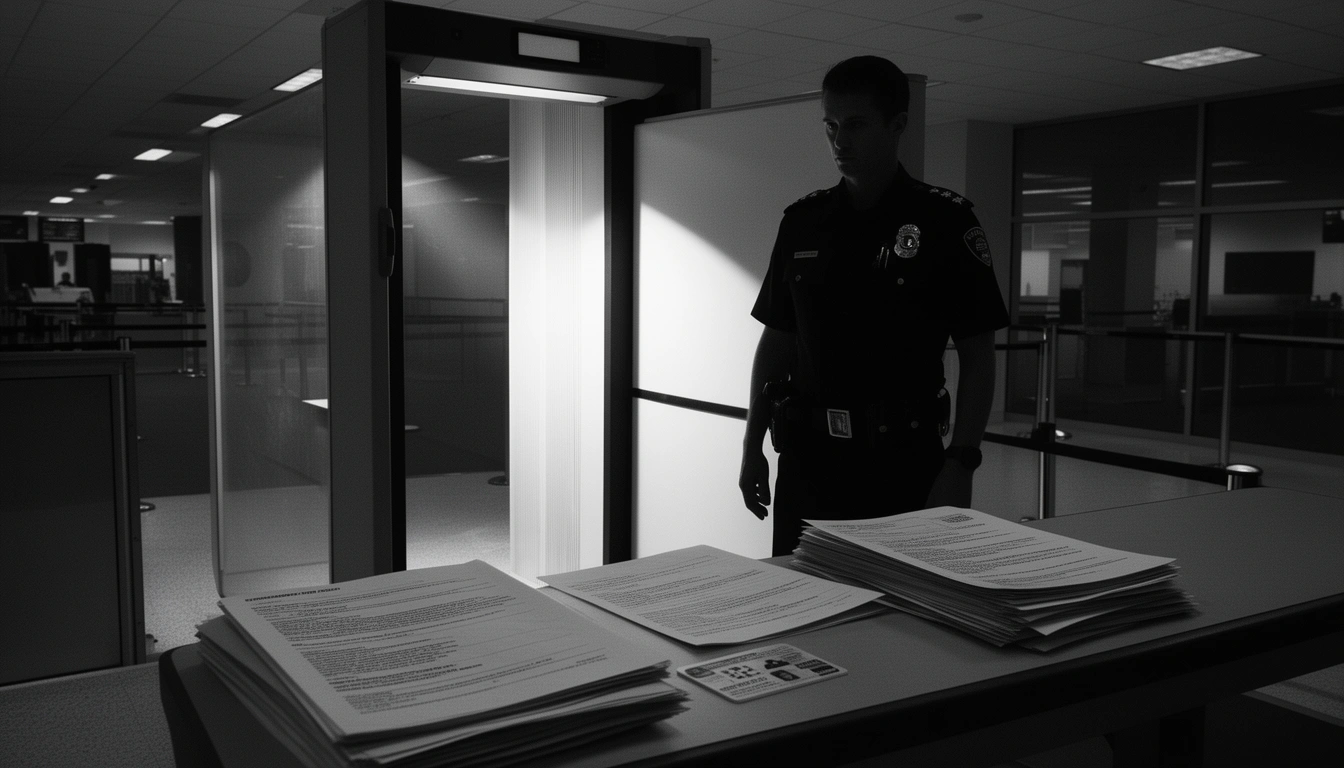
Kerri Thomas TSA Lawsuit Timeline and Updates
May 21, 2024 — The Incident at Atlanta Hartsfield Airport
At approximately 5 a.m. on May 21, 2024, Kerri Thomas arrived at the North Security checkpoint at Hartsfield-Jackson Atlanta International Airport. Upon approaching the checkpoint entrance, she informed the TSA officer on duty that she had a spinal cord stimulator surgically implanted in her back. She presented a medical identification card documenting her implant and requested a private pat-down screening, which is the alternative screening method TSA’s own policy requires agents to offer passengers who cannot safely pass through a metal detector or Advanced Imaging Technology (AIT) device.
According to the complaint, the officer at the entrance ignored both her verbal request and her medical identification card, directing her to proceed through the standard screening process. Thomas entered the checkpoint and, before reaching the AIT scanner, spoke to a second TSA officer. She again explained her condition and again requested a pat-down. That second officer told her the AIT machine had been “adjusted” and “recalibrated” so that it would not damage her device. The complaint alleges this representation was false: the machine had not been recalibrated in any way that would protect her implant.
When the officer activated the AIT machine, Thomas felt an immediate shock and intense pain. The complaint alleges the electromagnetic field generated by the scanner destroyed her spinal cord stimulator on contact.
2024 to Early 2026 — Administrative Process Fails
Before filing suit, Thomas pursued the required administrative adjudication process with the TSA, as mandated under the Federal Tort Claims Act before any lawsuit can be filed in federal court. That process, which can take six months or longer, ended without resolution. TSA either denied her administrative claim or failed to act on it within the statutory period, triggering Thomas’s right to file in federal court. The delay between the May 2024 incident and the February 2026 lawsuit reflects that mandatory pre-litigation timeline.
February 18, 2026 — Federal Lawsuit Filed
Thomas filed her complaint in the U.S. District Court for the Northern District of Georgia on February 18, 2026. The case became publicly known in early March 2026 when it was reported by People magazine, AboutLawsuits.com, and several aviation news outlets. The complaint names the United States of America as the sole defendant, citing TSA as the responsible agency. It alleges the TSA’s negligence, through its employees, was the direct and proximate cause of Thomas’s injuries.
The complaint states: “Defendant’s negligence, through the Transportation Security Administration and its employees or agents, constitutes the direct and proximate cause of the injuries and damages that Plaintiff suffered.”
What Is a Spinal Cord Stimulator and Why Does It Matter at Airport Security
A spinal cord stimulator (SCS) is a surgically implanted pain management device placed beneath the surface of the skin, typically near the lower back or buttocks. It works by delivering low-level electrical impulses directly to the spinal cord, interrupting or masking pain signals before they are consciously perceived. The device is used to treat chronic pain conditions where other interventions have failed, including sciatica, failed back surgery syndrome, complex regional pain syndrome, and neuropathic pain.
The system consists of a small pulse generator, similar in size to a pacemaker, and thin lead wires that run along the spinal cord. Both components contain sensitive electronic circuits. External electromagnetic fields, particularly the high-intensity fields generated by security screening equipment, can interfere with those circuits. The consequences can range from a temporary reset or loss of therapeutic function to irreversible damage requiring surgical removal and replacement of the device.
TSA’s own published guidance acknowledges this risk. The agency’s official website states that passengers with internal medical devices should not pass through a walk-through metal detector and that any passenger with a medical implant has the option to refuse AIT screening and request a pat-down instead. The TSA’s guidance on medical devices explicitly instructs passengers to inform officers of their condition and request alternative screening. The complaint alleges that Thomas followed every step of that protocol and was turned away at each point.
- You have the right to refuse metal detector or AIT scanner screening
- You must inform the TSA officer of your internal medical device
- A pat-down is the required alternative — not negotiable under TSA policy
- You may request private screening in a separate room at any time
- Pat-downs are conducted by an officer of the same sex
- Carrying a medical identification card from your device manufacturer or doctor is recommended
- TSA officers are required to honor these requests — refusal may constitute agency negligence
The TSA’s Own Policy Prohibited What the Agents Did
The central allegation in the Thomas lawsuit is not merely that TSA agents made a bad judgment call. It is that they violated a mandatory, published agency policy that unambiguously covers her exact situation.
TSA guidance on passengers with medical devices states that anyone who does not wish to go through screening by technology should inform the TSA officer, who will then conduct a pat-down. The guidance further states that passengers may request private screening at any time. The agency’s specific guidance for travelers with pacemakers, defibrillators, or other internal medical devices instructs them to inform the officer of their device and notes they can be screened using a pat-down instead.
The complaint alleges that not one but two separate TSA officers at the North checkpoint ignored this policy in sequence. The first officer was told at the checkpoint entrance and directed Thomas to proceed anyway. The second officer, positioned near the AIT scanner, went further: rather than honoring the pat-down request, the officer affirmatively told Thomas the machine had been adjusted in a way that would protect her device. The complaint alleges that statement was false, and that the officers knew or should have known the machine had not been recalibrated in any protective way.
That second allegation — that the officer made a false assurance about the machine’s safety — adds a layer of potential misconduct beyond simple negligence. It goes to whether TSA personnel not only failed to follow protocol but actively misled Thomas about the risk she faced.
What the Federal Tort Claims Act Allows and What It Limits
The Federal Tort Claims Act, codified at 28 U.S.C. § 1346(b) and § 2671 et seq., is the legal mechanism that permits individuals to sue the United States government for injuries caused by the negligent or wrongful acts of federal employees acting within the scope of their employment. Before the FTCA, the doctrine of sovereign immunity shielded the federal government from nearly all civil lawsuits.
To use the FTCA, an injured person must first file an administrative claim directly with the responsible federal agency — in this case, TSA — using a Standard Form 95. The claimant has two years from the date of the injury to file that administrative claim. TSA then has six months to investigate and respond. If the agency denies the claim in writing, or if six months pass without a decision, the claimant has six months from that point to file a lawsuit in federal district court. Missing either deadline is fatal to the claim.
Under the FTCA, claimants can recover compensatory damages, including past and future medical expenses, lost wages, pain and suffering, and loss of enjoyment of life. Punitive damages are not available against the federal government under the FTCA. Thomas’s complaint seeks all available compensatory categories.
One important nuance: the FTCA generally applies to negligent acts by federal employees. But under 28 U.S.C. § 2680(h)’s law enforcement proviso, intentional torts, including assault, battery, and false imprisonment committed by federal law enforcement and investigative officers, can also be covered. Multiple federal circuits, including the Eleventh Circuit which covers Georgia, have held that TSA screening officers qualify as law enforcement officers for purposes of that proviso. This matters because it means Thomas may be able to pursue claims that go beyond simple negligence if the facts support a finding of intentional or reckless misconduct.
What Thomas Is Claiming in Damages
The complaint does not state a specific dollar amount. Under the FTCA, claimants must specify an exact sum in the original administrative claim filed with the agency, but the federal court complaint can seek damages in an unspecified amount to be determined by the jury. Thomas’s complaint requests compensation across six categories.
| Damage Category | What It Covers |
|---|---|
| Past medical expenses | Cost of surgery to remove and replace the destroyed spinal cord stimulator; all related treatment |
| Future medical expenses | Ongoing care related to the device failure and any residual spinal injury |
| Physical pain and suffering | The immediate shock and injury at the scanner and the post-surgical recovery period |
| Mental anguish | Psychological distress from the incident and its aftermath |
| Lost earnings | Income lost during medical treatment and recovery |
| Permanent injuries | Any lasting physical harm resulting from the device destruction |
What TSA Has Said and the Government’s Likely Defense
TSA and the Department of Justice, which defends the United States in FTCA litigation, had not issued a public response to the lawsuit as of the time of filing in early March 2026. TSA did not respond to press requests for comment from People magazine at the time the suit was reported.
In FTCA cases involving TSA screening, the government typically mounts several defenses. It may argue that officers’ discretionary judgments about how to conduct screening are protected by the discretionary function exception to the FTCA, which shields government employees from liability for acts involving policy-level decision-making. However, that exception does not protect conduct that violates mandatory written policy — and here, TSA’s own published guidance on medical devices is explicit and mandatory, not discretionary.
The government may also dispute the causal chain: whether the AIT scanner in fact caused the device failure, or whether Thomas’s device had a pre-existing vulnerability. Establishing that the specific AIT at the North checkpoint generated sufficient electromagnetic interference to damage a properly functioning spinal cord stimulator will likely require expert medical and engineering testimony.
Why the “Recalibrated Machine” Claim Is Legally Significant
Most FTCA negligence claims against TSA involve straightforward agent error: an officer who missed a prohibited item, or who damaged luggage during inspection. The Thomas case includes an additional element that makes it more complicated and potentially more damaging for the government.
The complaint alleges that the second TSA officer at the AIT scanner did not merely fail to offer a pat-down. That officer affirmatively told Thomas the machine had been adjusted so it would not harm her device. That statement, if proven, represents a knowingly false assurance that directly caused Thomas to enter the scanner. It transforms the claim from one of pure negligence into something closer to a misrepresentation causing physical harm — a distinction that may affect how the court evaluates TSA’s conduct and the damages that flow from it.
The complaint specifically states: “One or more of the Transportation Security Administration’s employees or agents knew or should have known that the machine in which Plaintiff was forced to enter had not been recalibrated or adjusted so as to not cause harm to her spinal cord stimulator.” If the government cannot produce any documentation of a recalibration for that machine, it will face difficulty explaining why the officer made that representation.
Other TSA Lawsuits Involving Passenger Medical Conditions
The Thomas case is not the first lawsuit to allege that TSA agents violated screening policies for passengers with medical devices. In a 2019 case widely reported at the time, a Las Vegas woman with a hip implant sued TSA after being subjected to what she described as a humiliating strip search at Tulsa International Airport. That case arose from a different failure mode: an officer who found a panty liner during a pat-down and required the passenger to remove it for visual inspection in a private room. Though the fact pattern differs from the Thomas case, both cases reflect a recurring institutional problem: TSA agents who treat their own agency’s written screening protocols as optional.
Cases involving spinal cord stimulators specifically raise a distinct and well-documented technical risk. Device manufacturers issue patient identification cards precisely because AIT and metal detector interference is a known hazard. The TSA’s own guidelines incorporate this risk. Yet the Thomas complaint describes two officers at the same checkpoint on the same morning who both declined to apply the policy — one by ignoring it, and one by actively misrepresenting the machine’s safety.
Travelers dealing with similar issues involving government agencies and institutional negligence may also find the pattern of conduct familiar from the S&K Towing lawsuit, where an institution ignored known rules and continued harmful conduct despite being on notice. The GEO Group detainee lawsuit raised comparable questions about whether federal contractors and agencies can hide behind procedural defenses when their employees violate mandatory internal policies. The Minnesota ICE lawsuit similarly turned on whether federal agents exceeded their authority under written legal constraints — and whether the government could be held accountable in court when those constraints were ignored.
What This Lawsuit Teaches Travelers With Medical Devices
The Thomas case is a vivid illustration of a gap that exists between TSA’s written policy and what TSA officers sometimes do in practice. The policy is clear, publicly posted, and widely known to physicians who treat patients with implanted devices. What the Thomas complaint describes is a situation where that policy meant nothing at the checkpoint because the officers on duty chose not to apply it.
For travelers with pacemakers, defibrillators, cochlear implants, insulin pumps, bone growth stimulators, or spinal cord stimulators, the legal lesson is this: your right to a pat-down is not discretionary on the officer’s part. It is mandatory under TSA policy. If an officer refuses, you are not required to proceed through a scanner. You may ask to speak with a supervisor at the checkpoint. You may ask for private screening. If you are injured because an officer overrode your request, you have a legal avenue under the FTCA to seek compensation — but you must act within the deadlines. The administrative claim must be filed within two years of the injury. That clock starts the moment the harm occurs, not when the lawsuit is filed.
The broader institutional lesson is harder to resolve through a single lawsuit. TSA processes over two million passengers per day at hundreds of airports nationwide. The agency’s policies are written by headquarters; enforcement at individual checkpoints depends on the training, judgment, and compliance of individual officers. The Thomas complaint describes a failure at two consecutive points in the screening process — two officers, one after another, both declining to follow a policy that would have taken thirty seconds to apply correctly. That pattern raises a question that no lawsuit alone can answer: whether what happened to Thomas at the North checkpoint in Atlanta was an aberration or a symptom of inadequate officer training on medical accommodation protocols.
Frequently Asked Questions
What is the Kerri Thomas TSA lawsuit about?
Kerri Thomas, a Georgia woman, is suing the U.S. government under the Federal Tort Claims Act after TSA agents at Atlanta’s Hartsfield-Jackson airport allegedly forced her through a body scanner on May 21, 2024, despite her disclosing a spinal cord stimulator implant and requesting a pat-down. She alleges the scanner destroyed her device, causing immediate pain and requiring surgery.
What is TSA’s policy for passengers with spinal cord stimulators or other medical implants?
TSA policy requires officers to offer a pat-down as an alternative to metal detector and AIT scanner screening for any passenger with an internal medical device. Passengers may also request private screening at any time. The policy is mandatory, not discretionary.
What is an Advanced Imaging Technology (AIT) scanner?
An AIT scanner is the full-body imaging device used at TSA checkpoints. It generates electromagnetic fields to detect concealed items. These fields can interfere with implanted electronics including pacemakers, spinal cord stimulators, and defibrillators, which is why TSA offers an alternative pat-down screening for affected passengers.
What is the Federal Tort Claims Act and how does it apply here?
The FTCA allows individuals to sue the U.S. government for injuries caused by federal employees acting within the scope of their duties. Thomas’s suit names the United States as the defendant under the FTCA because TSA agents are federal employees whose alleged negligence caused her harm. Before suing, claimants must file an administrative claim with TSA first.
How long did Thomas have to file her administrative claim with TSA?
Under the FTCA, claimants have two years from the date of injury to file an administrative claim with the responsible agency. The incident occurred on May 21, 2024. Thomas completed that process before filing her federal lawsuit on February 18, 2026.
What damages is Thomas seeking?
Thomas seeks compensation for past and future medical expenses, physical pain and suffering, mental anguish, lost earnings, and permanent injuries. She is not seeking a specified dollar amount — damages will be determined by a jury. Punitive damages are not available against the government under the FTCA.
Can I sue TSA if a scanner damaged my medical device?
Potentially yes, through the FTCA. You must file an administrative claim with TSA within two years of the incident. If denied or unresolved after six months, you can then file in federal district court. Missing either deadline typically results in dismissal. Consult a federal tort claims attorney promptly after any such incident.
What should passengers with medical implants do at TSA checkpoints?
Carry a medical identification card from your device manufacturer or doctor. Inform the TSA officer at the checkpoint entrance of your implant before any screening begins. Request a pat-down and private screening if needed. You are entitled to refuse scanner screening. If an officer refuses your request, ask to speak with a checkpoint supervisor.
What is the discretionary function exception and could it block this lawsuit?
The FTCA’s discretionary function exception shields the government from liability for actions that involve policy-level judgment or discretion. However, when an agency has a mandatory written policy that an officer violated — as TSA does for medical device accommodations — courts generally do not apply the exception. Mandatory compliance rules are not discretionary.
Has TSA responded to the lawsuit?
As of the time of filing in early March 2026, TSA did not respond to press inquiries. The Department of Justice, which defends the United States in FTCA cases, had not issued a public statement. The case is in its early litigation stages with no trial date set as of June 2026.
Are there other TSA lawsuits like this one?
Yes. TSA has faced prior lawsuits over screening failures involving medical conditions, including a 2019 case involving a woman with a hip implant who alleged she was subjected to a strip search after a pat-down. Cases involving spinal cord stimulators and other sensitive implants are not unique, though each turns on its specific facts.
Can I record a TSA encounter if an officer refuses my accommodation request?
Generally, you may photograph or record in public areas of airports, including security checkpoints, as long as you do not interfere with the screening process. Recording can document an officer’s refusal to accommodate a medical request. That documentation could be useful evidence in a subsequent FTCA administrative claim or lawsuit. However, rules vary by airport and you should not obstruct officers during recording.

Leave a Reply