Frederick and Sara Evans thought they had bought a car. They had a pre-approved loan, agreed to financing terms, signed contracts, and drove home in a used 2021 Volkswagen ID4. Then Sikeston Ford Lincoln, a Missouri Ford dealership, called to say financing had not been finalized and the terms were changing. Then it happened again. Then, according to a federal lawsuit, dealership representatives arrived at the couple’s home with local police and threatened criminal charges to get the vehicle back.
The civil complaint — filed in May 2025 in U.S. federal court — accuses Sikeston Ford Lincoln of engaging in a “predatory and deceptive” yo-yo financing scheme that caused financial harm, emotional distress, and the loss of the vehicle the Evanses believed they had legally purchased. The lawsuit alleges violations of the Equal Credit Opportunity Act (ECOA), the Truth in Lending Act (TILA), and Missouri’s Merchandising Practices Act (MMPA). It seeks compensatory and punitive damages for wrongful repossession, breach of contract, and emotional distress. The dealership has denied wrongdoing and moved to compel arbitration.
- What: Federal lawsuit alleging yo-yo financing fraud, unauthorized credit applications, falsified income records, and wrongful repossession via police intimidation
- Who: Frederick and Sara Evans vs. Sikeston Ford Lincoln (Sikeston, Missouri)
- Status: Ongoing — filed May 2025 in federal court; dealership denied wrongdoing June 19, 2025 and moved to compel arbitration
- Injuries: Loss of vehicle, damaged credit, financial harm from unauthorized credit applications, emotional distress
- Settlement: None reached — litigation ongoing
- Eligibility: Individual consumer lawsuit; potential for similar claims by other consumers subjected to yo-yo financing or predatory practices at Missouri dealerships
- Key date: January 2024 — date of original vehicle purchase; May 2025 — federal complaint filed; June 19, 2025 — dealership denied allegations and sought arbitration
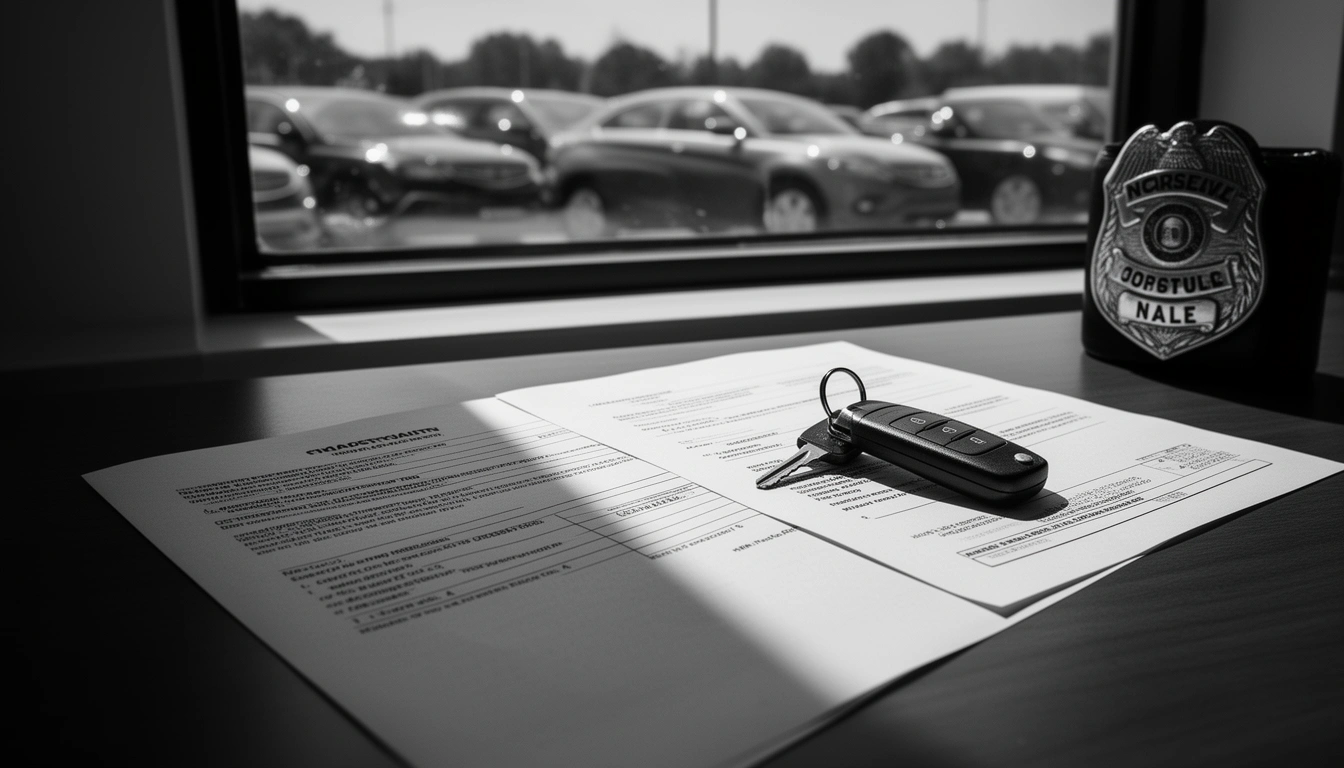
Sikeston Ford Lincoln Lawsuit Timeline and Updates
January 2024 — The Evanses Buy a Car
Frederick and Sara Evans visited Sikeston Ford Lincoln in Sikeston, Missouri, in January 2024 intending to purchase a used 2021 Volkswagen ID4. They arrived with a pre-approved loan already secured through their own lender — not a blank financing request, but a concrete financing arrangement they had obtained before setting foot in the dealership.
According to the complaint, the dealership confirmed financing terms: a 7.59% interest rate, a 150,000-mile extended warranty, and GAP insurance coverage, which pays the difference between what a car is worth and what is still owed on it if the vehicle is totaled or stolen. With those terms confirmed, the Evanses took delivery of the vehicle and drove home believing the deal was done.
Days Later — The Dealership Calls Back With New Terms
The financing was never finalized as promised. Days after delivery, the dealership contacted the Evanses with revised terms. The interest rate rose to 7.74%. The extended warranty shrank from 150,000 miles to 100,000 miles. The GAP insurance they had requested was gone entirely.
This is the pattern at the heart of a yo-yo financing scheme. The consumer drives away believing the deal is complete. The dealer treats it as conditional. When the permanent financing falls through — or when the dealer simply decides better terms are available — the consumer is called back and pressured to accept a worse deal, while the original contract they believed was final is treated as null.
The Escalation — A Third Contract at 9.34%
The Evans lawsuit alleges the terms kept moving. The dealership eventually presented a third contract with an interest rate of 9.34% — compared to the original 7.59% the couple had agreed to. That is a 175-basis-point increase over the original confirmed terms. The Evanses refused to sign the third contract.
The lawsuit also alleges the dealership submitted multiple unauthorized credit applications on the couple’s behalf, inflating their income on lender forms in the process. Unauthorized credit inquiries damage consumers’ credit scores and can affect their ability to secure financing elsewhere. Falsifying income on lender applications is a separate federal violation with potential criminal implications.
August 2024 — Dealership Representatives Arrive With Police
When the Evanses refused the escalating terms, the situation turned coercive. According to the complaint, a representative from Sikeston Ford Lincoln arrived at the couple’s home accompanied by local law enforcement, threatened criminal charges of auto theft, and demanded the vehicle be surrendered.
Feeling cornered, the Evanses complied. They handed over the car.
That sequence — using police presence and criminal threats to recover a vehicle from a consumer who believed they had legally purchased it — is what plaintiffs’ attorneys describe as illegal coercion. Auto theft requires the intent to permanently deprive someone else of their property without consent. A consumer who purchased a vehicle and drove it home under signed contracts had consent. Threatening auto theft charges against such a consumer is not a legitimate legal position — it is a pressure tactic. The Evans complaint names this explicitly as wrongful repossession.
2024–2025 — Agency Complaints Fail to Resolve the Dispute
Before filing suit, the Evanses contacted multiple agencies. They reached out to the FBI, the Missouri attorney general’s office, the Better Business Bureau, and the Federal Trade Commission. None of those efforts produced a resolution. The dealership, according to the complaint, did not respond to those contacts with any offer to make the Evanses whole.
What matters here is what that sequence reveals about the current consumer protection landscape for car buyers. The FTC’s Combating Auto Retail Scams (CARS) Rule — which would have directly prohibited yo-yo financing and required dealers to honor signed credit terms — was struck down by the 5th Circuit Court of Appeals in early 2025 on procedural grounds before it ever took effect. Without that rule, the primary tools consumers have against yo-yo financing remain the existing federal statutes and state consumer protection laws the Evanses’ lawsuit invokes.
May 2025 — Federal Lawsuit Filed
The Evanses filed their federal civil complaint in May 2025. The suit names Sikeston Ford Lincoln as the defendant and alleges violations of the Equal Credit Opportunity Act, the Truth in Lending Act, and Missouri’s Merchandising Practices Act. It also alleges wrongful repossession, breach of contract, and intentional infliction of emotional distress.
The complaint seeks both compensatory and punitive damages. Punitive damages are available under Missouri law in cases involving intentional or egregious misconduct — and sending representatives with law enforcement to threaten criminal charges against a consumer who refused revised loan terms is squarely in that territory, if the allegations are proven.
June 19, 2025 — Dealership Denies Wrongdoing, Seeks Arbitration
Sikeston Ford Lincoln filed a response on June 19, 2025, denying all wrongdoing and arguing the case should be dismissed or sent to private arbitration. The dealership’s position: the Evanses signed contracts containing mandatory arbitration clauses, which the dealership argues require the dispute to be resolved privately rather than in federal court. The dealership maintained the plaintiffs’ claims “lack the necessary factual and legal basis to proceed.”
The arbitration motion is the central procedural battleground. If the court compels arbitration, the case moves out of federal court and into a private process with different rules, more limited discovery, and no public record of the outcome. This is why arbitration clauses appear in virtually every auto purchase contract — they are the dealership’s most powerful tool for limiting its exposure when disputes arise.
What the Evans Lawsuit Actually Alleges — Three Legal Violations
The complaint targets three distinct areas of federal and state law. Each addresses a different type of harm the Evanses say they suffered.
Equal Credit Opportunity Act
The ECOA prohibits discrimination in lending and requires lenders to provide proper adverse action notices when credit terms change. When a dealership submits credit applications without the consumer’s authorization — as the Evans complaint alleges — it violates the ECOA’s consent requirements. Income falsification on loan applications is a separate but related violation. ECOA provides for actual damages, punitive damages up to $10,000 per individual claim, and attorney’s fees.
Truth in Lending Act
The TILA requires accurate disclosure of all credit terms before a consumer signs. When a dealer presents a signed retail installment sales contract with specific terms — interest rate, payment schedule, total cost of credit — and then treats those terms as conditional after the consumer drives away, it defeats the purpose of TILA’s disclosure requirements. The consumer made a decision based on terms that the dealer did not honor. TILA provides for actual damages, twice the finance charge (up to certain statutory caps), and attorney’s fees for violations.
Missouri Merchandising Practices Act
The MMPA broadly prohibits deceptive, fraudulent, and unfair business practices in consumer transactions. Missouri courts have interpreted the MMPA expansively. Notably, Missouri does not require consumers to prove a dealer intended to deceive them — only that the practice was objectively deceptive or misleading. The MMPA allows actual damages, punitive damages, and attorney’s fees. Class action lawsuits under the MMPA are permitted, meaning the legal theory the Evanses use could potentially be extended to other consumers who experienced similar practices at Sikeston Ford Lincoln or at other Missouri dealerships.
What Is a Yo-Yo Financing Scheme — and Is It Legal?
Yo-yo financing goes by several names in consumer law: spot delivery, conditional sale, or contingency financing. The mechanics are the same. The dealership lets the consumer take the vehicle before permanent financing is secured with a third-party lender. The consumer believes the deal is done. The dealer reserves the right — through fine print in the contract — to unwind the deal if the lender rejects or modifies the terms.
That reservation is not inherently illegal. Legitimate spot deliveries happen when dealers act in good faith, cannot secure financing as promised, and properly restore the consumer to their original position — returning the down payment, trade-in, and any other consideration paid. The FTC has acknowledged this practice exists and can be legitimate when handled properly.
Here is where it gets complicated. What the Evans complaint alleges is the predatory version. Not a good-faith notification that financing fell through, but a sequence of escalating pressure: a first call with worse terms, then a second call with worse terms still, then a third contract at a significantly higher rate, then — when the consumer refused — police-accompanied representatives demanding the car back under threat of criminal prosecution. The Center for Responsible Lending has found that 25% of consumers with incomes under $25,000 have experienced yo-yo financing. The practice disproportionately affects lower-income buyers who have fewer financing alternatives and are more easily pressured.
- Dealer allows you to take delivery before financing is officially confirmed by a lender
- Contract contains language about financing being “subject to approval” or “conditional”
- Dealer contacts you days after delivery to say terms have changed
- New contract offered at a higher rate, shorter warranty, or missing agreed add-ons
- Dealer threatens to report the vehicle stolen or send police if you refuse new terms
- Dealer submits multiple credit applications without your written consent
The Arbitration Battleground — Why the Dealership Wants Out of Federal Court
Sikeston Ford Lincoln’s June 19 motion seeking arbitration is not unusual — it is the standard first move for any dealership facing a federal consumer protection lawsuit. Auto purchase contracts almost universally contain mandatory arbitration clauses buried in the fine print. These clauses require disputes to be resolved by a private arbitrator rather than in court.
For consumers, arbitration is disadvantageous in several ways. Arbitration proceedings are not public. There is no jury. Discovery is limited. Appeals are extremely narrow. And arbitrators are often selected from panels that handle repeat business from the same dealerships, creating structural pressure toward industry-favorable outcomes.
For the Evans lawsuit specifically, the arbitration question is legally complex. TILA and ECOA are federal statutes. Courts have generally enforced arbitration clauses in consumer contracts, including for federal statutory claims. However, there are limits. Arbitration clauses cannot be used to prospectively waive statutory rights. And claims that the contract itself was procured through fraud or coercion may give courts grounds to decline enforcement of the arbitration provision contained in it — because a fraudulent contract cannot be used to strip a consumer of the right to challenge that fraud in court.
Similar dynamics played out in the Toyota driver data class action, where arbitration clause enforceability was a central early battleground before the case reached its current posture.
What Missouri Consumers Who Face Similar Practices Can Do
The Evans case is an individual lawsuit, not a class action. But the legal violations it invokes — ECOA, TILA, and the MMPA — are available to any Missouri consumer who has experienced similar practices at any auto dealership.
- Stop all phone calls with the dealer immediately. Every conversation is a chance for them to pressure you or create a false record of agreement.
- Document everything in writing. Note dates, times, and exact content of every call or visit from the dealer or their representatives.
- Do not sign a new contract. You are under no obligation to accept revised terms. The dealer must honor the original agreement or return your down payment, trade-in, and any other consideration.
- Request your original contract in writing. If the dealer claims the original financing fell through, demand written documentation from the lender, not just a verbal assertion from the dealer.
- Contact a consumer protection attorney. TILA and ECOA cases must typically be filed within one year of the violation. Missouri MMPA claims have a five-year statute of limitations.
- File complaints with the CFPB and Missouri AG. Consumer Financial Protection Bureau complaints are available at consumerfinance.gov. The Missouri AG consumer protection division handles dealer fraud complaints.
The Evanses contacted the FBI, the Missouri AG, the BBB, and the FTC without resolution. That is not a failure of the legal system — it is a signal that regulatory agencies are limited in what they can do for individual consumers on a fast timeline. The practical tool is a private lawsuit. TILA and ECOA both include fee-shifting provisions, meaning a prevailing plaintiff can recover attorney’s fees from the defendant. That provision is specifically designed to make consumer protection cases economically viable for individuals with modest damages.
What This Lawsuit Teaches Consumers
The Sikeston Ford Lincoln lawsuit teaches a lesson about the moment when a consumer believes a deal is done. That moment — driving off the lot — feels final. The keys are in hand. The paperwork is signed. The vehicle is in the garage. But in the world of conditional auto financing, “driving off the lot” is not always the legal moment of sale the consumer believes it to be.
The fine print in most auto purchase contracts contains language the average buyer never reads: a financing contingency clause that gives the dealership the right to unwind the transaction if third-party financing cannot be secured on the terms the contract reflects. That clause is not inherently illegal. What makes it predatory — and potentially illegal — is how it is used. Using it as a pretext to demand higher rates from consumers who have no leverage, or using police intimidation to recover a vehicle from a consumer who refuses, crosses from a legitimate business contingency into consumer fraud.
The broader lesson: pre-approve your financing through your own bank or credit union before visiting a dealership. When a dealer offers financing, read the contingency language before you sign. Never drive away under a “spot delivery” arrangement without understanding what conditions the dealer has reserved. And if a dealer ever arrives at your home with law enforcement to demand a car you believe you purchased legally — do not simply hand it over. Call a consumer protection attorney first. What the Evans lawsuit demonstrates is that the legal tools exist to fight back. Using them early, before the situation escalates, makes them more effective.
Read These
- Senate lawsuit provision repealed by the House
- Red Bull false advertising lawsuit
- Toyota UA80 transmission defect lawsuit
- Toyota driver data tracking class action
- Homeschool diploma Pennsylvania lawsuit
Frequently Asked Questions
What is the Sikeston Ford Lincoln lawsuit about?
A Missouri couple sued Sikeston Ford Lincoln alleging a yo-yo financing scheme: the dealership confirmed loan terms, allowed delivery, then repeatedly changed the terms, submitted unauthorized credit applications, falsified income records, and repossessed the vehicle using police intimidation when the buyers refused revised terms.
Who filed the Missouri Ford dealership lawsuit?
Frederick and Sara Evans of Missouri filed the complaint in May 2025 in U.S. federal court after visiting the dealership in January 2024 to purchase a used 2021 Volkswagen ID4.
What is the current status of the case?
Active. Sikeston Ford Lincoln denied all wrongdoing on June 19, 2025 and moved to dismiss or compel arbitration. No ruling on that motion has been reported. The litigation is ongoing.
What is a yo-yo financing scheme?
A yo-yo financing scheme lets a buyer take delivery under agreed terms, then calls them back days later claiming financing fell through and pressures them to sign a new contract with worse terms — higher interest rate, reduced warranty, missing add-ons.
What laws did the dealership allegedly violate?
The lawsuit alleges violations of the Equal Credit Opportunity Act (ECOA), the Truth in Lending Act (TILA), and Missouri’s Merchandising Practices Act (MMPA), plus claims for wrongful repossession, breach of contract, and intentional infliction of emotional distress.
What happened with the police at the Evans home?
According to the complaint, dealership representatives arrived at the Evans home accompanied by local police, threatened criminal charges of auto theft, and demanded the vehicle be surrendered. The Evanses complied. Plaintiffs’ attorneys call this illegal coercion, not legitimate repossession.
Why is the dealership seeking arbitration?
Sikeston Ford Lincoln argues the couple signed contracts containing mandatory arbitration clauses that require the dispute to be resolved in private arbitration rather than federal court.
What damages are the plaintiffs seeking?
Compensatory damages for financial losses, punitive damages for intentional misconduct, attorney’s fees (available under TILA and ECOA), and equitable relief for wrongful repossession including return of the vehicle or its equivalent value.
What is the statute of limitations for these claims?
TILA claims: 1 year from the violation. Missouri MMPA claims: 5 years. ECOA claims: 2 years. If you experienced similar practices at a Missouri dealership, consult a consumer protection attorney promptly.
What are my rights if a dealer calls after delivery and demands I return a car?
The law requires the dealer to honor the original contract or return all consideration paid — down payment, trade-in, fees. You are not required to accept revised terms. A dealer cannot legally report the vehicle stolen if you drove it home under a signed purchase agreement.
What is the CARS Rule and why does it matter?
The FTC’s Combating Auto Retail Scams (CARS) Rule, which would have prohibited yo-yo financing and required dealers to honor signed credit terms, was struck down by the 5th Circuit Court of Appeals in early 2025 before taking effect. Consumers currently rely on TILA, ECOA, and state consumer protection laws.
What should I do if a Missouri dealer tries to change my financing terms after delivery?
Stop communicating verbally with the dealer. Document everything in writing. Do not sign a new contract. Request written proof from the lender that financing actually failed. Contact a consumer protection attorney and file complaints with the CFPB and Missouri AG office.

Leave a Reply