A police wrongful death lawsuit is a civil rights and wrongful death claim filed when a law enforcement officer kills someone through unconstitutional conduct, excessive force, or deliberate indifference. These cases are filed separately from any criminal prosecution. A grand jury declining to indict an officer does not prevent a civil lawsuit. A criminal acquittal does not bar a wrongful death claim. The two systems operate independently and apply different standards of proof.
Police wrongful death cases are among the most legally difficult wrongful death claims that exist. They combine the general framework of wrongful death law with civil rights law under 42 U.S.C. Section 1983, which creates a federal cause of action when state actors violate constitutional rights. The doctrine of qualified immunity, which protects officers from personal liability unless they violated clearly established law, creates a barrier that does not exist in any other wrongful death context.
- What: Civil rights and wrongful death lawsuits against police officers and departments for fatal encounters involving excessive force or unconstitutional conduct.
- Legal basis: 42 U.S.C. Section 1983 (federal civil rights), state tort law, and wrongful death statutes.
- Key obstacle: Qualified immunity protects officers unless they violated clearly established constitutional law.
- Who pays: Typically the city or county government, not the individual officer.
- Settlement range: $500,000 to $5 million in most cases; landmark cases have reached $27 million.
- Status: Individual lawsuits, not a class action. New cases filed continuously.
- Statute of limitations: 2 to 3 years in most states; federal Section 1983 claims borrow state personal injury deadlines.
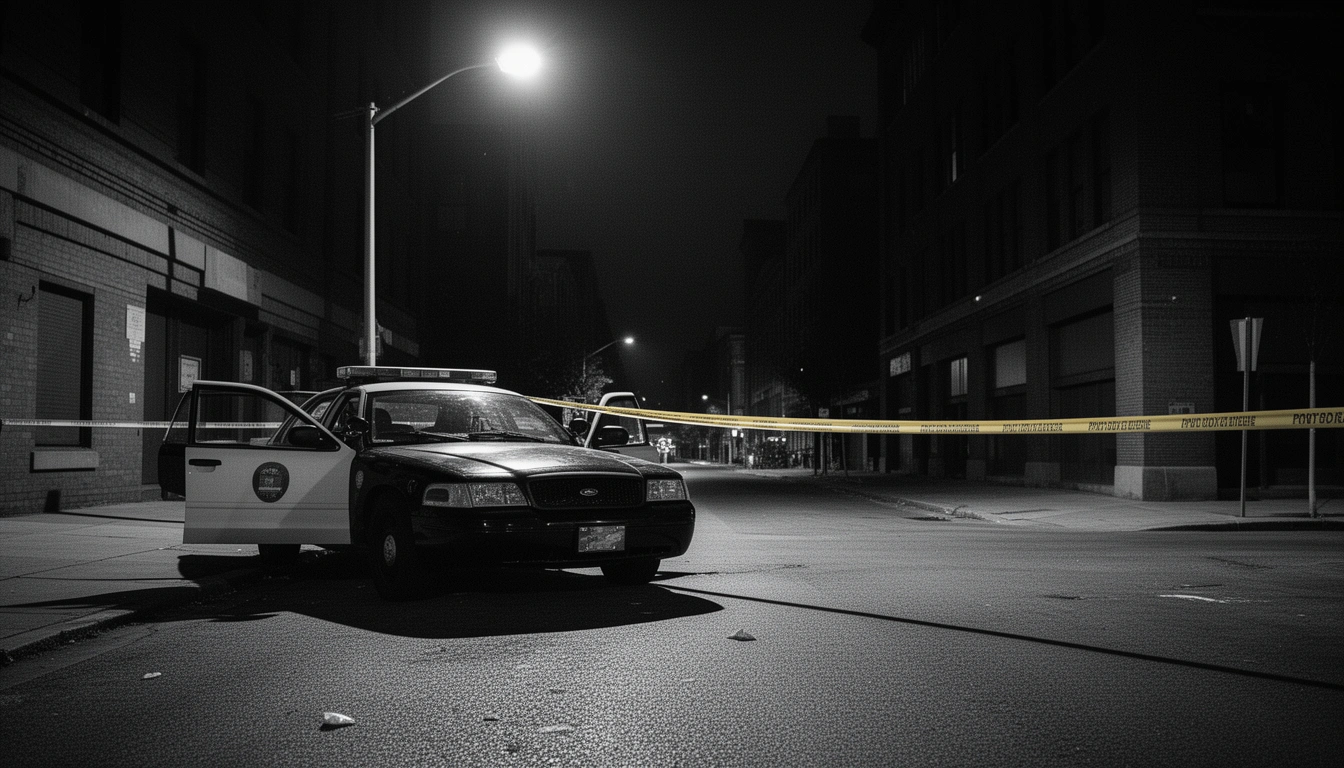
Police Wrongful Death Lawsuit Timeline and Updates
May 2020 — George Floyd and the Surge in Civil Litigation
The murder of George Floyd by Minneapolis police officer Derek Chauvin on May 25, 2020 triggered the largest wave of police wrongful death civil litigation in American history. Families who had settled for inadequate amounts or abandoned claims in previous years began refiling or filing new cases. Cities facing intense public pressure settled cases they might have previously contested. The Floyd family reached a $27 million settlement with the City of Minneapolis in March 2021, the largest pre-trial settlement ever reached in a police killing case at that time.
The ripple effect extended beyond Minneapolis. Breonna Taylor’s family settled with the City of Louisville for $12 million in September 2020. Ahmaud Arbery’s family settled for $2.25 million with Glynn County, Georgia in 2022. These high-profile settlements recalibrated what families and attorneys expected in police wrongful death cases nationally.
January 2025 — DOJ Finds Louisiana State Police Pattern of Excessive Force
In the final days of the Biden administration, the U.S. Department of Justice released findings that Louisiana State Police engaged in a statewide pattern of excessive force during arrests and vehicle pursuits. The findings referenced the 2019 death of Ronald Greene, who died after Louisiana State Police officers punched, kicked, and used stun guns on him following a traffic stop. Video obtained by the Associated Press in 2021 showed the brutal encounter. Federal prosecutors had declined to bring criminal charges against the officers involved.
April 2025 — DOJ Rescinds Louisiana Findings Under New Administration
The DOJ under the Trump administration rescinded the Louisiana State Police excessive force findings in April 2025. The reversal reflected a broader policy shift away from federal pattern-and-practice investigations of local law enforcement. It did not affect pending civil wrongful death litigation, which proceeds independently of federal administrative findings.
May 2026 — Ronald Greene Family Reaches $4.8 Million Settlement
The family of Ronald Greene reached a $4.8 million settlement in May 2026, ending a federal wrongful death lawsuit over his 2019 death in Louisiana State Police custody. The settlement is subject to approval by the Louisiana Legislature. Greene’s death became one of the most extensively documented police wrongful death cases in recent history, with video evidence showing the encounter directly contradicting initial police claims that Greene had died in a car crash.
The Legal Framework: Section 1983 and State Law Claims
Police wrongful death cases typically combine two bodies of law. Federal civil rights claims under 42 U.S.C. Section 1983 allow families to sue when a state actor, including a police officer acting under color of law, violates a federally protected constitutional right. The Fourth Amendment’s protection against unreasonable seizure is the most commonly invoked right in police shooting and excessive force wrongful death cases.
State tort law wrongful death claims run alongside the federal claim. These use the standard wrongful death framework: the officer owed a duty, breached it, caused the death, and damages resulted. State claims do not carry the qualified immunity defense that applies to federal Section 1983 claims, which is why plaintiff’s attorneys often pursue both simultaneously.
Qualified Immunity: The Biggest Barrier in Police Wrongful Death Cases
Qualified immunity is a judicially created doctrine that protects government officials, including police officers, from personal civil liability unless they violated clearly established statutory or constitutional rights that a reasonable person would have known. It does not appear in any federal statute. The Supreme Court created it through case law and has repeatedly reinforced it.
In practice, qualified immunity means that even if an officer’s conduct was wrong, reckless, or caused death, the officer cannot be held personally liable unless there exists prior case law in the same jurisdiction finding that nearly identical conduct violated constitutional rights. Courts have dismissed wrongful death cases on qualified immunity grounds even in cases involving clearly documented excessive force, simply because no prior case established a right against that specific type of force in that specific type of scenario.
Qualified immunity applies to the individual officer. It does not protect the employing municipality from liability under a separate theory called Monell liability, which requires showing the municipality had a policy, custom, or practice that caused the constitutional violation. Monell claims are harder to prove but carry no immunity defense.
Who Pays Police Wrongful Death Settlements
In the vast majority of cases, settlements and verdicts in police wrongful death lawsuits are paid by the city, county, or state government that employed the officer. Individual officers almost never pay out of their own pockets. This means taxpayers bear the financial cost of police misconduct settlements, while the officers involved often face no personal financial consequence.
Some jurisdictions are beginning to require officers to contribute personally to settlements in misconduct cases, particularly where the officer’s conduct was egregious and the department was on notice of prior problems. These policies remain rare. The disconnect between who pays and who acted is a recurring criticism of how police accountability functions in civil litigation.
Common Scenarios in Police Wrongful Death Cases
Fatal Shootings
Unjustified police shootings are the most common basis for police wrongful death lawsuits. The Fourth Amendment prohibits unreasonable seizures, and a shooting is a seizure under constitutional law. The legal test is whether a reasonable officer in the same situation would have used deadly force. Officers are permitted to use deadly force only when they have an objectively reasonable belief that they or others face an imminent threat of serious bodily harm or death.
Cases where the deceased was unarmed, fleeing, mentally ill, or presented no objectively reasonable threat are the strongest for plaintiffs. Cases where the deceased did present an objective threat are substantially harder. The presence of video evidence, whether from body cameras, dashcams, or bystanders, is now the single most determinative factor in police shooting wrongful death cases.
In-Custody Deaths
In-custody deaths, including deaths during restraint, transport, or detention, generate wrongful death claims under the Fourth Amendment for pre-arrest encounters and the Fourteenth Amendment’s due process clause for post-arrest detainees. George Floyd’s death, which occurred during a restraint following arrest, falls in this category. Deaths in jail or police holding facilities from denial of medical care are also actionable under the Fourteenth Amendment’s deliberate indifference standard.
High-Speed Pursuit Deaths
When police pursuits result in the death of an innocent third party, bystander, or passenger, wrongful death claims arise. The legal standard for pursuit-related deaths differs from shooting cases. Courts apply a shocks-the-conscience test for substantive due process violations in pursuit cases, which is harder to satisfy than the Fourth Amendment reasonableness standard. State tort claims for negligent pursuit are often more viable than federal constitutional claims in these cases.
Failure to Intervene
Officers who witness fellow officers using excessive force have a duty to intervene to stop it. Failure to intervene when intervention was possible and necessary can make a bystander officer liable alongside the officer who applied force. This theory was central to the prosecution and civil litigation arising from George Floyd’s death, where multiple officers were present during the restraint that killed him.
What Evidence Matters in Police Wrongful Death Cases
Body camera footage is the most consequential evidence in modern police wrongful death cases. It can establish the sequence of events, the level of threat actually present, whether commands were given and complied with, and whether the force used was proportionate. Its absence, when a department’s policy required it to be activated, can itself be used against the department.
Other critical evidence includes dashcam footage, bystander video, dispatch records and call logs, the officer’s prior disciplinary history and complaints, departmental use-of-force policies and training records, the medical examiner’s cause of death finding, and expert testimony from former law enforcement officials about whether the force used was consistent with accepted police practices.
Prior complaints against the same officer are particularly valuable in establishing that the department knew about a pattern of misconduct and failed to discipline or retrain. That pattern is the foundation of a Monell claim against the municipality.
Police Wrongful Death Settlement Amounts
| Case | Amount | Year |
|---|---|---|
| George Floyd (Minneapolis) | $27 million | 2021 |
| Breonna Taylor (Louisville) | $12 million | 2020 |
| Edward Bronstein (California) | $24 million | 2020 |
| Ronald Greene (Louisiana) | $4.8 million | 2026 |
| Ahmaud Arbery (Glynn County) | $2.25 million | 2022 |
| Lymond Moses (New Castle County, DE) | $1.05 million | 2023 |
| Leo Davis (Manhattan Beach, CA) | $395,000 | 2026 |
The Statute of Limitations for Police Wrongful Death Cases
Federal Section 1983 claims borrow the statute of limitations from the state in which the claim arises, typically the state’s personal injury statute of limitations. In most states that is 2 years from the date of death or from when the family knew or reasonably should have known the death was the result of unlawful conduct. State wrongful death claims follow state wrongful death statutes, which are also typically 2 years.
Claims against state entities, including state police agencies like the Louisiana State Police, may require filing an administrative tort claim before suing, with short notice deadlines sometimes as brief as 6 months from the incident. Missing the administrative notice requirement permanently bars the civil lawsuit regardless of the strength of the evidence.
What This Lawsuit Teaches Consumers
Police wrongful death litigation sits at the intersection of civil rights accountability and wrongful death law. What makes it distinct from every other wrongful death context is the identity of the defendant. A police officer acts with the authority and resources of the state. Holding that authority accountable requires navigating legal doctrines, primarily qualified immunity, that exist nowhere else in civil litigation.
The financial accountability in these cases falls almost entirely on taxpayers rather than on the officers whose conduct caused the death. That structural disconnect is the central unresolved problem in police accountability law. Civil settlements produce payments. They do not always produce officer discipline, departmental reform, or changed use-of-force policies.
Video evidence has transformed this area of law more than any legislative change. Body cameras have made it far harder for departments to control the narrative after a fatal encounter. Cases that would have been impossible to prove in 2010 are provable today because a camera captured what actually happened. That shift has increased both the number of cases filed and the settlement amounts paid.
Families who have lost a loved one in a police encounter should consult a civil rights attorney immediately. The documentation steps that matter most, requesting body camera footage, securing bystander video, obtaining the incident report and dispatch log, preserving the scene, and getting an independent autopsy if possible, must happen quickly. Evidence can be lost, footage can be deleted if not preserved by court order, and administrative notice deadlines arrive faster than families in grief typically realize. Understanding the parallel between how other high-profile wrongful death cases have built their evidentiary records from the earliest days provides useful context for what is at stake in those first critical weeks.
Frequently Asked Questions
What is a police wrongful death lawsuit?
A police wrongful death lawsuit is a civil rights and wrongful death claim filed when a law enforcement officer kills someone through excessive force, unconstitutional conduct, or deliberate indifference. It is filed separately from any criminal prosecution.
What is qualified immunity and how does it affect police wrongful death cases?
Qualified immunity is a court-created doctrine that protects officers from personal civil liability unless they violated clearly established constitutional rights. It is the primary barrier in police wrongful death cases and does not exist in any other wrongful death context.
Who pays police wrongful death settlements?
Most settlements are paid by the city, county, or state government that employed the officer. Individual officers almost never pay out of their own funds. Taxpayers bear the financial cost in the vast majority of cases.
What evidence matters most in a police wrongful death case?
Body camera footage is the most consequential evidence. Other key evidence includes dashcam video, bystander recordings, dispatch records, the officer’s prior disciplinary history, use-of-force training records, autopsy findings, and expert testimony from former law enforcement.
What is the statute of limitations for a police wrongful death lawsuit?
Federal Section 1983 claims typically follow the state personal injury statute of limitations, usually 2 years from the date of death. Claims against state entities may require administrative filings within 6 months. Missing notice deadlines permanently bars the lawsuit.
What are notable police wrongful death settlement amounts?
The George Floyd family received $27 million from Minneapolis in 2021. Breonna Taylor’s family received $12 million from Louisville in 2020. Edward Bronstein’s family received $24 million in California. The Ronald Greene family settled for $4.8 million in May 2026.
Can I sue if the officer was not criminally charged?
No. A grand jury declining to indict or a criminal acquittal does not bar a civil wrongful death lawsuit. Civil cases use a lower standard of proof and operate entirely independently of the criminal justice system.
What is a Monell claim in a police wrongful death case?
A Monell claim holds the municipality liable by proving it had a policy, custom, or practice that caused the constitutional violation. It is harder to prove than claims against individual officers but carries no qualified immunity defense.

Leave a Reply