In February 2026, the U.S. Supreme Court did something it had never done before: it struck down a sitting president’s tariffs as unconstitutional. The 6-3 ruling in Learning Resources, Inc. v. Trump and Trump v. V.O.S. Selections, Inc. held that the International Emergency Economic Powers Act (IEEPA) does not authorize the president to impose tariffs. With that decision, every tariff President Trump had imposed under IEEPA from February 2025 onward became unlawful.
The case reached the U.S. Supreme Court after originating in parallel challenges at the U.S. Court of International Trade (CIT) and the U.S. District Court for the District of Columbia. The ruling invalidated both the “Liberation Day” Reciprocal Tariffs and the fentanyl Trafficking Tariffs. What follows is a $166 billion refund fight — and a second wave of consumer class actions against major retailers who raised prices during the tariff period but may not pass the refund back to the people who paid it.
- What: The Supreme Court ruled IEEPA does not authorize the president to impose tariffs, striking down the Liberation Day and trafficking duties imposed from early 2025 onward.
- Who: Small business plaintiffs Learning Resources Inc. and V.O.S. Selections vs. Trump administration; 330,000 importers affected; consumer class actions vs. Nike, IKEA, Nintendo, Home Depot, Adidas, and others
- Status: Ongoing — CIT refund process active via CAPE system; Trump DOJ appealing refund order to Federal Circuit; consumer class actions under investigation
- Injuries: Importers paid $166B+ in unlawful duties; consumers paid inflated retail prices during the tariff period (Aug. 1, 2025 – Feb. 15, 2026)
- Settlement: None — refunds pending through CBP’s CAPE system; consumer class actions at investigation stage
- Eligibility: Importers who paid IEEPA duties from Feb. 4, 2025 through Feb. 24, 2026; consumers who purchased from brands that raised prices during the tariff period
- Key date: June 2, 2026 — Trump DOJ formally appealed CIT’s nationwide refund order to the Federal Circuit
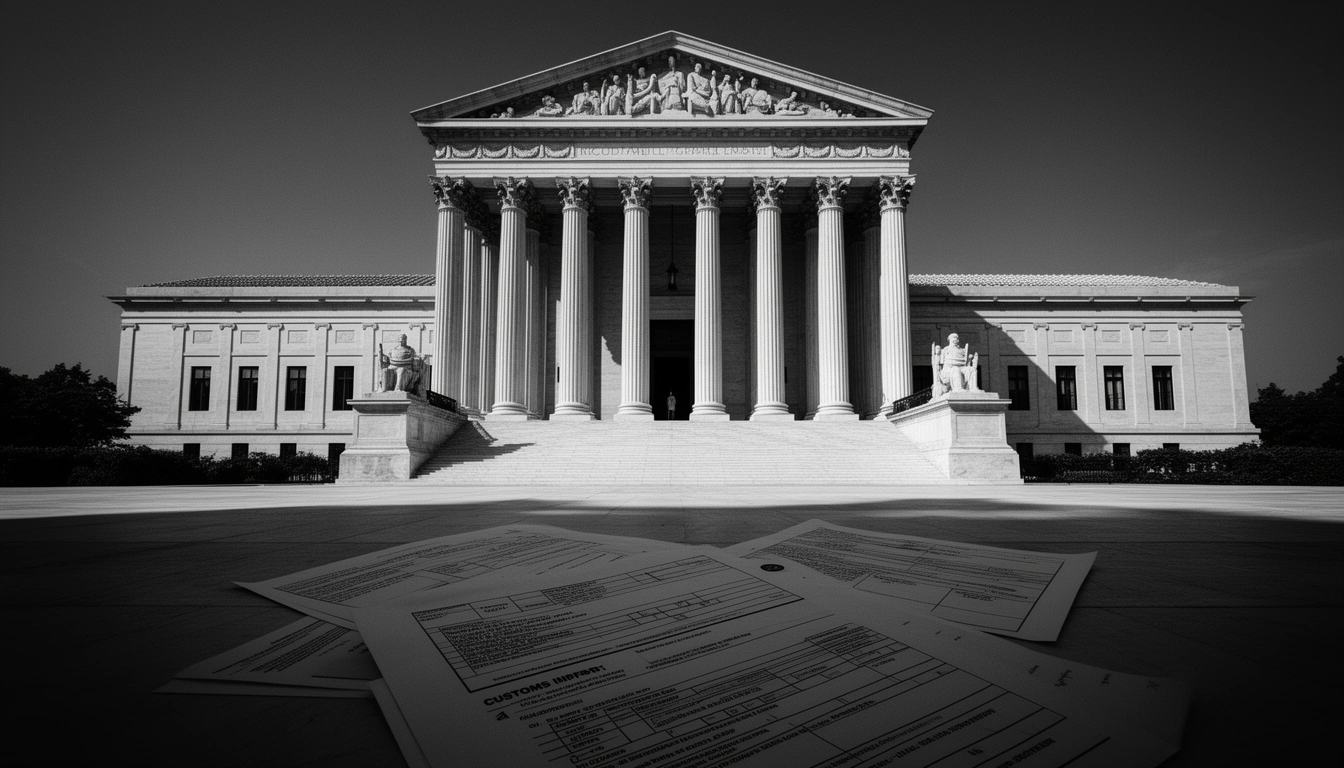
IEEPA Tariff Lawsuit Timeline and Updates
February 1, 2025 — Trump Imposes First Tariffs Under IEEPA
President Trump declared national emergencies over two threats: drug trafficking from Mexico, Canada, and China, and persistent U.S. trade deficits. Both declarations invoked IEEPA — a 1977 statute that grants the president broad authority to regulate commerce during a national emergency.
Under the first emergency, Trump imposed a 25% duty on most Canadian and Mexican imports and a 10% duty on most Chinese imports. These became known as the Trafficking and Immigration Tariffs. No president in IEEPA’s nearly 50-year history had ever used the statute to impose tariffs.
April 2, 2025 — “Liberation Day” — Global Reciprocal Tariffs
On April 2, 2025, Trump broadened the tariff regime dramatically. He imposed a 10% baseline tariff on all U.S. trading partners and higher “reciprocal” rates of up to 50% on nearly 90 countries. China faced the steepest rates, with combined duties exceeding 145% on some goods.
The administration framed these as mirroring trade barriers U.S. exporters faced abroad. Trade analysts rejected that framing. The tariffs often exceeded foreign rates and targeted countries with which the U.S. ran a trade surplus. The practical effect: a near-universal import tax on consumer goods, components, and raw materials entering the American market.
May 28, 2025 — Two Federal Courts Strike Down IEEPA Tariffs on the Same Day
Two courts ruled against the tariffs simultaneously. The U.S. Court of International Trade granted summary judgment in V.O.S. Selections v. United States, brought by five small businesses and 12 states. The U.S. District Court for the District of Columbia issued a preliminary injunction in Learning Resources, Inc. v. Trump, brought by two family-owned educational toy companies.
The pattern is familiar: coordinated multi-court litigation designed to create circuit pressure and force expedited Supreme Court review. Both courts stayed their rulings, allowing tariff collection to continue while appeals proceeded.
August 29, 2025 — Federal Circuit Affirms Both Decisions
The U.S. Court of Appeals for the Federal Circuit, sitting en banc, upheld both lower court rulings. The panel held that IEEPA’s grant of authority to “regulate . . . importation” does not encompass the distinct power to levy tariffs. The court stayed its decision pending Supreme Court review.
By this point, hundreds of billions in duties had been collected. Importers — from small educational toy manufacturers to major retailers — had absorbed or passed on the costs. The refund stakes were already enormous.
September 9, 2025 — Supreme Court Grants Expedited Review
The Supreme Court granted certiorari and expedited the schedule, setting oral argument for November 5, 2025. Three questions framed the arguments: whether IEEPA’s regulatory language includes tariff authority; whether the major questions doctrine requires clear congressional delegation for wide-ranging tariffs; and whether the administration’s interpretation constituted an unconstitutional delegation of the taxing power.
Nearly 2,000 importers filed protective lawsuits at the CIT during this period to preserve refund eligibility. The CIT stayed all new filings pending the Supreme Court’s decision.
January 8, 2026 — Administration Stipulates to Refunds Pending Decision
Before the Court issued its ruling, the Trump administration stipulated on January 8, 2026 that it would refund IEEPA tariffs — including those on Brazil and India not directly at issue in the Supreme Court litigation — for all current and future entries if the Court ruled against it. That stipulation framed the coming decision as the trigger for a refund process that would affect every affected importer, not just the named plaintiffs.
February 20, 2026 — Supreme Court Rules 6-3: IEEPA Does Not Authorize Tariffs
Chief Justice John Roberts authored the majority opinion, joined by Justices Sotomayor, Kagan, Gorsuch, Barrett, and Jackson. The Court held that the power to impose tariffs is a branch of the taxing power vested exclusively in Congress under Article I, Section 8 of the Constitution. Any presidential tariff authority must come from a clear congressional delegation — and IEEPA provides none.
The majority invoked the major questions doctrine, noting that no president in IEEPA’s nearly 50-year history had ever used it to impose tariffs, and that the scope of the claimed authority — touching virtually every import entering the United States — “dwarfs” any prior major questions case. The Court also analyzed the statutory text: IEEPA’s power to “regulate . . . importation” does not include the power to tax importation, just as the power to “regulate” something in hundreds of other federal statutes has never been understood to include the power to levy duties on it.
Justices Thomas, Kavanaugh, and Alito dissented. They argued tariffs are a traditional regulatory tool for managing importation and that the majority’s ruling creates a massive practical problem — $166 billion in refund liability — without addressing how it will be resolved.
February 20–24, 2026 — President Issues Executive Order Ending IEEPA Tariff Collection
Hours after the Court’s decision, President Trump issued an executive order stopping the collection of all remaining IEEPA-based tariffs. U.S. Customs and Border Protection issued guidance on February 22 implementing the order, halting IEEPA tariff collection on goods entered for consumption on or after 12:00 a.m. Eastern on February 24, 2026.
The executive order did not address refunds. That silence left 330,000 importers, who had paid duties across 53 million entries since February 2025, without clarity on when or how they would be reimbursed.
March 4, 2026 — CIT Orders Nationwide Refunds
CIT Senior Judge Richard Eaton issued a refund order in Atmus Filtration, Inc. v. United States, directing CBP to liquidate all unliquidated entries without IEEPA tariffs and reliquidate previously liquidated entries without them. Critically, Judge Eaton held that the order applies to all importers of record — not just those who filed lawsuits.
The government pushed back immediately. At a hearing the same day, DOJ stated: “It is not our position that every single entry and every importer will get a refund. Our position is that you have to file a claim in this court.” The government requested a stay to appeal. Judge Eaton denied it.
March 6–12, 2026 — CBP Requests 45-Day Extension; Refund Order Paused
CBP filed a declaration requesting a 45-day extension to update its Automated Commercial Environment (ACE) system. The volume was staggering: 53 million entries, $166 billion in collected duties, 330,000 importers. Judge Eaton paused the immediate refund requirement while CBP’s technical plan was considered.
CBP outlined a new processing system — the Consolidated Administration and Processing of Entries (CAPE) — built to handle importer-submitted refund declarations through the ACE portal.
April 7–20, 2026 — CIT Issues New Refund Order; CAPE Phase 1 Launches
Judge Eaton issued a new order on April 7 mirroring the March 4 refund directive. CBP launched CAPE Phase 1 on April 20, 2026, allowing importers of record and customs brokers to submit refund declarations directly through the ACE portal via CSV file uploads.
As of April 26, 2026, over 75,000 CAPE declarations had been submitted, covering more than 1.7 million validated entries already processed into the refund pipeline. Approximately 63% of declarations and 84% of validated entries passed initial validation checks.
June 2, 2026 — Trump DOJ Appeals CIT Refund Order to Federal Circuit
The Department of Justice, on behalf of the Trump administration, formally appealed the CIT’s nationwide refund order to the U.S. Court of Appeals for the Federal Circuit on June 2, 2026. The appeal challenges both the universal scope of the refund order and a CIT order compelling the CBP Commissioner to testify.
A successful appeal could stay the CAPE refund process for importers who have not filed individual CIT cases. That outcome would push the refund timeline out by months or years for the majority of the 330,000 affected importers — and would effectively require each importer to file its own lawsuit to obtain relief.
What the Lawsuit Actually Alleged — Two Cases, One Legal Question
The consolidated cases came from opposite ends of the import spectrum. Learning Resources, Inc. and hand2mind, Inc. are small, family-owned companies that design educational toys. Most of their manufacturing runs through China. IEEPA tariffs pushed their import costs from $2.3 million in 2024 to a projected $100 million in 2025 — a 44-fold increase that threatened the companies’ survival.
V.O.S. Selections and its co-petitioners represent a broader coalition: five small businesses and 12 states. Together they argued that IEEPA — enacted in 1977 to give presidents tools to respond to foreign emergencies through financial sanctions and asset freezes — was never designed to function as a tariff statute.
This is the core allegation: the Constitution gives Congress the exclusive power to lay and collect taxes, and tariffs are a form of taxation. Congress has delegated tariff authority to the president in specific statutes — Section 232 of the Trade Expansion Act, Section 301 of the Trade Act of 1974 — but IEEPA contains no such delegation. Using IEEPA to impose tariffs on every trading partner simultaneously based on declared national emergencies was, the plaintiffs argued, exactly the kind of “highly consequential” executive action the major questions doctrine prohibits without clear congressional authorization.
The Supreme Court agreed. No hedging. No remand for further factual findings. IEEPA simply does not authorize tariffs — full stop.
Which Tariffs Were Struck Down and Which Remain
The ruling did not eliminate every Trump tariff. That distinction matters enormously for importers trying to plan their cost structures going forward.
| Tariff Type | Authority | Status After Ruling |
|---|---|---|
| Liberation Day Reciprocal Tariffs (10%+ on all trading partners) | IEEPA | Struck down — refunds owed |
| Trafficking Tariffs (25% Canada/Mexico, 10% China) | IEEPA | Struck down — refunds owed |
| Steel and aluminum tariffs | Section 232 | Still in effect |
| Chinese goods tariffs (prior to 2025) | Section 301 | Still in effect |
| Auto parts, pharmaceutical tariffs | Section 232 (partial) | Still in effect |
The ruling explicitly leaves Section 232 and Section 301 tariffs intact. Those statutes expressly authorize the president to adjust imports following specific investigative processes by the Commerce Department and the U.S. Trade Representative. Courts will eventually face arguments about whether Learning Resources — with its characterization of tariffs as a form of taxation — has implications beyond IEEPA. That secondary litigation has not yet reached the courts.
The $166 Billion Refund Fight — Who Gets What and When
Here is where it gets complicated. The Supreme Court said the tariffs were unlawful. It said nothing about refunds. That gap created immediate litigation at the CIT over how, whether, and when 330,000 importers recover $166 billion in duties they paid under an unconstitutional authority.
The CIT’s March 4 refund order — and its April 7 successor — took a sweeping position: every importer who paid IEEPA duties is entitled to a refund, without needing to file an individual lawsuit. Judge Eaton relied on the CIT’s unique statutory authority, distinct from federal district courts, to issue orders with nationwide effect. The Trump administration disputes that framing entirely.
- Log into the ACE Portal at CBP
- Navigate to the new CAPE tab (available to Importer, Organizational Broker, and Filer sub-accounts)
- Upload a CSV file — a “CAPE Declaration” — listing each entry on which IEEPA duties were paid
- CBP validates entries and processes liquidation or reliquidation without IEEPA tariffs
- Refunds flow through the standard customs liquidation and reliquidation process
What matters here is the distinction between entry types. For unliquidated entries (where CBP has not yet issued a final duty determination), the path is straightforward: liquidate without IEEPA duties. For liquidated entries not yet final (where CBP issued a determination but the protest window remains open), reliquidation removes the IEEPA component. For finally liquidated entries (past the protest deadline), CBP has taken the position it cannot issue refunds without specific court orders — a stance the DOJ used in its June 2 appeal to narrow the scope of relief.
The Tariff Refund Act of 2026 (S. 3905), introduced in the Senate, would resolve this ambiguity by requiring CBP to refund all IEEPA duties within 180 days of enactment, with interest, prioritizing small businesses. The bill has not passed.
The Consumer Class Actions — The Second Fight
The importer refund story has a parallel track that most legal coverage overlooks. When IEEPA tariffs hit, major retailers and consumer brands raised prices on the products they sold. They passed the tariff cost to consumers. Then the Supreme Court struck down the tariffs. Then the government began processing refunds to importers and retailers.
The question attorneys began investigating in early 2026: did any of that refund money flow back to the consumers who actually paid the inflated prices? The answer, in most cases, appears to be no.
Consumer class actions have been filed or are under active investigation against IKEA, Nintendo, UPS, Fabletics and others. Attorneys at Kaplan Fox and Kilsheimer LLP are investigating additional brands including Nike, Home Depot, Adidas, Hermès, Macy’s, SharkNinja, Birkenstock, and On (On Running). The alleged period of consumer harm: August 1, 2025 through February 15, 2026 — roughly the window when tariff-inflated prices were in effect before the Supreme Court’s ruling.
Similar to the dynamics seen in the Red Bull false advertising class action, the theory is unjust enrichment: companies received government reimbursement for costs they had already passed to consumers. Keeping both the consumer overpayment and the government refund — the argument goes — amounts to being paid twice for the same cost.
These cases remain at the investigation stage. No settlements have been reached. No class has been certified. The legal theory faces challenges: proving exactly which price increases were attributable specifically to IEEPA tariffs (as opposed to general inflation, supply chain costs, or competitive pricing decisions) will require product-level discovery that has not yet occurred.
What the Dissent Got Right — and Why It Still Matters
The three dissenters — Justices Thomas, Kavanaugh, and Alito — raised a practical objection the majority did not answer: what happens to $166 billion in duties already collected?
The dissent warned that the majority’s ruling creates an enormous and immediate government liability without prescribing any mechanism for resolving it. That warning proved accurate. The refund fight between the CIT and the DOJ, the ambiguity over finally liquidated entries, the partial CAPE rollout, the June 2 Federal Circuit appeal — all of it flows directly from a ruling that declared the tariffs unlawful but left the consequences entirely to lower courts to work out.
That is not a criticism of the majority’s constitutional analysis. The Court was right that tariffs are taxation and that IEEPA does not clearly delegate taxing authority. But the dissent’s practical concern — that structural remedies at this scale require institutional infrastructure the courts are not designed to provide — plays out in real time every time an importer submits a CAPE declaration and waits to learn whether the Federal Circuit will stay the whole system.
What Importers and Consumers Must Do Now
Two groups have active steps to consider.
For importers: File CAPE declarations now. The refund process is live. Over 75,000 declarations had been submitted by late April 2026. Even if the Federal Circuit appeal creates delays, importers who have filed are in a stronger position than those who have not. Work with a licensed customs broker or trade attorney to identify which entries are eligible, whether they are in unliquidated, liquidated-not-final, or finally-liquidated status, and which IEEPA duties were paid from February 4, 2025 through February 24, 2026.
For consumers: Preserve purchase records. If you bought goods from any major retailer between August 1, 2025 and February 15, 2026 — particularly from brands that publicly announced tariff-related price increases — keep receipts, order confirmations, and credit card statements. Consumer class actions against IKEA, Nintendo, and others are in early stages. Those investigations will eventually need class members with documented purchase histories from the relevant period.
The DOT non-domiciled CDL license dispute offers a parallel lesson: when a federal regulatory reversal creates a large eligible population, the window to file documentation closes faster than most people expect. Act before the appeals process creates uncertainty about who ultimately qualifies.
What This Lawsuit Teaches Consumers
The IEEPA tariff litigation teaches a constitutional lesson and a practical one. The constitutional lesson: tariffs are taxes. The power to tax belongs to Congress. When a president attempts to impose a universal import tax on hundreds of trading partners — touching virtually every product in the American consumer economy — without clear statutory authorization, federal courts will eventually say no. They did, in three successive courts, ending at the Supreme Court in a 6-3 ruling that crossed the Court’s ideological lines.
The practical lesson is harder and less resolved: being right about the law does not mean you get your money back quickly. The $166 billion in collected duties exists. CBP built a new system to return it. The administration that collected the money now appeals the order to return it. The consumers who paid higher prices at retail have no direct claim to the government refund — they can only pursue the retailers who pocketed both the consumer payment and the government check.
That gap between constitutional victory and financial remedy is the space where most people live. It is also the space where the tariff lawsuit’s full consequences will play out over the next several years — in the Federal Circuit, in individual importer claims, and in consumer class actions that have barely started. The Supreme Court won the legal argument. The economic argument is still being decided.
Read These
- Senate lawsuit provision repealed by the House
- Red Bull false advertising lawsuit
- Toyota UA80 transmission defect lawsuit
- Toyota driver data tracking class action
- Homeschool diploma Pennsylvania lawsuit
Frequently Asked Questions
What did the Supreme Court decide in the tariff lawsuit?
In a 6-3 ruling on Feb. 20, 2026, the Supreme Court held that IEEPA does not authorize the president to impose tariffs, striking down both the Liberation Day Reciprocal Tariffs and the Trafficking Tariffs on Canada, Mexico, and China.
Which tariffs were struck down?
The ruling invalidated all IEEPA-based tariffs: the 10%+ Reciprocal Tariffs imposed April 2025 and the 25%/10% Trafficking Tariffs imposed February 2025. Section 232 and Section 301 tariffs (steel, aluminum, Chinese goods under Trade Act) remain in effect.
Who are the plaintiffs in Learning Resources v. Trump?
Learning Resources, Inc. and hand2mind, Inc. — two small family-owned educational toy companies — sued after IEEPA tariffs pushed their Chinese manufacturing costs from $2.3M to over $100M annually, threatening their viability.
How much in tariff refunds is owed?
Approximately $166 billion in IEEPA duties were collected across 53 million entries from 330,000 importers. CBP is processing refunds through the CAPE system, launched April 20, 2026.
How do importers apply for a tariff refund?
Importers file a CAPE Declaration through the ACE Portal at CBP. Phase 1 opened April 20, 2026. Importers of record or their customs brokers upload a CSV file listing entries on which IEEPA duties were paid.
Will the government actually pay the refunds?
Contested. CIT Judge Eaton ordered nationwide refunds on March 4, 2026. The Trump DOJ appealed to the Federal Circuit on June 2, 2026. A successful appeal could stay or limit the refund order.
What is the CAPE system?
CAPE (Consolidated Administration and Processing of Entries) is a CBP system built to process IEEPA tariff refund claims. Phase 1 opened April 20, 2026. As of late April, over 75,000 declarations had been submitted covering 1.7 million validated entries.
Can consumers get refunds for paying higher prices during the tariff period?
Attorneys are investigating consumer class action claims against retailers including Nike, IKEA, Nintendo, Home Depot, Adidas, and others that allegedly raised prices during the tariff period (Aug. 1, 2025 – Feb. 15, 2026) and retained government refunds rather than returning them to consumers.
Which tariffs are still in effect after the Supreme Court ruling?
Section 232 tariffs on steel, aluminum, and autos remain. Section 301 tariffs on Chinese goods remain. Any tariff renegotiated via Trade and Security Agreements may also remain. Only IEEPA-based tariffs were invalidated.
What is the major questions doctrine and why did it matter here?
The major questions doctrine holds that Congress must clearly authorize highly consequential exercises of executive power. Chief Justice Roberts applied it to find that IEEPA’s ambiguous regulatory language could not support a trillion-dollar tariff regime with no historical precedent.
Who dissented in the Supreme Court tariff ruling?
Justices Thomas, Kavanaugh, and Alito dissented, arguing tariffs are a traditional tool to regulate importation and that the majority’s ruling creates practical difficulties including a massive government refund obligation.
Is there a Tariff Refund Act in Congress?
Yes. The Tariff Refund Act of 2026 (S. 3905) would require CBP to refund all IEEPA duties within 180 days of enactment, with interest, prioritizing small businesses. It has not yet passed.

Leave a Reply