A drunk driver wrongful death lawsuit is a civil claim filed by surviving family members when a person is killed in a crash caused by an intoxicated driver. Unlike most wrongful death scenarios, drunk driving cases carry a significant advantage for plaintiffs: the driver’s intoxication, once established, makes the negligence element almost impossible to dispute. A driver who chose to get behind the wheel while impaired made a deliberate decision that a reasonable person would never make. Courts and juries understand that.
These cases sit within the broader framework of wrongful death law but carry features that distinguish them from other fatal accident claims. Punitive damages are available and commonly awarded because drunk driving is treated as reckless conduct, not mere negligence. Dram shop liability allows families to sue the bar or restaurant that overserved the driver. And the existence of a criminal DUI conviction or charge provides powerful, ready-made evidence that the driver was legally at fault.
- What: Civil wrongful death lawsuit against a driver who caused a fatal crash while legally intoxicated.
- Who can file: Surviving spouse, children, parents, or estate personal representative.
- Additional defendants: Bars and restaurants that overserved the driver under dram shop laws in ~38 states.
- Damages: Economic losses, non-economic losses, and punitive damages for the reckless nature of drunk driving.
- Settlement range: $500,000 to several million for wrongful death; cases with punitive awards reach higher.
- Statute of limitations: 2 years in most states from the date of death.
- Key advantage: A criminal DUI conviction is powerful supporting evidence, but you can sue even without one.
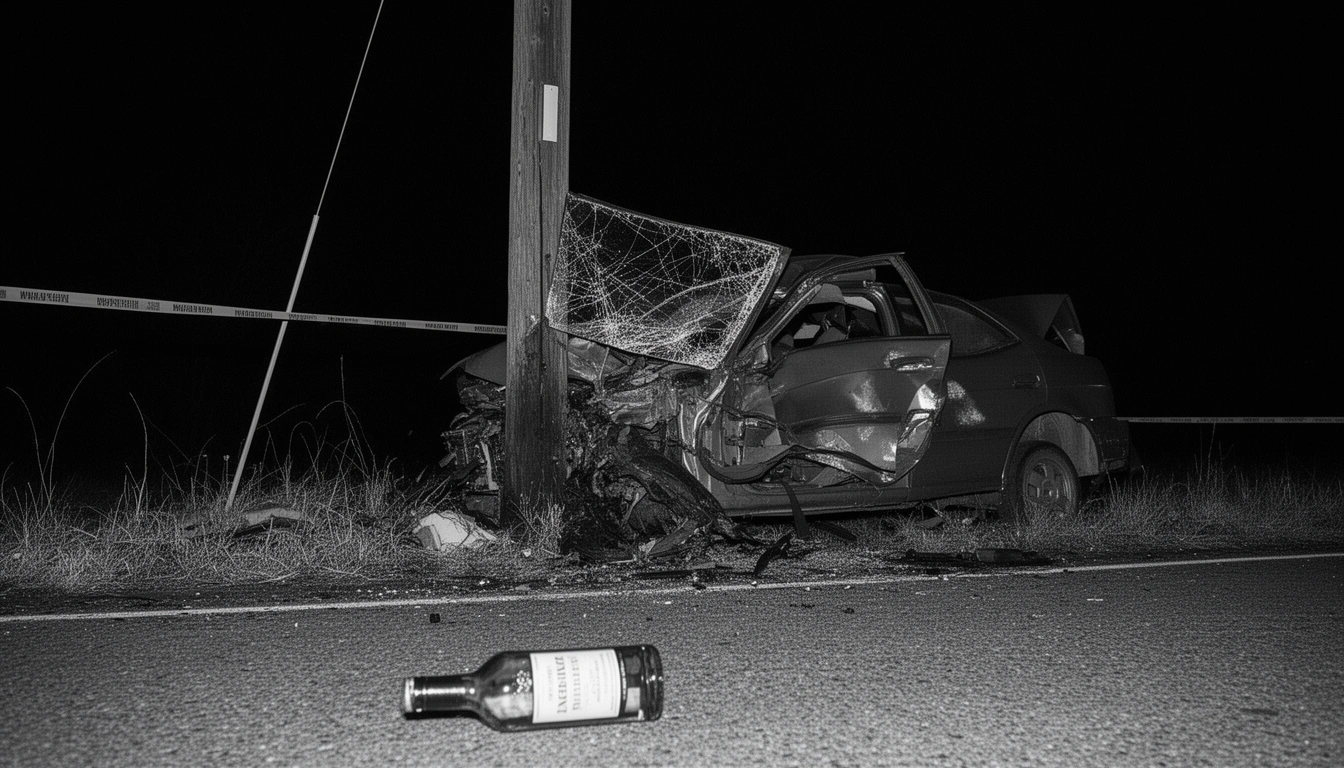
How a Drunk Driver Wrongful Death Lawsuit Works
The legal structure of a drunk driving wrongful death claim follows the same four elements as every wrongful death case. What makes these cases distinctive is how cleanly each element is usually satisfied.
Duty. Every driver on a public road owes a duty of reasonable care to other drivers, passengers, cyclists, and pedestrians. This element is never contested in a drunk driving case.
Breach. Driving while legally intoxicated is per se negligence in every state. A blood alcohol concentration at or above the legal limit of 0.08% establishes breach without any further argument. A criminal DUI conviction makes this element essentially automatic in the civil case. Even without a conviction, evidence of intoxication from police reports, breathalyzer results, field sobriety test footage, and witness accounts establishes breach.
Causation. The intoxicated driver’s impaired judgment, slowed reaction time, and compromised motor control caused the crash that killed the victim. Defense attorneys may argue comparative fault if the victim was speeding or failed to wear a seatbelt, but the core causation element is rarely seriously disputed when a drunk driver ran a red light, crossed the center line, or drove the wrong way.
Damages. The death caused measurable losses to the surviving family. Lost income, funeral and burial costs, medical bills incurred before death, and non-economic losses including grief, loss of companionship, and loss of parental guidance are all recoverable.
Punitive Damages: Why Drunk Driving Cases Are Different
Drunk driving wrongful death cases are among the most common scenarios in which punitive damages are awarded. Punitive damages are not tied to the plaintiff’s actual losses. They exist to punish conduct that is not merely negligent but reckless or intentional. Courts have consistently held that choosing to drive while intoxicated qualifies as reckless conduct.
The availability and size of punitive awards in drunk driving cases depends significantly on state law. Some states cap punitive damages at a multiple of compensatory damages. Others impose no cap. Some states exclude punitive damages from insurance coverage, meaning the drunk driver must pay them personally. When a driver has significant personal assets, uncapped punitive damages can produce total awards that dwarf the compensatory portion of the verdict.
Juries are often visibly angry in drunk driving wrongful death cases. The deliberateness of the choice, getting into a car knowing you are impaired, generates a moral reaction that translates into large awards. Defense attorneys in these cases know they are fighting the punitive question more than the liability question.
Dram Shop Liability: Suing the Bar or Restaurant
In approximately 38 states, families can file a wrongful death dram shop claim against the bar, restaurant, nightclub, or other alcohol-serving establishment that overserved the intoxicated driver. Dram shop laws create liability for commercial alcohol vendors who serve visibly intoxicated patrons or serve alcohol to minors who then cause fatal accidents.
Dram shop claims matter for a practical reason beyond legal accountability. Individual drunk drivers often carry minimal insurance or personal assets. A bar or restaurant is an insured commercial entity with a liquor liability policy. Adding a dram shop defendant gives families access to a much deeper pool of compensation.
| State | Dram Shop Law | Notes |
|---|---|---|
| California | Limited | Only applies to service to minors or obviously intoxicated adults in narrow circumstances |
| Texas | Yes | Texas Alcoholic Beverage Code allows suits for service to visibly intoxicated patrons |
| Florida | Yes | Florida Statute 768.125 allows dram shop claims in specific circumstances |
| New York | Yes | Strong dram shop statute with broad application |
| Illinois | Yes | Dram Shop Act allows suits against commercial servers |
| Delaware | No | No civil dram shop liability statute |
| Virginia | No | No commercial dram shop liability |
To succeed on a dram shop claim, families must prove the establishment served the driver when he or she was visibly intoxicated, or served alcohol to a minor. Evidence includes surveillance footage from inside the bar, receipts showing the number of drinks purchased, witness accounts from other patrons or staff, and the driver’s blood alcohol level at the time of the crash, which can be used to back-calculate how intoxicated they appeared at the time of service.
The Criminal Case and the Civil Lawsuit: How They Interact
A drunk driving death typically triggers both criminal prosecution and civil litigation. They proceed independently. Families can pursue a wrongful death civil lawsuit regardless of what happens in the criminal case, and regardless of how the criminal case resolves.
A criminal DUI conviction or guilty plea is powerful evidence in the civil case. It establishes that a court of law, applying the higher criminal standard of proof, found the driver was intoxicated and responsible for the crash. That finding is admissible in civil proceedings and dramatically strengthens the plaintiff’s case.
Families do not need to wait for the criminal case to conclude before filing the civil lawsuit. In fact, waiting can be dangerous. The civil statute of limitations does not pause while criminal proceedings continue. If a family waits for a criminal conviction before consulting a civil attorney, they may find their civil claim is already close to the deadline or has expired entirely.
A criminal acquittal, while damaging to a civil case, does not end it. The civil burden of proof is preponderance of the evidence: more likely than not. That standard is far lower than beyond reasonable doubt. Cases that cannot be proven criminally can still be proven and won civilly.
Who Can Sue in a Drunk Driver Wrongful Death Case
State law determines who has standing to file. In most states, the lawsuit is filed by the personal representative of the deceased’s estate on behalf of all eligible beneficiaries. The people entitled to compensation typically include the surviving spouse, children, and parents. Some states extend standing to siblings or financial dependents.
If the drunk driver killed a passenger in their own vehicle, that passenger’s family can sue. If the drunk driver killed a pedestrian, cyclist, or occupant of another vehicle, those families can sue. If a drunk driver killed multiple people in the same crash, each family files separately unless the claims are consolidated by the court.
Comparative Fault: Can the Victim’s Conduct Reduce the Recovery
Defense attorneys in drunk driving wrongful death cases sometimes argue comparative fault, claiming the victim’s own conduct contributed to the crash or their death. Common arguments include that the victim was speeding, failed to wear a seatbelt, ran a yellow light, or was otherwise inattentive.
Seatbelt non-use is the most frequently raised defense in wrongful death cases where the victim was a vehicle occupant. Some states allow evidence of seatbelt non-use to reduce damages. Others exclude it entirely. In states applying pure comparative fault, any percentage of fault assigned to the victim reduces the recovery proportionally. In states applying modified comparative fault with a 50% bar, the victim’s estate loses entirely if found more than 50% at fault.
In practice, juries in drunk driving wrongful death cases rarely assign significant fault to victims. A driver who deliberately chose to operate a vehicle while impaired has such a dominant share of moral culpability that arguments about the victim’s minor traffic infraction typically fall flat.
What Drunk Driver Wrongful Death Settlements Look Like
Drunk driving wrongful death cases are among the highest-value personal injury claims because punitive damages compound the compensatory award. Serious injury and wrongful death cases settle for $500,000 to several million dollars. Cases involving young victims with high earning potential, multiple dependents, or particularly egregious drunk driving conduct, such as a driver with prior DUI convictions or a blood alcohol level far above the legal limit, generate the largest awards.
| Factor | Impact on Settlement Value |
|---|---|
| Driver’s BAC level | Higher BAC increases punitive exposure significantly |
| Prior DUI convictions | Repeat offenders generate much larger punitive awards |
| Victim’s age and income | Younger high-earners produce larger economic damage calculations |
| Number of dependents | Minor children significantly increase non-economic damages |
| Driver’s insurance coverage | Policy limits cap what is practically recoverable without assets |
| Dram shop defendant available | Adds insured commercial defendant with deeper pockets |
| Criminal conviction or plea | Substantially strengthens liability and settlement leverage |
Underinsured and Uninsured Motorist Coverage
A practical reality in drunk driving wrongful death cases is that intoxicated drivers frequently carry minimum insurance or no insurance at all. A wrongful death claim worth several million dollars against a driver with a $25,000 policy limit and no personal assets produces a $25,000 recovery without other options.
Uninsured and underinsured motorist coverage, carried on the victim’s own vehicle policy or a household member’s policy, fills part of that gap. UM/UIM coverage pays when the at-fault driver is uninsured or when their coverage is insufficient to compensate the victim’s losses. Families should review every applicable auto insurance policy immediately after a fatal drunk driving crash. Multiple policies may stack, providing more total coverage than any single policy limit.
The dram shop defendant is the other solution to the underinsured driver problem. A bar’s liquor liability coverage is almost always substantially higher than an individual driver’s auto policy. Identifying and pursuing the dram shop claim is frequently the most important strategic decision in a drunk driving wrongful death case.
The Statute of Limitations
Most states impose a 2-year statute of limitations for drunk driving wrongful death claims, running from the date of death. Florida shortened its deadline from 4 years to 2 years in 2023 tort reform legislation. Some states provide 3 years. A small number of states allow 1 year for certain claims.
The dram shop claim may carry a separate, shorter deadline in some states. In Texas, for example, the dram shop statute of limitations is 2 years from the date of the incident. In Illinois, it is 1 year from the date of the injury or death under the Dram Shop Act, which is shorter than the general wrongful death deadline. Missing the dram shop deadline kills the claim against the bar while the wrongful death claim against the driver may still be alive.
Do not wait for the criminal case to conclude. Do not wait to see whether the driver’s insurer offers a settlement. Consult a wrongful death attorney immediately. The clock starts on the date of death and does not pause for anything.
What This Lawsuit Teaches Consumers
Drunk driving kills approximately 13,500 Americans per year according to NHTSA data. That number has barely moved in a decade despite decades of public awareness campaigns, tougher criminal penalties, and rideshare alternatives that eliminate every practical excuse for driving impaired. The civil justice system provides a financial accountability mechanism that the criminal system cannot fully deliver.
A drunk driver who serves time in prison and emerges with a DUI conviction has paid a criminal price. The family of the person they killed has lost income, companionship, and a future that cannot be restored. The civil lawsuit does not undo any of that. What it does is place the financial cost of that deliberate, reckless choice where it belongs: on the person who made it, and on the commercial establishment that helped make it possible.
The dram shop system is one of the most practically important and least understood tools available to families after a drunk driving death. Bars and restaurants that continuously overserve patrons to maximize revenue bear real legal exposure when those patrons kill someone on the way home. That exposure exists to change behavior, not just compensate victims. Understanding the full scope of available defendants, and acting before any deadline expires, is the difference between a meaningful recovery and a check that does not begin to reflect what was lost.
This series has covered wrongful death law across six of its most common and consequential scenarios. From nursing home neglect deaths to hospital malpractice, from Autopilot crashes to police excessive force, the legal mechanism is the same. What changes is the defendant, the evidence, and the obstacles. In every case, time is the resource that runs out first. The families who act quickly, retain experienced counsel, and preserve evidence give themselves the best chance at the accountability the law makes available.
Frequently Asked Questions
What is a drunk driver wrongful death lawsuit?
A drunk driver wrongful death lawsuit is a civil claim filed by the surviving family when someone is killed in a crash caused by an intoxicated driver. Families can sue the driver directly and, in about 38 states, the bar or restaurant that overserved them.
Can I sue a drunk driver for wrongful death if there was no criminal conviction?
Yes. You can file a civil wrongful death lawsuit even if the driver was acquitted or not charged. The civil standard of proof is preponderance of evidence, far lower than the criminal standard of beyond reasonable doubt.
How much is a drunk driver wrongful death lawsuit worth?
Wrongful death cases involving drunk drivers typically settle for $500,000 to several million dollars. Cases with high BAC levels, repeat DUI offenders, young victims with dependents, or dram shop defendants reach the higher end.
What is dram shop liability in a drunk driving death case?
Dram shop laws in about 38 states allow families to sue bars, restaurants, and other alcohol vendors that overserved the intoxicated driver. These claims are critical when the driver carries minimal insurance, because commercial establishments carry liquor liability policies.
What is the statute of limitations for a drunk driving wrongful death lawsuit?
Most states impose a 2-year deadline from the date of death. Dram shop claims may carry separate, shorter deadlines in some states. Florida shortened its deadline from 4 to 2 years in 2023. Consult an attorney immediately to confirm your state’s deadline.
Are punitive damages available in drunk driving wrongful death cases?
Punitive damages are available in drunk driving wrongful death cases because choosing to drive while intoxicated is treated as reckless conduct, not mere negligence. They can significantly exceed the compensatory damage award in cases involving very high BAC or repeat DUI offenders.
What if the drunk driver had no insurance or minimal coverage?
UM/UIM coverage on the victim’s own or a household member’s auto policy may cover the gap when the drunk driver has insufficient or no insurance. Multiple policies may stack. Identifying all applicable coverage is a critical early step.
Should I wait for the criminal DUI case to finish before suing?
Families can file a civil lawsuit before, during, or after the criminal case. The civil statute of limitations does not pause for criminal proceedings. Waiting for the criminal case to resolve risks missing civil filing deadlines.

Leave a Reply